Big electric executive sedans are becoming rare, but BMW is doubling down. With the latest 7‑series, the company is refreshing its flagship with a full spread of gas, hybrid and all‑electric options and the i7 sits at the tech-heavy centre of that strategy.
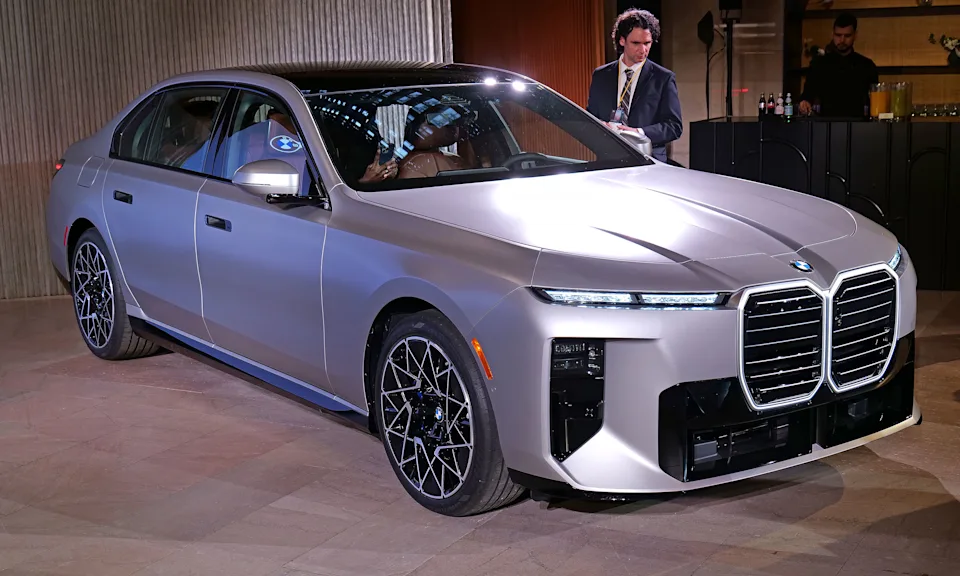
The car shown at BMW’s New York reveal was actually the gas-powered 740; building rules at Grand Central Station kept the i7 itself outside. BMW representatives say the internal-combustion and electric versions are nearly identical visually, aside from their powertrains, so what you see here is essentially what buyers can expect from the 2027 i7.
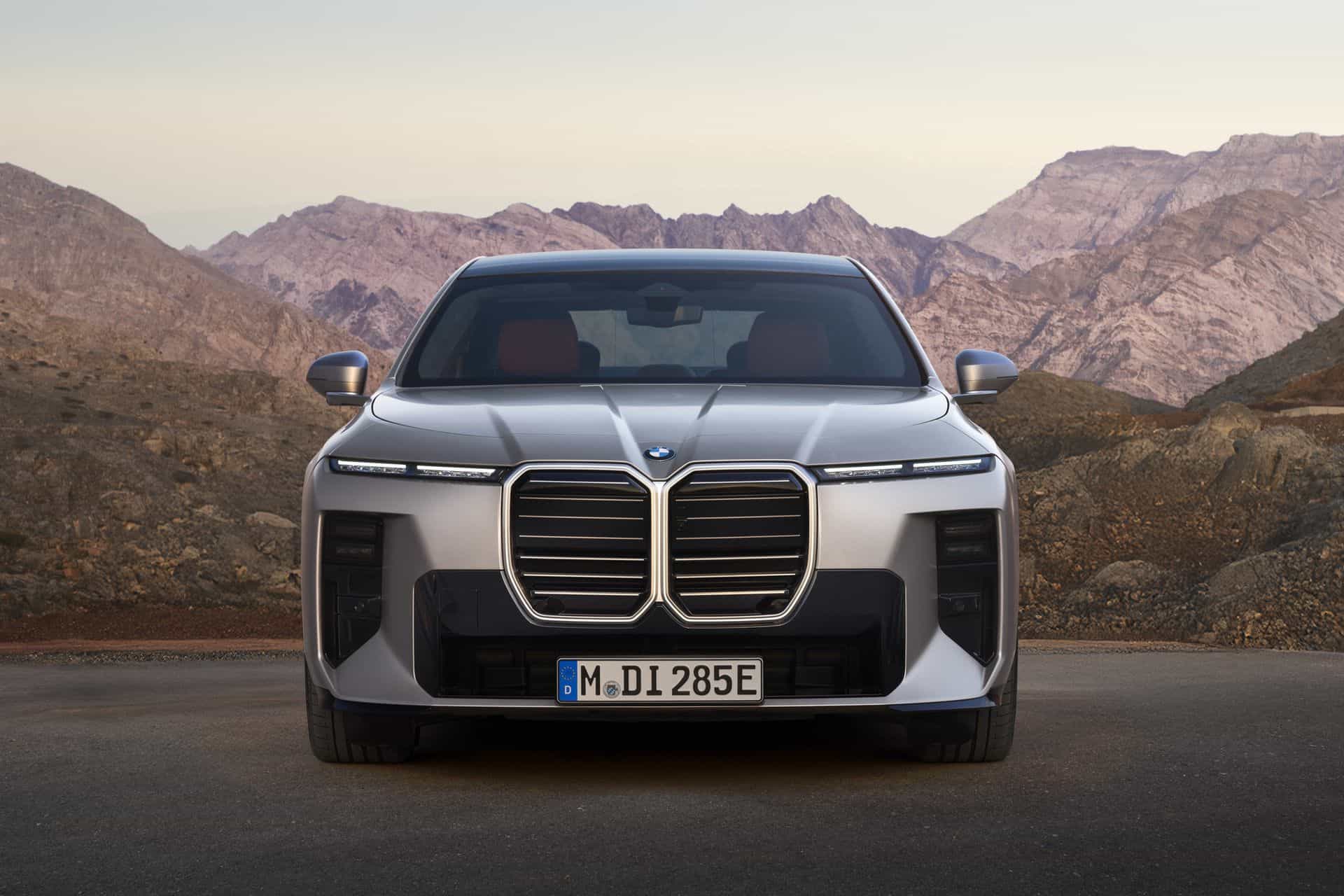
Bearing BMW’s Neue Klasse design language for the US market, the new 7‑series has been engineered so that gas, hybrid and EV variants share almost the same exterior. BMW says that’s about simplifying choice for buyers and giving the range a consistent visual identity.
That identity leans heavily toward an EV look even on combustion models. The traditional kidney grille is enlarged, outlined with lighting and backed by active aero shutters on ICE variants to improve airflow. The previous generation’s stacked headlights are gone, replaced with razor-thin units that pack 24 crystal LEDs for a gem-like lighting signature. At the rear, the taillights now stretch nearly the full width of the car, making the sedan stand out more at night.
BMW has also tucked the exhaust outlets on the 740 down and behind the bumper, further blurring the visual line between gasoline and electric versions. M Sport and upcoming M Performance models will bring back more prominent tailpipes for customers who still want that traditional performance cue.
Buyers get access to hundreds of paint shades, including a new finish that blends matte and gloss in a single treatment. Updated 20‑inch wheels are standard on the latest 7‑series.
i7 M70 xDrive – dual-motor all-wheel drive, up to 680 horsepower; expected in 2027, pricing not yet announced
All versions are all-wheel drive by default, with the M70 sitting at the top as the most powerful. Compared with the outgoing model, the 2027 i7 gets a larger 112.4kWh battery pack (up from 105.7kWh), using BMW’s sixth-generation cells.
That upgrade brings both range and charging improvements. BMW says the i760 should exceed 350 miles of range on a single charge, based on internal measurements using EPA testing procedures. DC fast charging now tops out at 250kW, up from 195kW, on a 400‑volt architecture. According to BMW, that’s enough to move the battery from 10 percent to 80 percent in about 28 minutes. The i7 also adds a native NACS charging port, aligning with the broader industry shift in North America.
Where the new i7 really separates itself is in the cabin. This is the first BMW for the US to showcase the Neue Klasse interior, and it is dominated by displays, lighting and media hardware.
Depending on how you count, there are between five and seven screens on board:
17.9‑inch central display as the main infotainment hub, with support for both Android Auto and Apple CarPlay.
Panoramic Vision, a projector-based strip running along the bottom of the windshield that acts as a secondary display and traditional 3D-style head-up display for navigation and key driving data.
Updated driver controls on the steering wheel with “shy tech” buttons that only illuminate when their functions are available, plus haptic feedback.
14.6‑inch Passenger Screen on the front dash, a first for any BMW letting the front passenger stream video, music and more independently of the main screen.
Two small rear-door touch panels for passengers to tweak climate, media and, where fitted, the rear entertainment system.
Optional 31‑inch 8K Theater Screen that folds down from the ceiling for back-seat occupants.
The Theater Screen is the centrepiece of the rear cabin. BMW says the 31‑inch 8K display is the largest screen currently offered in any production car. It’s fully touch-enabled, includes an integrated webcam for video calls and can pair with Bluetooth controllers for gaming. Woofers mounted under the rear seats contribute to what BMW describes as a 4D audio experience.
Backing all of this is a Bowers & Wilkins audio system with 36 speakers and up to 4,000 watts of power. Lighting also plays a big role in the Neue Klasse interior; BMW uses staged ambient lighting, including halo effects on the rear of the front seats, to tie the whole space together.
A small but important detail for tech users is the full-size HDMI port located beside a USB‑C outlet at the back of the centre console. That connection lets passengers feed almost any HDMI source into the huge Theatre Screen, consoles, laptops, streaming sticks turning the i7 into a rolling living room or mobile office.
BMW’s long-running executive seating mode returns as well. Activate it, and the front passenger seat moves forward by about 20cm while the rear seat reclines and deploys a footrest, creating a lounge-like space in the back. It’s clearly aimed at owners who will sometimes ride instead of drive, and who may have a second driver to make that possible.
On the driver assistance front, BMW representatives say the car’s assisted driving features have been tuned to better tolerate light manual steering adjustments without immediately disengaging hands-free functions or forcing a tug-of-war with the wheel. Detailed specs and regulatory designations weren’t provided, but the intent is a less brittle, more natural assist experience.
Every new 7‑series, including the i7, will also ship with four years of data and access to BMW’s Digital Premium service included, covering connected features for a substantial portion of the vehicle’s early life.
Technically, BMW calls this the “new” 7‑series, but the company is building on a major overhaul that landed in 2023, making the 2027 update closer to an aggressive mid-cycle refresh than a clean-sheet redesign. Even so, the changes to powertrains, charging, interfaces and in-car entertainment add up to a meaningful step for the brand’s flagship sedan.
The i7’s biggest barrier is obvious: price. With the base i750 starting at $105,750 and the i760 well beyond that, plus an as-yet-unpriced M70 on the horizon, this remains a car for a small group of buyers. For those who can justify it, BMW is positioning the i7 as both a high-powered EV and a showcase for just how many screens, sensors and creature comforts it can pack into one very large sedan.
Paul Balo is the founder of TechBooky and a highly skilled wireless communications professional with a strong background in cloud computing, offering extensive experience in designing, implementing, and managing wireless communication systems.
We use cookies to ensure that we give you the best experience on our website. If you continue to use this site we will assume that you are happy with it.