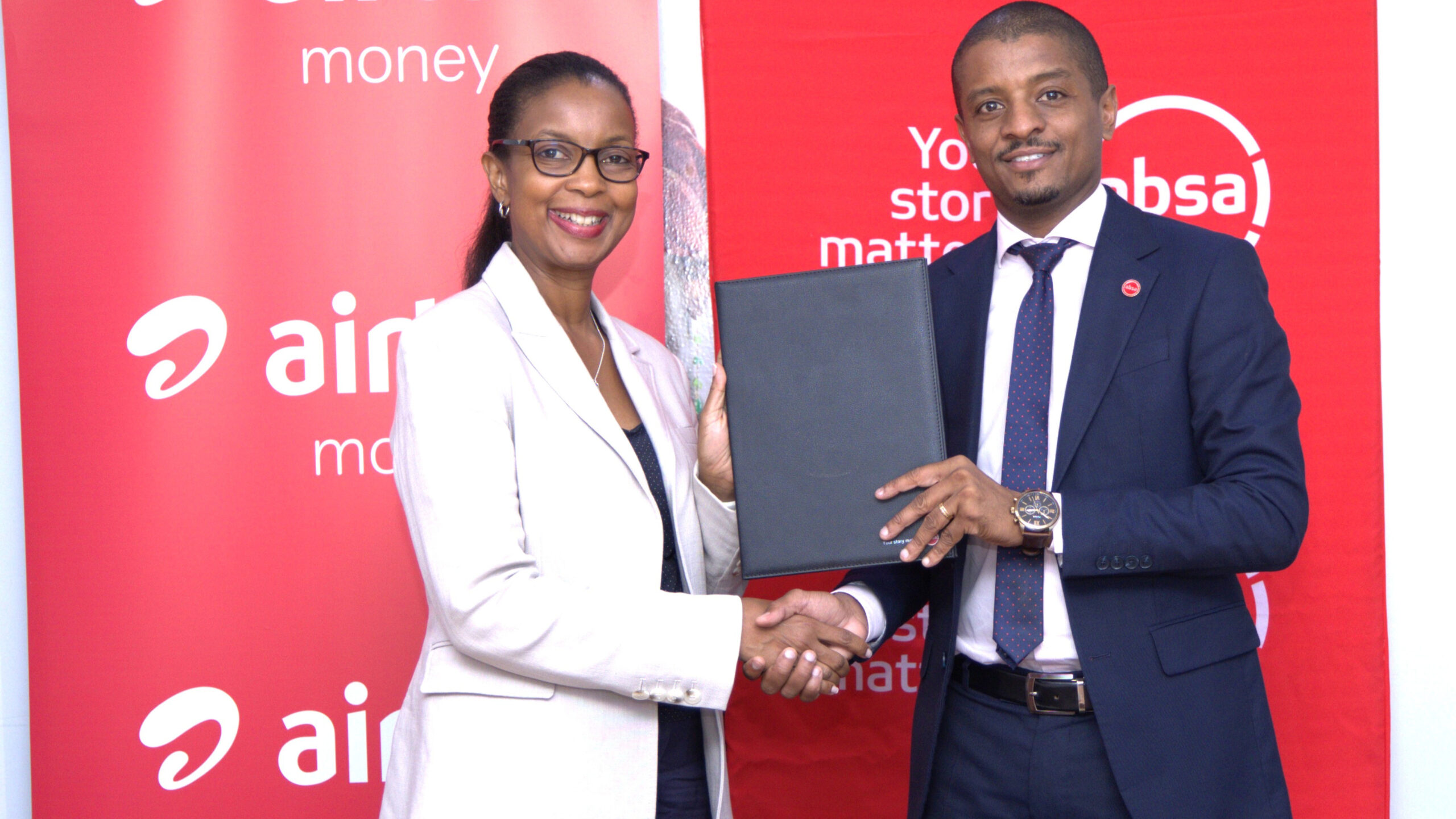
Airtel Money has integrated with Absa Bank Kenya in a move aimed at streamlining how small and medium-sized businesses move money between mobile wallets and bank accounts.
The partnership allows merchants to receive payments from Airtel Money users directly into Absa Bank Kenya accounts and paybill numbers – Kenya’s widely used mobile money billing codes that function like merchant payment IDs. By cutting out manual steps that often slow settlement, the two companies are targeting one of the most persistent pain points in SME cash management.
Many Kenyan SMEs operate across a mix of mobile money platforms, traditional bank accounts and agent networks. That patchwork often leads to delayed settlements, reconciliation headaches and slower access to working capital. Airtel Money’s link with Absa is designed to reduce those frictions through direct wallet-to-bank settlement.
The integration also strengthens Airtel Money’s push into merchant payments, a segment that has long been dominated by Safaricom’s M-PESA. While M-PESA remains the anchor of Kenya’s digital payments market, Airtel is gradually carving out share, particularly among price-sensitive users and merchants.
According to Kenya’s Communications Authority, Airtel’s mobile money share has risen to about 11%, reflecting steady gains as more people look for alternatives fin fees, user experience or service combinations. Positioning Airtel Money as a more practical tool for day-to-day business transactions is a key part of that strategy, and direct connectivity to a major bank like Absa is central to the pitch.
Absa Bank Kenya is framing the move as an SME growth play. “This is about unlocking the full potential of digital payments for SMEs across Kenya and ensuring they have the tools to grow with confidence in a rapidly evolving economy,” said Renato D’Souza, Absa Bank Kenya’s Business Banking Director, in a statement.
The Airtel–Absa tie-up comes as more payments in Kenya originate on telecom-led platforms, forcing banks to plug deeper into mobile money ecosystems if they want to stay close to transaction flows and keep lending, savings and working capital products relevant.
Mobile money agents still handle significant value across the economy. Central Bank of Kenya data shows that transactions routed through agents reached KES 633.35 billion (about $4.9 billion) in February 2026. At the same time, overall volumes at agent outlets are declining as users increasingly prefer direct wallet and bank transfers – the very flows banks want to capture through integrations like this one.
Safaricom’s M-PESA remains the benchmark. The platform processed 21.9 billion transactions worth KES 20.2 trillion (roughly $156 billion) in the six months to September 2025, according to Safaricom disclosures. That scale has underpinned deep partnerships between Safaricom and major lenders.
NCBA Bank runs M-Shwari, a savings and loan product embedded in M-PESA.
KCB Bank offers KCB M-PESA, which delivers short-term credit through the same mobile money platform.
These products show how banks and telecoms are combining payments rails with credit and savings, tightening the link between everyday transactions and financial services. Equity Bank has taken a different route with Equitel, its mobile virtual network that connects customer bank accounts directly to mobile money services for payments and transfers.
In this context, the Airtel–Absa integration gives both sides a clearer position in a market where embedded financial services are becoming the norm. For Airtel, it enhances the utility of its wallet for merchants who need faster settlement and simpler reconciliation into their bank accounts. For Absa, it is another channel to remain plugged into Kenya’s growing volume of digital payments and to maintain visibility over business transaction data that can support lending and other products.
While Safaricom’s entrenched partnerships such as M-Shwari and KCB M-PESA combine payments with savings and credit, Airtel’s latest move focuses on tightening the rails between wallets and bank accounts. How far this integration evolves – and whether it leads to deeper offerings blending payments with lending or savings – will shape Airtel Money’s competitiveness in merchant payments.
Related Reading
More contextual TechBooky stories selected from tags, categories and article context.
Paul Balo is the founder of TechBooky and a highly skilled wireless communications professional with a strong background in cloud computing, offering extensive experience in designing, implementing, and managing wireless communication systems.
We use cookies to ensure that we give you the best experience on our website. If you continue to use this site we will assume that you are happy with it.