Amazon is rolling out a new, shopping-focused version of Alexa in the US, designed specifically to help people discover, compare and buy products on its platform. The company says the feature, called Alexa for Shopping, will be available to all US customers over the coming week, with no Prime membership or Echo hardware required.
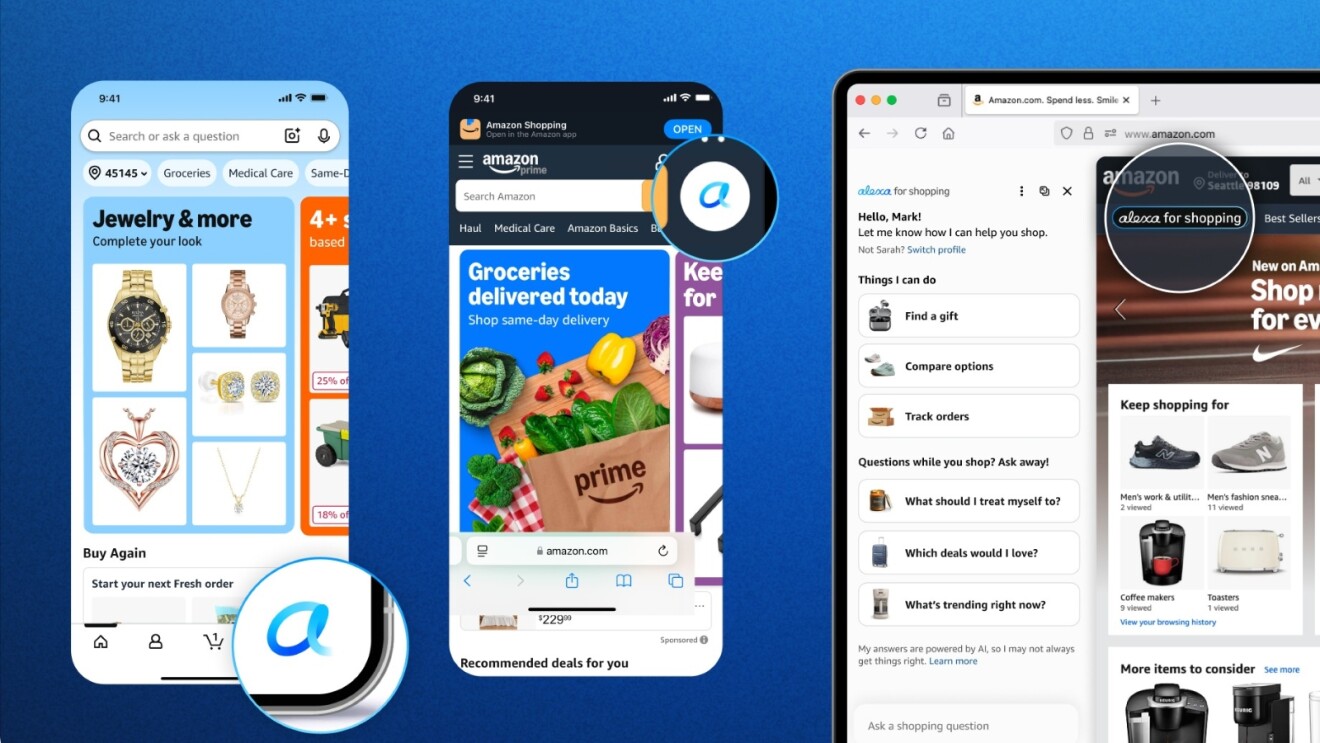
Users will be able to access Alexa for Shopping for free through the Amazon mobile app by tapping the Alexa icon in the bottom menu, or via the Alexa icon at the top of the screen on Amazon’s website. On desktop and mobile web, simply typing a natural-language question into the Amazon search bar will also route queries to the assistant when appropriate.
Alexa for Shopping is positioned as an “agentic AI assistant” that blends two of Amazon’s existing systems: Alexa+, the company’s generative AI upgrade for its voice assistant, and Rufus, the AI shopping assistant Amazon introduced in 2024. By combining the “personalized knowledge” of Alexa+ with Rufus’ product expertise, Amazon is aiming to create a more proactive, context-aware shopping helper.
The assistant uses data from past interactions with Alexa on Echo and other devices, along with a customer’s shopping and browsing history on Amazon. With that information, Alexa for Shopping can make tailored product suggestions and support more complex queries than a standard search box.
Because the system depends on your profile and activity, you must be logged in to your Amazon account for Alexa for Shopping to work.
What Alexa for Shopping can actually do
Alexa for Shopping is built to handle a range of shopping-related tasks that go beyond simple product lookups. Based on Amazon’s description, it can:
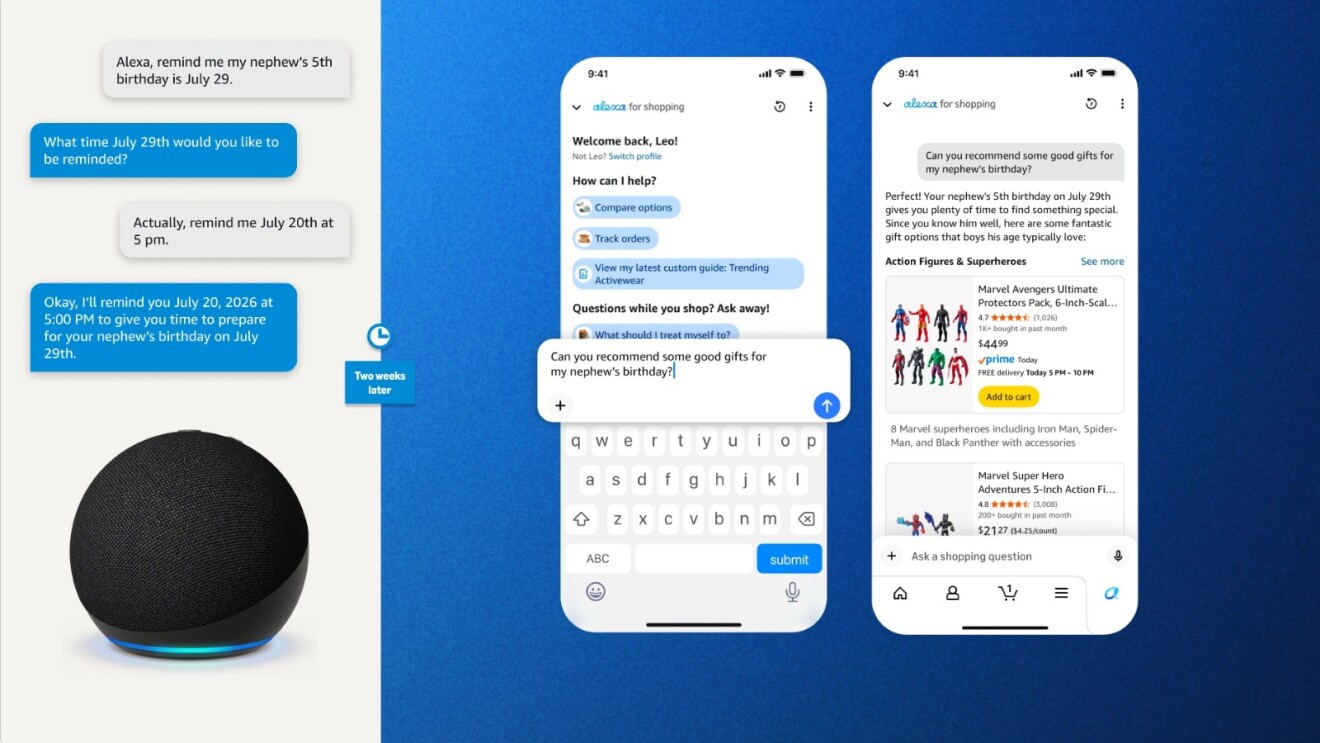
Remember context over time: If you use Alexa to brainstorm ideas for a school science project, it can surface and recommend supplies days later, even if there’s a gap between the initial conversation and the shopping request.
Offer support tied to your purchases: The assistant can answer some non-purchase questions based on what you’ve already bought. For example, it can give troubleshooting tips for malfunctioning appliances by referencing items previously purchased for them, like pods for a particular dishwasher model.
Guide major buying decisions: You can ask which laptop matches certain specifications, then set a price alert for that recommendation so you’re notified when it hits your target price.
Help with gifting: If you tell Alexa a child in your life is turning five, it can suggest age-appropriate gifts and surface options that can arrive before the birthday.
Beyond conversational support, Alexa for Shopping is also meant to streamline browsing and checkout:
Item comparison: It can compare multiple products you select from search results, summarising how they differ.
Price history: For a given item, the assistant can show its price history over the past year, giving shoppers more insight into how pricing has changed over time.
Routine purchases: Users can schedule recurring orders and have Alexa automatically add items to their cart based on previous purchases.
Custom shopping guides: The assistant can create tailored guides that line up features, prices and reviews across several products, effectively generating side-by-side comparisons on demand.
All of this is accessible through voice or typed questions, depending on how you interact with Amazon’s app or website.
Alongside Alexa for Shopping, Amazon is also extending its core shopping experience to Echo Show devices with larger displays. Those smart screens will now support the full Amazon browsing and search interface, letting users look for items and shop directly from the device.
Related Reading
More contextual TechBooky stories selected from tags, categories and article context.
Paul Balo is the founder of TechBooky and a highly skilled wireless communications professional with a strong background in cloud computing, offering extensive experience in designing, implementing, and managing wireless communication systems.
We use cookies to ensure that we give you the best experience on our website. If you continue to use this site we will assume that you are happy with it.