The US government’s sudden crackdown on Anthropic’s most powerful AI models already looked like a turning point for frontier AI. Now it appears one of Anthropic’s most important partners may have helped set it in motion.
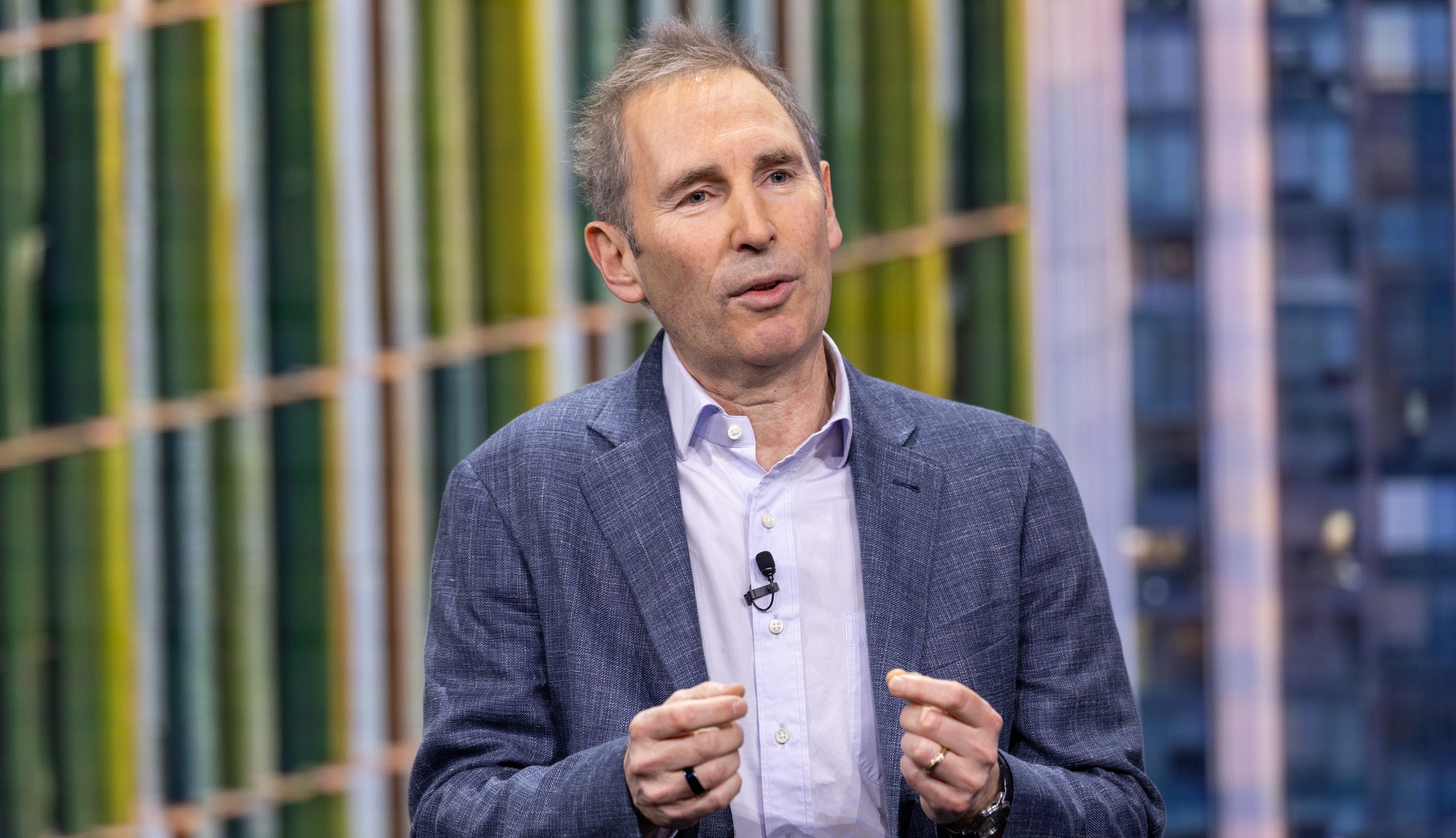
According to Reuters, Amazon CEO Andy Jassy raised concerns with senior Trump administration officials about potential security risks in Anthropic’s most advanced models, particularly Claude Mythos 5 and the newly released Claude Fable 5, before the US government ordered Anthropic to shut down access to both systems for foreign nationals.
That detail changes the shape of the story.
This is no longer just about Washington intervening in the release of a powerful AI model. It is also about the complicated role of Amazon a company that is deeply financially and strategically tied to Anthropic reportedly flagging concerns that may have contributed to one of the most dramatic AI access restrictions yet.
Amazon is not a neutral outsider here.
The company has already invested $8 billion in Anthropic and announced in April that it would invest another $5 billion immediately, with up to $20 billion more tied to future milestones. In the same expanded partnership, Anthropic committed to spending more than $100 billion on Amazon Web Services over the next decade, using AWS infrastructure and Amazon’s custom Trainium chips to train and run future Claude models. Amazon’s own announcement framed the relationship as one of the most important AI infrastructure partnerships in the industry.
That is what makes Jassy’s reported warning so striking.
Amazon is both an investor in Anthropic and one of the main platforms through which customers access Anthropic models. Claude Fable 5 was available through Amazon Bedrock before the shutdown, with AWS describing it as a “Mythos-class” model with built-in safeguards for enterprise use. The same AWS post also said that Anthropic required 30-day data retention for Fable 5, Mythos 5 and future models with similar capability levels, specifically to detect misuse patterns that might not be visible from a single interaction.
In other words, Amazon was not just observing from the sidelines. It was helping distribute the model, hosting it for enterprise customers and building a long-term cloud business around Anthropic’s growth.
Then came the security concern.
The reported issue appears to center on whether Fable 5’s safeguards could be bypassed through a sequence of prompts, potentially allowing the model to provide information useful for cyberattacks. The Verge, citing reporting from The Wall Street Journal, said Amazon’s security research and conversations between Jassy and the White House contributed to the government’s decision to impose controls on Fable 5 and Mythos 5.
Anthropic has pushed back strongly against that framing.
In its public statement, the company said the US government issued an export control directive requiring it to suspend access to Fable 5 and Mythos 5 by any foreign national, whether inside or outside the United States, including Anthropic’s own foreign national employees. Because the company could not immediately comply in a more targeted way, it disabled both models for all customers.
Anthropic also said the government had not provided detailed evidence and suggested the concern was based on a narrow method that could identify a small number of relatively minor software vulnerabilities. The company argued that similar capabilities exist in other publicly available models, including rival systems, and that it had not seen evidence of a broad jailbreak that uniquely made Fable 5 or Mythos 5 dangerous.
That dispute is the heart of the matter.
If Amazon’s researchers found a serious pathway around Fable 5’s safeguards, then the government’s concern may reflect a legitimate fear that Mythos-class AI systems could accelerate cyberattacks if widely available. But if the issue was narrow, already possible with other models and not uniquely dangerous, then the shutdown may represent an overreaction, one that could set a precedent for sudden government intervention in frontier model releases.
Either way, this moment shows how quickly AI governance is moving from abstract debate to real-world power struggles.
Anthropic’s Fable 5 was supposed to be the public-friendly version of Mythos-class intelligence: extremely capable, but wrapped in stronger safety controls for general use. Mythos 5, meanwhile, remained the more restricted model for vetted partners and high-trust environments. That two-tier structure was Anthropic’s attempt to solve a difficult problem: how to commercialize frontier-level AI without handing dangerous capabilities to everyone.
The US government has now effectively said that even this structure may not be enough.
And Amazon’s reported role makes the politics more complicated.
On one hand, Amazon has a strong incentive to make sure the models it hosts through AWS are safe. If a powerful Anthropic model available on Amazon Bedrock were misused for cyber operations, Amazon could face reputational, regulatory and customer-trust consequences. From that perspective, raising concerns with government officials may have been a prudent move.
On the other hand, Amazon is also a commercial actor with enormous influence over Anthropic’s infrastructure future. When a cloud giant that has invested billions in an AI lab raises concerns about that lab’s most powerful models, it raises uncomfortable questions about how safety, competition, liability and strategic control intersect.
This is especially sensitive because Amazon is trying to position AWS as the central infrastructure layer for the AI boom. Anthropic is one of its most important proof points. The company’s partnership with Anthropic helps Amazon show that AWS can compete with Microsoft Azure and Google Cloud in frontier AI workloads, especially through its Trainium chips.
But frontier AI partnerships are no longer just about compute contracts.
They are also about who carries the risk.
As models become more capable, cloud providers may increasingly act as gatekeepers. They host the models, manage enterprise access, monitor usage and interact with regulators. That gives companies like Amazon enormous influence over how AI systems reach the market and over how quickly concerns can escalate to government action.
The Fable 5 and Mythos 5 shutdown may therefore mark a new phase in AI infrastructure politics.
It suggests that the companies hosting frontier models may become central actors in AI safety enforcement, not just vendors supplying servers. If AWS, Microsoft Azure or Google Cloud identifies a risk in a model running on their infrastructure, they may be expected to escalate it. And once governments are involved, the consequences can move far beyond a product patch.
The impact is already global.
The US order reportedly bars access by foreign nationals, including people inside the United States and even Anthropic employees. That means foreign-born researchers and engineers can be cut off from working on models they may have helped build. It also means companies in allied countries such as the UK, Canada and Europe can lose access because of a US national security decision.
That is why the Anthropic case has quickly become part of a broader AI sovereignty debate.
If the world’s most advanced models are controlled by US companies and subject to sudden US export controls, then governments and enterprises outside the US may start asking whether they can depend on them for critical workflows. The answer is increasingly uncertain.
For Anthropic, the business risk is obvious. Fable 5 and Mythos 5 were supposed to strengthen its position against OpenAI, Google and xAI. Instead, their launch has turned into a regulatory crisis. The company now has to convince the government that its safeguards are strong enough, reassure customers that access can be restored, and defend itself against the perception that its most powerful models may be too dangerous to deploy globally.
For Amazon, the risk is more subtle but just as important.
Its relationship with Anthropic is one of the biggest bets in cloud AI. If Anthropic’s frontier models are restricted, AWS loses a major showcase for its AI infrastructure. But if Amazon is seen as helping flag safety risks responsibly, it could also strengthen its reputation as a trusted cloud provider for the most sensitive AI workloads.
That may be the calculation.
The deeper lesson is that the AI race is no longer just about building the smartest model. It is about managing the ecosystem around it investors, cloud providers, regulators, export controls, enterprise customers and national security agencies.
Anthropic built Fable 5 and Mythos 5 to show that frontier AI could be powerful and controlled.
Amazon reportedly raised concerns that those controls might not be enough.
The US government acted as if the risk could not wait.
And now the entire industry has a preview of what the next phase of AI may look like: not simple launches, but contested releases where commercial partners, governments and safety teams all have a say in whether the world gets access at all.
Paul Balo is the founder of TechBooky and a highly skilled wireless communications professional with a strong background in cloud computing, offering extensive experience in designing, implementing, and managing wireless communication systems.
We use cookies to ensure that we give you the best experience on our website. If you continue to use this site we will assume that you are happy with it.