The race to dominate space-based internet has just entered a thrilling new chapter.
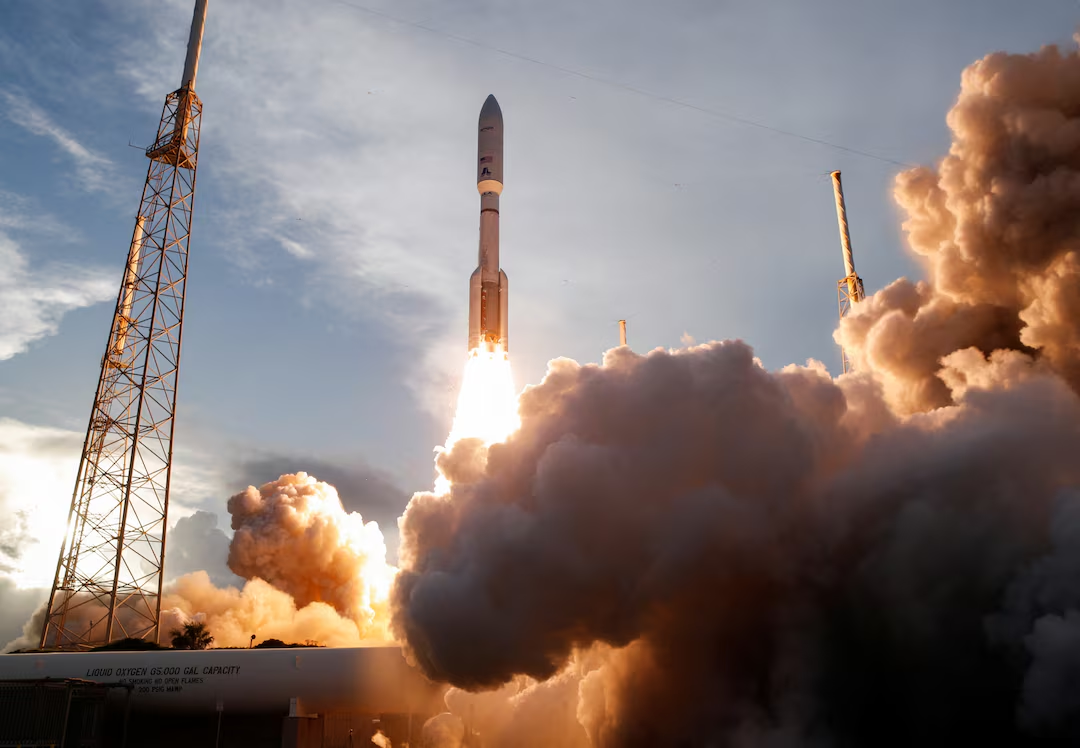
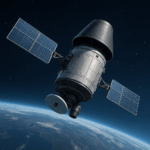
Amazon’s Project Kuiper officially kicked into high gear yesterday (April 28, 2025), as United Launch Alliance’s (ULA) Atlas V rocket blasted off from Cape Canaveral Space Force Station at exactly 7:01 p.m. EDT (2301 GMT), carrying 27 new Kuiper broadband satellites into low Earth orbit (LEO).
The highly anticipated launch marks the start of a massive deployment effort. Amazon plans over 80 launches to build out the Project Kuiper constellation, which will eventually consist of more than 3,200 satellites orbiting the planet. While that’s a huge number, Amazon still trails SpaceX’s Starlink, which already boasts over 7,200 operational satellites and counting.
And Starlink isn’t slowing down. In a remarkable show of force, SpaceX completed a Starlink launch less than three hours before Amazon’s liftoff — and already had another lined up just four hours later.
If all systems function as planned, the 27 Kuiper satellites will initially deploy at an altitude of about 280 miles (450 kilometres) above Earth before climbing to their operational orbits at 392 miles (630 kilometres).
“While the satellites complete the orbit-raising process, we will look ahead to our ultimate mission objective: providing end-to-end network connectivity,” Amazon explained in a prelaunch blog post.
The process involves beaming data from the internet to Amazon’s ground stations, then transmitting it to Kuiper satellites, down to customer antennas — and back again. Project Kuiper is expected to begin limited service later this year, opening a new front in the global broadband competition.
This launch represents Project Kuiper’s second mission to space, following the successful launch of two prototype satellites back in October 2023. However, the 27 operational satellites that just went up are a major evolution from those early models.
According to Amazon, every system on board — including the phased array antennas, processors, solar arrays, propulsion, and optical inter-satellite links — has been significantly upgraded based on lessons from the prototypes.
One standout innovation: Amazon applied a special dielectric mirror coating to the satellites to reduce their visibility from Earth — an important gesture toward minimizing disruption for astronomers, who have expressed concerns about large satellite constellations cluttering the night sky.
While ULA’s Atlas V rocket delivered the satellites this time, Amazon isn’t putting all its eggs in one basket. The company has secured additional launch contracts with Blue Origin (founded by Jeff Bezos), SpaceX, and European launcher Arianespace.
Most future Kuiper missions will either use the Atlas V, ULA’s new Vulcan Centaur, or alternative launch providers depending on mission profiles and timelines.
This particular mission was originally slated for April 9, but persistent bad weather and range conflicts at the Eastern Range (the U.S. Space Force’s Florida testing and launch corridor) delayed proceedings until the end of the month.
Amazon’s entry into the satellite internet game couldn’t come at a more pivotal moment. With Starlink already serving users across 65+ countries, and with competitors like OneWeb also racing to offer global coverage, the stakes are incredibly high.
The promise of high-speed internet from anywhere — rural Africa, dense cities, or open oceans — could reshape connectivity worldwide. However, the competition isn’t just about coverage. It’s about speed, reliability, pricing, and who can scale infrastructure fastest.
If Amazon’s vision for Project Kuiper succeeds, it could offer a robust alternative to Starlink — potentially using Amazon’s massive e-commerce and AWS cloud empire to bundle services in innovative ways.
For now, though, the real work is just beginning: testing, scaling, and ensuring that tens of millions of potential users across the globe will eventually see Kuiper satellites as a viable new option for internet access.
Paul Balo is the founder of TechBooky and a highly skilled wireless communications professional with a strong background in cloud computing, offering extensive experience in designing, implementing, and managing wireless communication systems.
We use cookies to ensure that we give you the best experience on our website. If you continue to use this site we will assume that you are happy with it.