• AI Search
  • Cryptocurrency
  • Earnings
  • Enterprise
  • About TechBooky
  • Submit Article
  • Advertise Here
  • Contact Us
TechBooky
  • African
  • AI
  • Metaverse
  • Gadgets
Generic selectors
Exact matches only
Search in title
Search in content
Post Type Selectors
Search in posts
Search in pages
  • African
  • AI
  • Metaverse
  • Gadgets
Generic selectors
Exact matches only
Search in title
Search in content
Post Type Selectors
Search in posts
Search in pages
TechBooky
Generic selectors
Exact matches only
Search in title
Search in content
Post Type Selectors
Search in posts
Search in pages
Home Artificial Intelligence

Anthropic Blocks OpenClaw on Claude as Agent Usage Strains Capacity

Paul Balo by Paul Balo
April 4, 2026
in Artificial Intelligence, Service news
Share on FacebookShare on Twitter

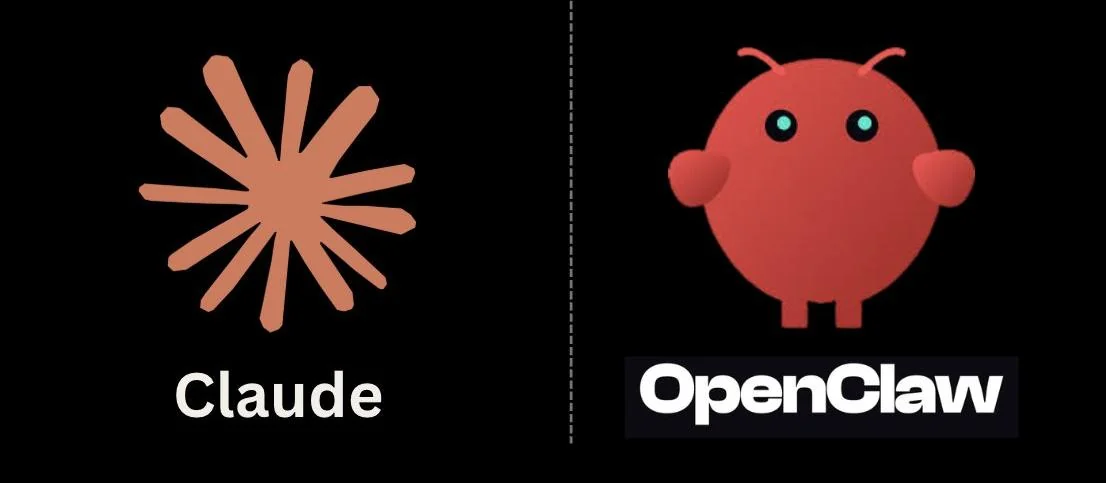
Anthropic has effectively pulled the plug on one of the fastest-growing use cases for its AI third-party agent tools and in doing so, it may have revealed something deeper about where the AI industry is heading.

Starting April 2026, users can no longer run tools like OpenClaw under standard Claude subscriptions. Instead, they’ll have to switch to a pay-as-you-go model or use API access, adding an extra layer of cost and friction to what had quickly become one of the most compelling AI workflows. 

On paper, this looks like a pricing change.

In reality, it’s a platform shift.

OpenClaw had exploded in popularity by turning Claude into something closer to an autonomous assistant handling emails, scheduling, even real-world tasks across apps. But that level of usage came with a problem: it didn’t fit Anthropic’s business model. These agent-style workflows consumed far more compute than typical chatbot interactions, putting what the company described as an “outsized strain” on its systems. 

So Anthropic did what platform companies tend to do when third-party innovation gets too expensive or too powerful.

We’ve been working hard to meet the increase in demand for Claude, and our subscriptions weren't built for the usage patterns of these third-party tools. Capacity is a resource we manage thoughtfully and we are prioritizing our customers using our products and API.

— Boris Cherny (@bcherny) April 3, 2026

It closed the door.

This isn’t just about OpenClaw.

It’s about control.

For months, AI labs have encouraged developers to build on top of their models, creating an ecosystem of tools, agents, and workflows. But as those tools start to unlock real utility and real demand they also start to expose the limits of current pricing and infrastructure.

Flat-rate subscriptions were never designed for autonomous agents running continuously in the background.

And now, we’re seeing that mismatch play out in real time.

There’s also a strategic angle that’s harder to ignore.

OpenClaw didn’t just make Claude more useful it made it more replaceable.

When users interact with an AI agent layer instead of the underlying model, the model itself becomes interchangeable. Swap Claude for another provider, and the experience doesn’t change much. That’s a dangerous position for any AI company trying to build a long-term platform.

By restricting third-party access, Anthropic is pulling users back into its own ecosystem toward native tools and products it can fully control and monetize.

But the move comes with trade-offs.

Developers are frustrated. Some users signed up specifically to use Claude through tools like OpenClaw, and now face higher costs or broken workflows. Even OpenClaw’s creator publicly pushed back, saying efforts to reverse the decision only managed to delay it briefly. 

And the broader message to the ecosystem is clear: build on top of AI platforms, but don’t expect stability.

What’s happening here mirrors an older playbook.

Apple did it with the App Store. Twitter did it with third-party clients. Now AI companies are doing it with agents.

Open ecosystems tend to close once the stakes get high.

The bigger question is what this means for the future of AI interfaces.

Tools like OpenClaw hinted at a world where users don’t interact directly with models at all. Instead, they rely on autonomous agents that sit on top of multiple systems, abstracting away the underlying providers entirely.

If that model takes off, the real value shifts away from the AI companies and toward the agent layer.

And that’s exactly what companies like Anthropic are trying to prevent.

So this isn’t just a policy change.

It’s a signal.

The AI stack is starting to solidify, and the companies at the bottom, the ones providing the models are drawing clear boundaries around how their technology can be used.

Because in the race to define the future of AI, controlling the platform may matter just as much as building the intelligence.

Related Posts:

  • openclaw
    Tencent and Zhipu Shares Rise After OpenClaw AI Agent Launch
  • 1392432_092010_updates
    OpenClaw Creator Peter Steinberger Joins OpenAI
  • anthropic
    Anthropic’s Claude Opus 4.6 Debuts 1M-Token Context
  • claude marketplace
    Anthropic unveils Claude Marketplace to centralize…
  • OpenClaw moltbot AI assistant
    OpenClaw’s Viral Rise Exposes Security Risks in Agentic AI
  • kiloclaw
    Kilo Launches KiloClaw for Production-Ready OpenClaw Agents
  • openclaw flaws
    OpenClaw Security Gaps Raise Enterprise AI Concerns
  • baidu-joins-chinas-openclaw-frenzy-with-new-ai-agents
    Baidu, Tencent Boost AI Push Amid OpenClaw Boom

Discover more from TechBooky

Subscribe to get the latest posts sent to your email.

Tags: AIai agentclaudeopenclawsubscription
Paul Balo

Paul Balo

Paul Balo is the founder of TechBooky and a highly skilled wireless communications professional with a strong background in cloud computing, offering extensive experience in designing, implementing, and managing wireless communication systems.

BROWSE BY CATEGORIES

Receive top tech news directly in your inbox

subscription from
Loading

Freshly Squeezed

  • OpenAI Prepares Cybersecurity AI as Anthropic’s Mythos Sparks Global Alarm April 9, 2026
  • OpenAI Hits Pause On ‘Stargate UK’ AI Data Center Plan Over Energy Costs And Regulation April 9, 2026
  • Spotify Adds Universal Video Toggles So You Can Go Audio-Only Again April 9, 2026
  • Greece Is Banning Social Media for Kids Under 15 — And Europe Could Be Next April 9, 2026
  • These Countries are Also Looking to Ban Kids on Social Media April 9, 2026
  • Amazon Will End Store Support for Pre-2013 Kindles and Fire Tablets in 2026 April 9, 2026
  • China’s Z.ai Open-sources GLM-5.1, a Long‑running AI Agent Built for 8‑hour Tasks April 8, 2026
  • Insta360’s Snap turns your phone’s rear camera into a selfie rig April 8, 2026
  • Sam Altman Says ChatGPT Needs Another Year To Do Something As Simple As Timing a Run April 8, 2026
  • Iran-Linked Hackers Are Actively Disrupting US Infrastructure — And It’s Getting Worse April 8, 2026
  • Madica Backs 3 Startups, Launches Pre-Seed Guide April 8, 2026
  • Anthropic Unveils Glasswing, a New AI System for Large-Scale Vulnerability Discovery April 8, 2026

Browse Archives

April 2026
MTWTFSS
 12345
6789101112
13141516171819
20212223242526
27282930 
« Mar    

Quick Links

  • About TechBooky
  • Advertise Here
  • Contact us
  • Submit Article
  • Privacy Policy
Generic selectors
Exact matches only
Search in title
Search in content
Post Type Selectors
Search in posts
Search in pages
  • African
  • Artificial Intelligence
  • Gadgets
  • Metaverse
  • Tips
  • AI Search
  • About TechBooky
  • Advertise Here
  • Submit Article
  • Contact us

© 2025 Designed By TechBooky Elite

Discover more from TechBooky

Subscribe now to keep reading and get access to the full archive.

Continue reading

We use cookies to ensure that we give you the best experience on our website. If you continue to use this site we will assume that you are happy with it.