The deal is significant not just because of the scale involved but because of who’s involved.
For months, Elon Musk had publicly criticized Anthropic, at times calling the company “dangerous” and accusing it of ideological bias. Anthropic, meanwhile, has positioned itself as one of the AI industry’s most safety-focused labs, often taking approaches that appeared philosophically opposite to Musk’s more aggressive vision for AI development.
Now, the two sides are partnering anyway.
And that says a lot about where the AI industry is heading.
Under the agreement, Anthropic will gain access to the entire compute capacity of Colossus 1, the giant AI supercluster originally built by xAI in Memphis, Tennessee. The facility reportedly contains more than 220,000 Nvidia GPUs and over 300 megawatts of compute capacity, making it one of the largest AI infrastructure deployments in the world.
That scale matters because compute has become the defining constraint of the AI race.
The biggest AI labs are no longer competing primarily on talent or algorithms alone. They are competing on infrastructure access to chips, electricity, data centres, and the ability to train increasingly massive models.
And Anthropic has been feeling that pressure.
The company’s Claude ecosystem, particularly Claude Code and its enterprise tools, has reportedly seen explosive growth in recent months, with usage rising far faster than internal projections. That demand has stretched infrastructure limits to the point where Anthropic had to impose strict usage caps and rate limits on some premium services.
This deal changes that almost immediately.
Anthropic says the additional compute will allow it to significantly increase rate limits and improve reliability across Claude products, particularly for developers and enterprise customers using advanced reasoning and coding workloads.
But the broader implications are even bigger.
Because this isn’t just a compute agreement.
It’s a sign that the AI industry is entering a new phase where former rivals are increasingly forced to cooperate due to the sheer scale and cost of infrastructure required to compete.
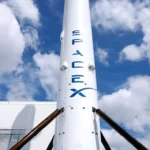
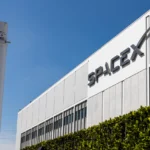
That’s especially true now that xAI itself has effectively merged into the broader SpaceX ecosystem. Following SpaceX’s acquisition of xAI earlier this year, the combined entity increasingly referred to as “SpaceXAI” has become one of the largest privately controlled AI infrastructure groups in the world.
And Musk appears determined to monetize that infrastructure aggressively.
According to reports, providing compute access to external AI companies serves two strategic purposes. First, it generates revenue from excess capacity. Second, it strengthens SpaceXAI’s position as an AI infrastructure provider, something closer to an “AI utility company” than just another model developer.
That’s a major strategic shift.
For years, the dominant AI model was vertically integrated: companies built models primarily for themselves and their own ecosystems. Now, infrastructure itself is becoming a standalone business.
And Musk wants in.
What makes the Anthropic partnership especially fascinating is how much it blurs competitive lines.
Anthropic competes directly with OpenAI. Musk is currently locked in a deepening rivalry with Sam Altman and has repeatedly attacked OpenAI publicly. By helping Anthropic scale faster, Musk indirectly strengthens one of OpenAI’s biggest competitors.
That may not be accidental.
Some analysts see the partnership as part infrastructure play, part strategic counterweight against OpenAI’s dominance.
At the same time, Anthropic gains something equally valuable: independence.
Rather than relying too heavily on one cloud provider like Google or Amazon, the company now has access to an entirely different compute ecosystem one that is vertically integrated across chips, energy, networking, and potentially even space infrastructure in the future.
Yes, space.
Both sides have reportedly discussed future collaboration on orbital AI data centers, a concept that sounds futuristic but is increasingly being explored as energy and cooling constraints become major bottlenecks for terrestrial AI infrastructure.
That may still be years away.
But it highlights just how extreme the compute race is becoming.
The AI industry is rapidly evolving into something that looks less like software and more like heavy industry requiring enormous physical infrastructure, power generation, and supply chain control.
And in that world, alliances become less ideological and more practical.
For all their philosophical differences, Anthropic and Musk now share the same problem:
They both need more compute than the current system can easily provide.
This partnership is their answer.
And it may end up being remembered as one of the clearest signs that the AI race is no longer just about models.
It’s about who controls the machines powerful enough to train them.
Related Reading
More contextual TechBooky stories selected from tags, categories and article context.
Paul Balo is the founder of TechBooky and a highly skilled wireless communications professional with a strong background in cloud computing, offering extensive experience in designing, implementing, and managing wireless communication systems.
We use cookies to ensure that we give you the best experience on our website. If you continue to use this site we will assume that you are happy with it.