Both Apple and Google are incorporating generative artificial intelligence capabilities centred around music into their main consumer applications. This is significant because generative AI music elements were added to Apple and Google’s primary consumer platforms in February 2026, signalling a move toward widely used AI-driven creative tools.
Using Google DeepMind’s most recent Lyria 3 model, Google’s Gemini AI assistant can now produce 30-second music tracks from user-uploaded text, images, or videos, the firm announced in a blog post on Wednesday. Users over 18 will be able to access the tool in several languages, and it can produce original lyrics or just instrumental audio. According to the business, it is being implemented on Gemini’s desktop version and will show up in the mobile app in the next days.
Google claimed that when users share links to the tunes with others, its well-liked image-creation model, Nano Banana, will also produce unique cover art at the same time, providing a visual component.
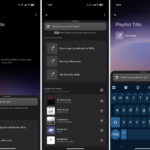
Separately, Apple revealed last week that users will soon be able to create playlists in Apple Music using AI. Using Apple Intelligence, the Playlist Playground feature enables users to create playlists with 25 tracks, cover art, and descriptions using text prompts. It is part of iOS 26.4, which went live in beta on Monday and will be made more accessible this spring. The new function from Apple Music competes with a comparable service provided by Spotify.
Analysts from Bloomberg Intelligence wrote in a note on Wednesday, “We don’t expect it to be a deal-breaker for Spotify.” “However, we believe that these actions may compel Spotify to introduce an AI mixing feature in the near future.”
Apple, which has lagged behind in artificial intelligence, is attempting to include more AI capabilities in its devices and apps, including Creator Studio, a software bundle that was just released.
For its part, Google has been trying to convince investors that the money it spends on AI-powered products can increase sales. This indicates that the product is not entirely free for releases such as this one.
The free version allows users to create 10 tracks per day, while paid customers receive 20 to 100 tracks per day, depending on their subscription tier, much like Gemini restricts the number of images that may be created each day.
The business stated that users would be able to use the tracks they have created and that it has filters in place to ensure that outputs do not infringe upon existing content or break privacy or intellectual property laws.
The music industry, which sees some of the technology as a danger to its business and intellectual property, has responded to generative AI tools with caution and occasionally hostility.
In the blog article, Google claimed to have controls in place that prevent the AI from stealing content from particular artists. Gemini will only utilise the request as “broad creative inspiration and create a track that shares a similar style or mood” if users name actual musicians.
A corporate representative went on to say, “Our training for Lyria 3 is designed to use music that YouTube and Google have the right to use under our terms of service, partner agreements, and applicable law.”
For Google Gemini, which will be using Lyria 3 to create music, the Lyria 3 model, created by Google DeepMind, was incorporated by Google into the Gemini app.
Users can upload images and videos or provide text suggestions to create 30-second music pieces. Both instrumental music and tracks with original lyrics can be produced by the program. Each track’s unique cover art is automatically created by Google’s Nano Banana model.
To confirm that it is artificial intelligence (AI), everything created in audio is watermarked with SynthID. Additionally, Google put controls in place to stop the AI from outright stealing work from certain artists.
The playlist playground in Apple Music also features the iOS 26.4 update, which is presently in public beta and includes Apple’s new music capabilities, which make use of Apple Intelligence.
Users can create personalised 25-song playlists using the “Playlist Playground” function by using natural language cues like “upbeat workout mix”.
Users can choose corresponding AI-generated cover art and further modify their created lists.
The public is anticipated to be able to access the function around March or April of 2026.
These changes come after a longer-term partnership between the two businesses, in which Apple is powering some Siri and Apple Intelligence features with Google Gemini.
We use cookies to ensure that we give you the best experience on our website. If you continue to use this site we will assume that you are happy with it.