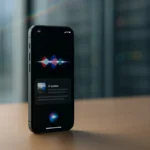
Apple is reportedly planning a new privacy-focused feature for the next major Siri overhaul, leaning on its long-running stance on user data as it tries to catch up in the AI race.
According to reporting from Bloomberg’s Mark Gurman, the more chatbot-like Siri expected with iOS 27 will introduce an option to automatically delete past conversations. Users will be able to choose how long Siri keeps their chats: 30 days, one year, or indefinitely.
This is a notable shift in how mainstream AI assistants handle data. Other leading AI chatbots typically keep extensive histories and rely on them to personalize responses or are limited to separate “incognito” or private sessions that don’t fully replace default tracking. Apple’s reported plan would put time limits at the centre of the experience rather than as an edge case.
The move fits with Apple’s broader strategy of presenting privacy as a core feature, not an add-on. As more tech companies rush to ship powerful AI assistants, Apple is still seen as trailing the competition on generative AI capabilities. The company appears to be betting that some users will tolerate fewer conveniences if they feel their data is more tightly controlled.
Gurman reports that the revamped Siri will sit within Apple’s broader “Apple Intelligence” push, even as Apple swaps out many of the underlying components for Google’s Gemini AI technology. While that reliance on a rival’s model could be perceived as a weakness, Apple is said to be trying to turn it into a selling point by wrapping Gemini-powered features in stricter privacy and data retention rules.
Most leading AI chatbots today depend heavily on long-term histories and memory systems. Those systems track what users ask, what they prefer, and how they respond over time, then use that data to fine-tune answers and customize future interactions. Gurman notes that Apple, by contrast, plans to place “tighter limits” on how memory works in Siri, including restrictions on what information can persist and how long it can be retained.
If those controls ship as described, Siri would still have some notion of user context, but within guardrails chosen by the user: a month, a year, or no effective limit. The key distinction is that these controls are built into the default product design rather than offered only as a separate private mode.
The strategy underscores a growing tension in consumer AI products: the trade-off between smarter, more personalised assistants and stricter limits on what data they are allowed to remember. Systems that remember more can feel more helpful, but they also raise sharper concerns about surveillance, profiling, and potential misuse of sensitive information.
Gurman’s reporting suggests Apple is leaning toward giving users more levers to dial back that memory, even if it means Siri may be less deeply personalised than some competitors. The company appears to be reading the current anxiety around AI as an opening, positioning itself as the vendor that will not simply accumulate data indefinitely in the background.
Details beyond the retention options and memory limits have not been outlined in the report, and Apple has not publicly confirmed the changes. But if implemented as described, the auto-deleting chat feature would mark one of the clearest attempts by a major platform to bake data expiration into an AI assistant’s default experience.
Paul Balo is the founder of TechBooky and a highly skilled wireless communications professional with a strong background in cloud computing, offering extensive experience in designing, implementing, and managing wireless communication systems.
We use cookies to ensure that we give you the best experience on our website. If you continue to use this site we will assume that you are happy with it.