Since Henry Ford began using automated assembly lines to mass produce the T-Model Ford back in 1913, automated manufacturing has been used to varying degrees to improve productivity, quality, and safety while at the same time reducing costs, errors and lead times.
Automation has become more complex due to the development of various types of technology including mechanical, hydraulic, pneumatic, electrical, electronic and computer technology. The evolution of automation has developed from Ford’s pulley systems to ‘intelligent’ machines that have refined the system of mass production even further.
The increasing complexity of various control systems and programs that capacitate operating equipment to work with little human intervention has brought us to the threshold of smart manufacturing. This allows for the introduction of collaborative robots and other technologies to take on dangerous or complex tasks and free humans for new roles created by these changes to manufacturing.
A brief history of automated manufacturing
The first fully automated industrial process was invented by Oliver Evans in 1785. His flour mill operated on hydropower through the use of a water wheel and could be said to be the first example of the full industrial automation that fed the dream for other uses of automation via technologies like steam and electricity.
Henry Ford’s automated production lines of 1913 furthered the automated industrial processes, giving birth to mass production of automobiles and opening the gates for the use of automation in other areas of production.
In the 25 years pre- and post-WW2, Japan moved to the fore in terms of automated manufacturing, developing the first highly accurate electrical timer, micro-switch and protective relays. These technologies and the solid-state proximity switch gave rise to the use of fixed automation processes around the world, used by both the Allies and the Axis powers to supply their armies with tanks, warships and fighter planes.
Later, new technology introduced by the US when assisting Japan in rebuilding their society was quickly adopted across a number of their manufacturing industries and catapulted them to the forefront of automated automotive manufacturing.
Today, thanks to the reduced cost of computers, automation benefits a wide range of industries from mining to pharmaceutical production and onto computer assembly. Computers are now able to control most parts of automation, further reducing the need for human activity in the production of many of the objects used by consumers today.
Where next for automated manufacturing?
As we step into the 4th industrial revolution – Industry 4.0 – developments that include robotics, smart manufacturing, artificial intelligence (AI) and the Internet of Things (IoT) are becoming widely adopted. Computers have become more intelligent, automation processes have become faster and safer, and products are of higher quality while simultaneously being cheaper to produce.
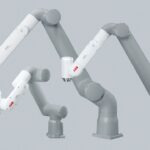
A new generation of robotics is advancing automation further, enabling the implementation of simple-to-program and easy-to-use robots in a variety of complex tasks which are enabled by voice and image recognition technologies. The benefits of these collaborative robots are endless. They work safely alongside human and they are cheaper to purchase and easier to adapt to new product lines than their previous counterparts, making them a much more attractive investment for smaller manufacturers.
As AI and deep learning become widely adopted it is likely manufacturing robots will be able to do even more. One report predicts, only 5% of jobs will be completely replaced by automation processes while jobs pertaining to new technology enabling automation – managing, maintaining and programing the technology used by industry – will emerge.
Furthermore, technologies such as augmented reality (AR), virtual reality (VR), and 3D printing are revolutionizing manufacturing, allowing companies to create prototypes of products faster, with better specifications, and at much less cost to the business. The increased efficiencies automation is bringing to manufacturing bode well for our future.
Author Profile
Ashley Little is from DO Supply, Inc. (www.dosupply.com), an industrial equipment supplier based in Cary, NC. She writes about robotics, machine learning, and the future of automation for industries.
We use cookies to ensure that we give you the best experience on our website. If you continue to use this site we will assume that you are happy with it.