Medical Researchers from the Brigham andWomen’s Hospital, together with other collaborators have developed a new approach of brain mapping that would help in clarifying the remote causes of many neuropsychiatric conditions, with the mandate to identifying therapeutic solutions to them.
In their finding first published in journal,Nature Human Behavior,and supported by the Sidney R. Baer Foundation, the Brain & Behavior Research Foundation, and the National Institute of Mental Health (K23MH121657, R01MH113929 and R01MH115949), the researchers made very significant breakthrough in making correlations between specific brain circuits and neuropsychiatric conditions like depression.
Shan Siddiqi, the paper’s corresponding author and Managing Director, of the Center for Brain Circuit Therapeutics at the Brigham talked on the new technique when he said:
“This is a new technique that uses existing data on patients with brain damage to develop new treatment targets for real-world patients with similar symptoms. In principle, this should open the floodgates for researchers to study any stroke- or brain-injury-associated symptom to find a new treatment target for people who developed the same symptom without brain damage.”
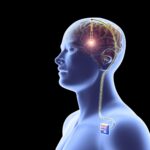
The team used data on depression and Parkinson’s disease that have been known to be readily associated with well-defined brain lesions which are commonly treated with DBS and TMS. The location and connectivity of 461 brain lesions, 101 DBS sites, and 151 TMS sites were then combined with the researchers comparing patients that had hypertension, those who have had improvements in hypertension, together with patients who had no mood change. They later identified a brain circuit that proved to have a therapeutic target for invasive and noninvasive brain stimulation treatments. It was also indicated in the study that the outcomes of brain stimulation may vary, depending on the technique used, either through DBS or TMS method, according to the targeted circuit.
This approach was then subsequently used with Parkinson’s disease data, where 29 lesions and 95stimulation sites data were combined for tremors and rigidity. The researchers further showed that lesions that have come to be known with Parkinson’s disease motor symptoms are connected to the same circuits as the stimulation sites that that relieve those symptoms.
Stemming from the success of the study, the team of researchers has now shifted their focus to refining circuit maps for other neuropsychiatric conditions such as anxiety disorders, post-traumatic stress disorder, mania, hallucinations, and movement disorders.
The authors of the study are now in the process of having a trial that would confirm the distinct TMS targets that they have already identified for depression and anxiety.
Shan Siddiqi inferred on the prospects of more clinical trials when he said:
“Now that we have concrete evidence that lesions map to treatment targets, we can design more clinical trials to generate new treatments. This approach gives us highly rigorous hypotheses about treatment targets. When we don’t know much about the brain circuitry of a particular disorder, our study shows how to find the answer to that question and turn it into new treatment targets.”
Reference: “Brain stimulation and brain lesions converge on common causal circuits in neuropsychiatric disease” by Shan H. Siddiqi, Frederic L. W. V. J. Schaper, Andreas Horn, Joey Hsu, Jaya L. Padmanabhan, Amy Brodtmann, Robin F. H. Cash, Maurizio Corbetta, KiSuengChoi, Darin D. Dougherty, Natalia Egorova, Paul B. Fitzgerald, Mark S. George, Sophia A. Gozzi, FrederikeIrmen, Andrea A. Kuhn, Kevin A. Johnson, Andrew M. Naidech, Alvaro Pascual-Leone, Thanh G. Phan, Rob P. W. Rouhl, Stephan F. Taylor, Joel L. Voss, Andrew Zalesky, Jordan H. Grafman, Helen S. Mayberg and Michael D. Fox, 8 July 2021, Nature Human Behavior. DOI: 10.1038/s41562-021-01161-1
Related Reading
More contextual TechBooky stories selected from tags, categories and article context.
Ayoola Faseyi, an Abuja based Journalist with interest in Technology and Politics. He is a versatile writer with articles in many renowned News Journals.
He is the Co-Founder of media brand, The Vent Republic.
We use cookies to ensure that we give you the best experience on our website. If you continue to use this site we will assume that you are happy with it.