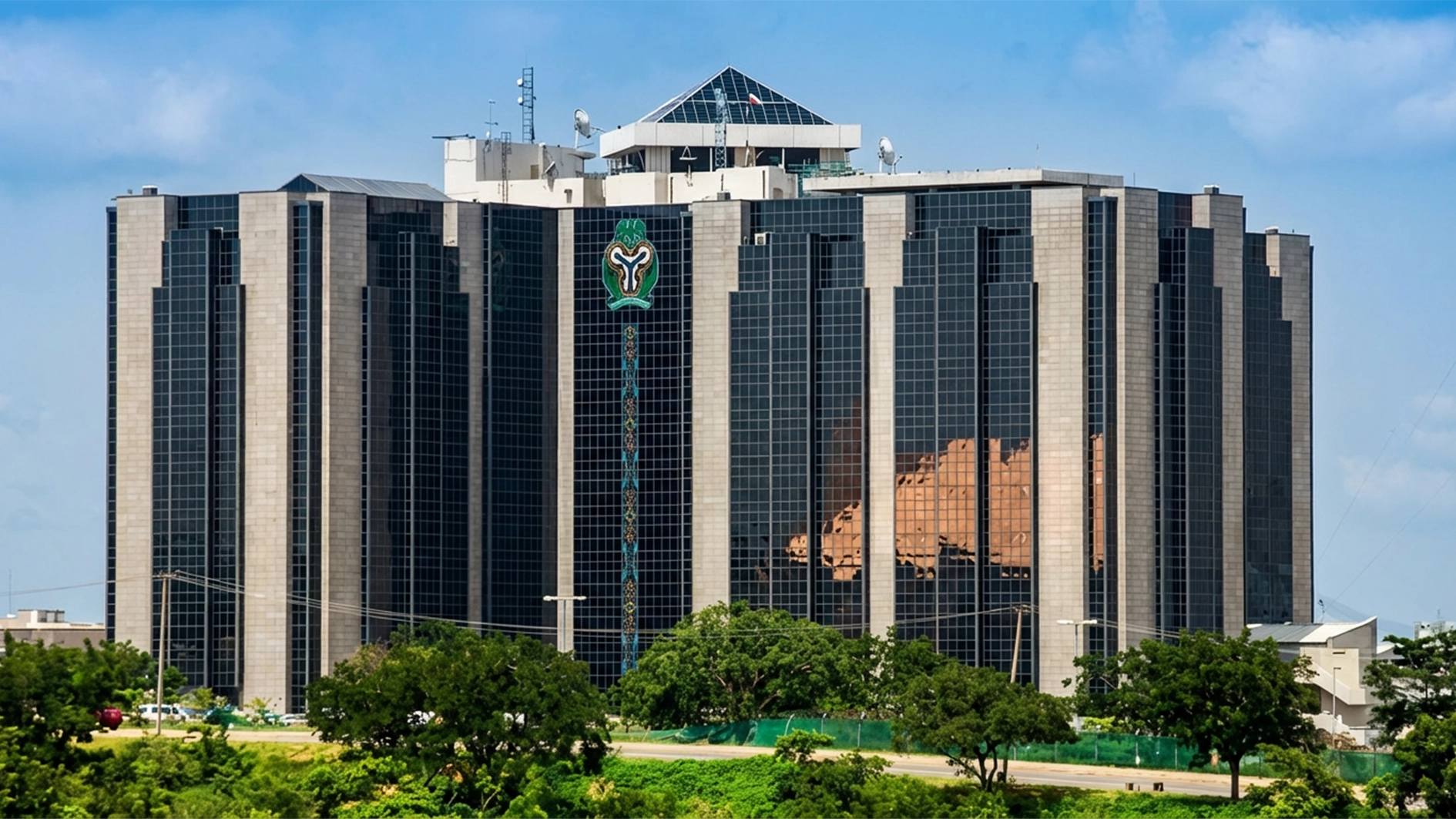
The Central Bank of Nigeria has instructed that all banks and other financial institutions to make use of multi-factor authentication for foreign card transactions as part of new initiatives which is to help in the smooth usage of foreign-issued payment cards locally in Nigeria.
Dr. Rita I. Sike, the director of the CBN’s Financial Policy and Regulation Department, signed a circular dated December 18, 2025, which contained the directive.
All withdrawals and online transactions above $200 per day, $500 per week, and $1,000 per month, or their naira equivalents, are subject to the new rule, according to the circular, “Facilitation of Seamless Use of Foreign Cards,” which is sent to all banks and non-bank financial organisations.
It further stated that the move is intended to improve ease, security, and user experience while using foreign cards throughout Nigeria, as well as to tighten transaction security while enhancing the experience of tourists and Nigerians returning from the diaspora.
According to the circular, “multi-factor authentication for all withdrawals and online transactions exceeding $200 per day, $500 per week, and $1,000 per month (or its equivalent)” must be implemented by all banks and non-bank financial organisations.
The CBN instructed banks and non-bank acquirers in the circular to guarantee uninterrupted and effective local currency withdrawals, payments, and transfers for consumers of foreign-issued cards across the country.
Financial institutions were instructed to maintain high system uptime in addition to the multi-factor authentication requirement in order to ensure smooth and continuous transaction processing. Additionally, all virtual or web-based payment systems, ATMs, and point-of-sale terminals must be set up correctly to take foreign cards that are routed through Nigerian acquirers.
In order to facilitate seamless card transaction processing, the CBN also required that these terminals hold the required certifications or recertifications and completely adhere to worldwide card association standards.
Furthermore, all merchant settlements resulting from international card transactions must be performed exclusively in local currency (naira), and institutions must keep enough cash on hand to fulfil their settlement commitments.
The CBN directed banking institutions to put in place strong transaction monitoring systems that can identify anomalous foreign card usage trends across all terminals in order to lower fraud risks.
Stronger know-your-customer and anti-money laundering regulations are anticipated for merchants who accept international card payments. Merchants must make sure that card-present transaction receipts are correctly signed and request legitimate identity documents when transactions seem suspect.
In accordance with current legislation, suspicious transactions must be reported right away to the Nigerian Financial Intelligence Unit.
Additionally, the regulator highlighted price and settlement transparency. Before completing transactions, banks and acquirers must make sure that customers are aware of the applicable currency rates.
The circular states that all related fees must be declared up front and that exchange rates for foreign card transactions must be determined by the market and based on the current official rate. Users must expressly agree the terms before completing a transaction, and proof of this approval must be kept.
Additionally, acquirers must teach merchants and agent networks on chargeback procedures and dispute resolution on a quarterly basis.
Consumer complaints pertaining to foreign card transactions must be settled within authorised timeframes, the CBN said, adding that escalations to the central bank would result in the proper penalties.
The CBN’s Consumer Protection and Financial Inclusion Department should be contacted by visitors and Nigerians returning from the diaspora who encounter problems using foreign-issued cards.
In an effort to enhance the user experience for both visiting and returning customers, the apex bank also instructed institutions to recalibrate their fraud-monitoring systems to limit incorrect declines on valid foreign card transactions.
Card acceptance devices need to have contactless payment choices for low-value transactions.
Additionally, the circular imposed more stringent requirements on acquirers regarding chargebacks and dispute settlement. In accordance with applicable card scheme regulations and CBN guidelines, acquirers must establish and maintain strong, auditable chargeback control procedures.
This include prompt case intake, gathering evidence, processing refunds, and doing post-event analysis. Transaction records, including item or service descriptions, signed merchant receipts, and terminal approval slips, must be kept by institutions for a minimum of 12 months and can be retrieved within 24 hours upon request.
The lists of the number of prerequisites for merchants and financial institutions are below;
Authentication Thresholds: For withdrawals and transactions that surpass the designated dollar limitations or their equivalents in other currencies, MFA is required.
Terminal Compliance: ATMs, virtual platforms, and point-of-sale terminals must be set up to take foreign cards and follow international card association guidelines.
Enhanced Monitoring: To detect anomalous activity and modify fraud systems to lower false transaction declines, financial institutions must have strong transaction monitoring in place.
Merchant Requirements: Stricter KYC and AML standards must be followed by merchants who accept international card payments. Receipts must be signed and identification should be required for transactions that seem suspicious.
We use cookies to ensure that we give you the best experience on our website. If you continue to use this site we will assume that you are happy with it.