On November 30, 2022, OpenAI unveiled a new product, modestly defining and describing it to be “a model called ChatGPT that communicates and interacts in a conversational manner.”
Well, yesterday November 30, 2025, it became 3years after its launch and the company celebrates it third anniversary.
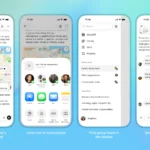
Within the space of the three years so far it has launched several features in users has found to be more helpful in the user of the application, Chatgpt. Some of the features launched this year include ChatGPT Global Group Chats Feature, ChatGPT Desktop Apps with Voice Mode which was launched early November has also recorded daily where users can access the Advanced Voice Mode requires a ChatGPT Plus subscription ($20, £16, AU$30). However, users can use it on the free tier, but with a monthly talk time limit of only 10 minutes.
It’s no exaggeration to say that ChatGPT subsequently changed the business and technology sectors, becoming tremendously popular and it’s still the number one free app on Apple’s app rankings today as a result it also serving as a catalyst for a wave of generative AI technologies.
It’s even made some people wary of the em dash, which no chatbot will ever steal from me. This is a error which was fixed. And according to OpenAI, it says ChatGPT will now skip using em dashes if instructed. This punctuation mark, often flagged as a sign of AI-generated text, has appeared widely in recent months in school papers, emails, comments, customer service chats, LinkedIn posts, online forums, ad copy, and beyond. Its frequent use has drawn criticism, with some accusing writers of relying on an AI chatbot instead of crafting content themselves.
In a recent interview with members of the press, Karen Hao, author of “Empire of AI,” said that OpenAI has “already grown more powerful than pretty much any nation-state in the world” and is now “rewiring our geopolitics, all of our lives.”
There may be even more significant developments in the future. Charlie Warzel stated in The Atlantic that we are now living in “the world ChatGPT built,” which is “defined by a particular type of precarity” and “perpetually waiting for a shoe to drop.”
Warzel further told the reporters that “young generations feel this instability acutely as they prepare to graduate into a workforce about which they are cautioned that there may be no predictable path to a career.” And went on to say that “older generations, too, are told that the future might be unrecognisable, that the marketable skills they’ve acquired may not be relevant.”
Some others, however, are more enthusiastic about an AI-centric future and are well-positioned to profit from it. According to Warzel, AI supporters and investors are waiting with everyone else, not only to see if their bets pay off, but also “because a defining feature of generative AI, according to its true believers, is that it is never in its final form.”
Meanwhile, Bloomberg offered a closer look by focusing at ChatGPT’s impact and altered the stock market. Nvidia has emerged as the clearest beneficiary, with its stock surging 979% since the chatbot’s debut. AI enthusiasm has also lifted other major tech firms: the seven most valuable S&P 500 companies that is Nvidia, Microsoft, Apple, Alphabet, Amazon, Meta, and Broadcom which are all tech-related, and their combined growth has contributed to nearly half of the index’s 64% rise since ChatGPT’s launch.
This has resulted in a market that is increasingly concentrated at the top. The S&P 500 is weighted by market capitalisation, and those seven companies now account for 35% of the weighting, up from approximately 20% three years ago.
For now, no one has an idea the length of time how the growth will continue, however it is worthy to note the exception of Nvidia CEO Jensen Huang, as AI executives are increasingly acknowledging that we may be in a bubble (or “mania” if you prefer).
Similarly, Sierra CEO and OpenAI board chair Bret Taylor concurred that we are “in a bubble” and compared it to the late-1990s dot-com boom. While individual companies may fail, he predicted that “AI will transform the economy, and I believe it will, like the internet, create enormous amounts of economic value in the future.”
OpenAI is still in progress, with the eventual objective of developing artificial general intelligence (AGI). The company is likewise making steady progress towards this goal. Also with the recently launched GPT-5.1 AI model is capable of both reasoning and communicating with users in a more empathetic manner. The software can now generate photos and movies, talk to users in real time using voice modulation, and even allow several users to collaborate on a project through group chats.
ChatGPT has also undergone considerable expansion. It’s no longer only a tool for end users. With application programming interfaces (APIs), enterprise and education-focused products, and integrations with a variety of apps, it is now a worldwide interface that has an impact on all major industries.
In another three years, or less, everyone will know whether there will be a justified optimism.
We use cookies to ensure that we give you the best experience on our website. If you continue to use this site we will assume that you are happy with it.