OpenAI has revealed that advertisements would soon show up at the top of the ChatGPT AI tool for certain users. This is in order to fund its high infrastructure expenses and increase access for more users. OpenAI stated that it will start testing ads within ChatGPT.
The official OpenAI account stated, “In the coming weeks, we plan to start testing ads in ChatGPT free and Go tiers,” in a post on X (previously known as Twitter). The business also described the guiding principles and strategy for implementing ads on the platform in a blog post.
Some ChatGPT users on the free service and a new subscription tier, called ChatGPT Go, will be impacted by the trial, which will start in the US.
All users worldwide will have access to this less expensive alternative, which will cost $8 per month or the equivalent amount in other currencies.
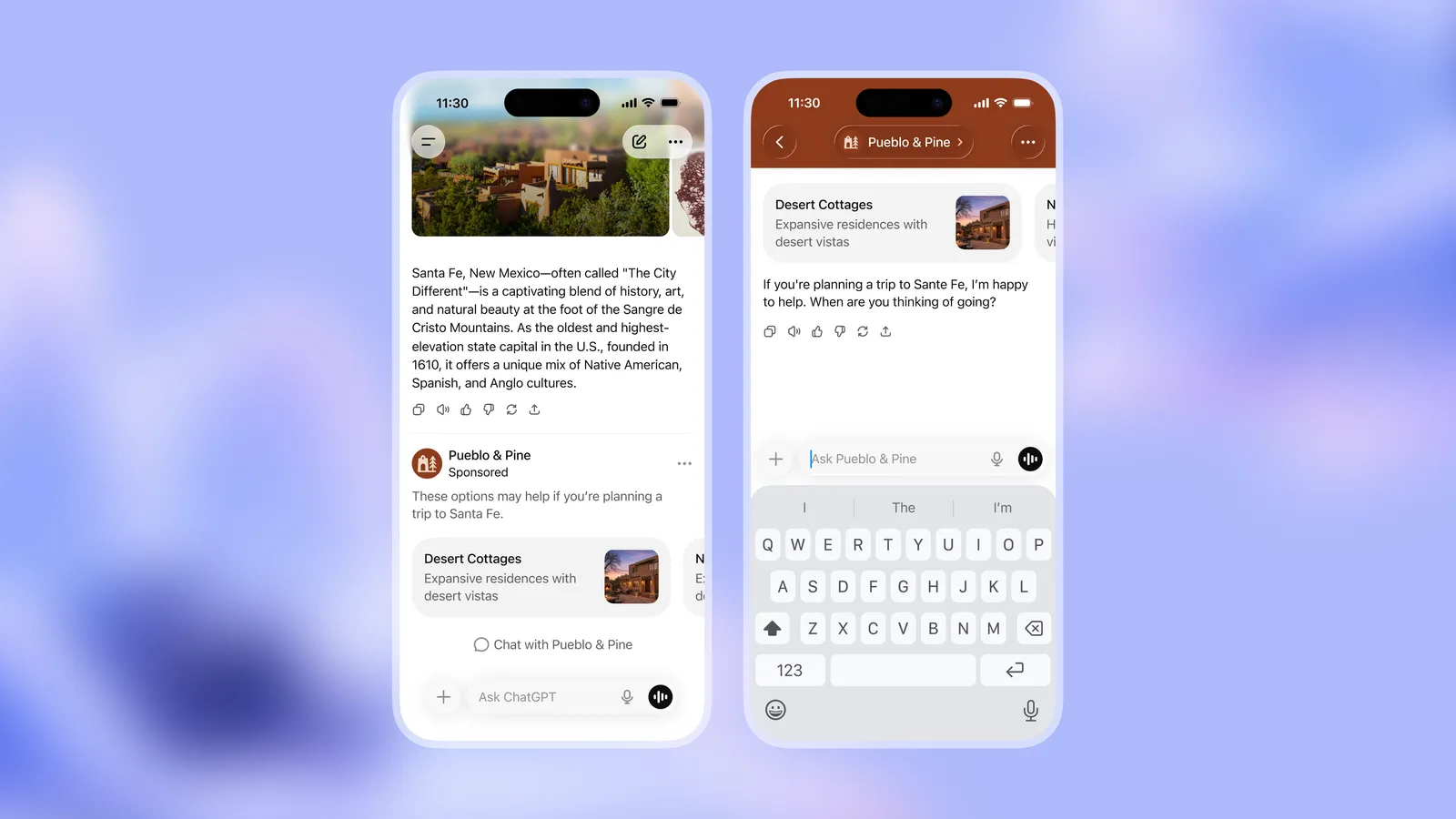
According to OpenAI, during the testing, pertinent advertisements will show up following a prompt; for instance, asking ChatGPT for destinations in Mexico might cause holiday advertisements to show up.
The advertisements appear to be banners in screenshots that the company released.
ChatGPT’s responses won’t be influenced by OpenAI, and the company won’t provide advertising access to conversation data.
It stated that it has made the decision to investigate advertisements “so more people can benefit from our tools with fewer usage limits.”
However, there is also rising conjecture that the AI industry has not yet shown much profit and has been overvalued by enthusiastic investors and hype.
According to some observers, this “bubble” is unsustainable and may soon burst.
OpenAI’s move to investigate ad revenue was not surprising, according to Henry Ajder, a specialist in artificial intelligence, deepfakes, and synthetic media.
He stated, “OpenAI is a company that has seen a huge amount of growth in terms of users in the last few years, but it continues to burn investor money, as it is not a profit-making entity.
Therefore, in order for this company to start turning a profit, it must find more revenue sources from somewhere other than just standard paying subscribers. “Additionally, advertising is a dependable source of income for many software companies.
According to the Financial Times, barely 5% of ChatGPT’s 800 million users are paying subscribers, and OpenAI lost over $8 billion (£5.98 billion) in the first half of 2025.
It already has Plus and Pro subscriptions, which cost $20 and $200 a month in the US, in addition to the new Go membership tier.
In 2025, ChatGPT Go made its debut in India before spreading to other nations.
Originally founded as a non-profit, OpenAI has gradually shifted towards being a more commercial enterprise.
For over 20 years, advertising has been a major source of funding for the internet economy.
Even though OpenAI’s CEO, Sam Altman, originally declared that advertisements were “a last resort” and that he detested them, the company isn’t the only one thinking about this income strategy.
Taz Patel was named “head of advertising and shopping” by the AI business Perplexity in 2025, but he quit nine months later.
Google disputes claims that in 2026, it contacted marketers about adding advertisements to its Gemini AI technology.
In the US, advertisements will first target the following demographics:
Free Users: Adult users on the regular free tier who are logged in.
Go ChatGPT Users: Users of ChatGPT Go, a new low-cost tier that costs $8 per month and gives more messages than the free version but still has advertisements.
Ad-Free Tiers: Ad-free subscriptions will continue to be available for Plus ($20/month), Pro ($200/month), Enterprise, and Education.
How the advertisements will look like for users;
For Placement: At the bottom of the chatbot’s responses, advertisements usually show up as banners with clear labels.
For Personalisation: Adverts will be customised according to the subject of the current discussion (e.g., asking for travel suggestions can trigger vacation-related adverts).
For User Control: Users have the option to remove data used for advertisements or disable ad personalisation at any time.
According to OpenAI, ads will not influence the AI’s responses due to policy and privacy safeguards. The company also says advertisers will not be given direct access to individual conversations, user data will not be sold, and ads will be restricted on sensitive topics such as politics, mental health, and healthcare. In addition, age-gating measures will ensure that users identified as under 18 are not shown advertisements.
OpenAI stated that ads on the platform will aim to be informative, engaging, and conversational. The company also plans to let small businesses create AI-driven experiences within ChatGPT when users interact with an ad. Since ads are still in the testing phase, details such as ad formats, eligible subscription tiers, and how users see them may change before a full rollout.
We use cookies to ensure that we give you the best experience on our website. If you continue to use this site we will assume that you are happy with it.