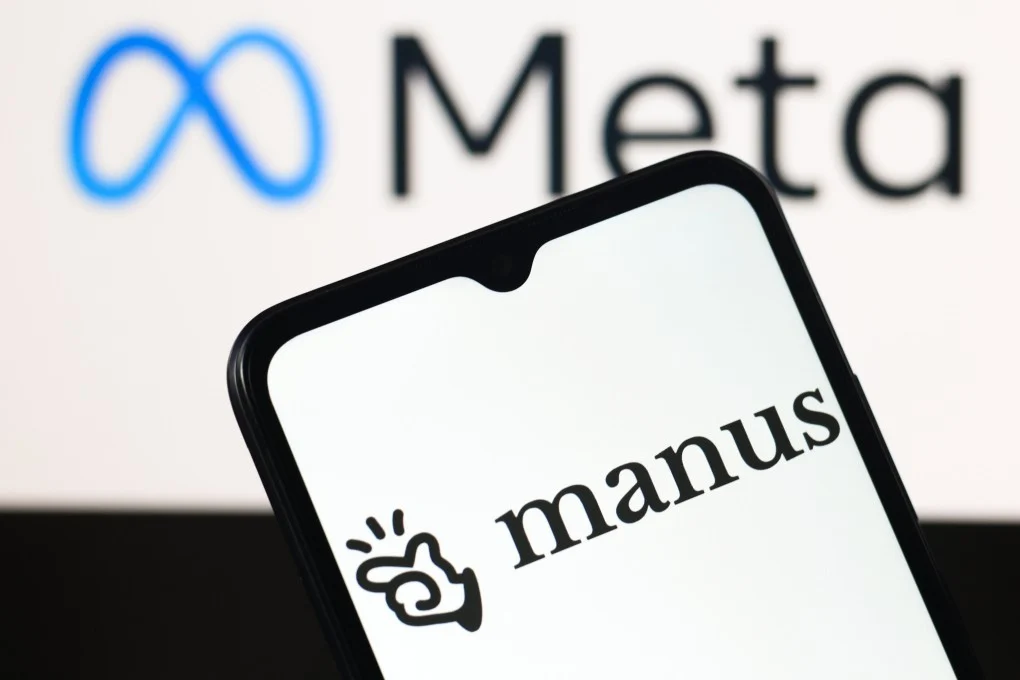
The National Development and Reform Commission (NDRC), China’s main economic planner, announced on Monday that it had banned Meta’s $2 billion purchase of Manus, an agentic AI business started by Chinese engineers that moved to Singapore before being acquired by Mark Zuckerberg late last year.
The National Development and Reform Commission (NDRC) issued the veto after a months-long investigation into whether the agreement complies with Chinese investment and technology laws.
The action, which goes far beyond tensions between the United States and China and into the larger AI sector, is one of China’s most important cross-border actions. It might seriously harm Meta’s aspirations in the rapidly evolving field of AI agents.
In December 2025, Meta announced its plan to acquire Manus, a startup behind the world’s first “general AI agent” capable of performing complex multi-step digital tasks, for $2 billion to $3 billion, but in March 2026 Chinese authorities imposed an exit ban on co-founders Xiao Hong and Ji Yichao to prevent them from finalizing the merger, as a probe examined whether Manus’s mid-2025 relocation to Singapore was a tactic to bypass Chinese AI export controls, with Beijing’s decision signaling that agentic AI is a critical national security asset and marking the first time China has used exit bans to block a major U.S. tech acquisition.
China’s NDRC ordered both parties to completely terminate the agreement without providing an explanation.
The statement reads that “In compliance with laws and regulations, the National Development and Reform Commission (NDRC) has decided to prohibit foreign investment in the Manus project and has required the parties involved to withdraw the acquisition transaction.”
However, the situation is not at all simple. As of March, some 100 Manus workers had already relocated to Meta’s Singapore operations, with founders assuming executive positions. Javier Olivan, the COO of Meta, now receives direct reporting from CEO Xiao Hong. According to reports, Manus CEO Hong and Chief Scientist Yichao Ji are prohibited from leaving mainland China due to exit limitations.
“Every applicable law was properly followed within this transaction. We expect the investigation to be resolved appropriately,” a Meta representative told members of the press.
Manus, which was founded in 2022 by Hong, Ji, and Tao Zhang, moved its headquarters from China to Singapore in the middle of 2025. A few months later, Meta knocked. In December 2025, the business announced that it will buy Manus for between $2 and $3 billion, with the intention of integrating its agent technology into Meta AI.
According to Nikkei Asia, Meta has reached an agreement to buy Singapore-based AI company Manus, subject to a complete withdrawal from Chinese ownership and operations. However, the company’s roots are in China. Before moving to Singapore, Manus’ founders founded Butterfly Effect, the business’s parent company, in Beijing in 2022.
According to members of the press, which cited Senator John Cornyn’s post on X, this background has gained attention in Washington, where he has already voiced reservations about Benchmark’s investment in the company and questioned if American capital should be moving to a Chinese-linked enterprise.
When members of the press asked Manus for comment, he did not reply.
The blocked deal has stalled Meta’s planned integration of Manus technology into WhatsApp and Instagram, potentially slowing its global AI progress, while analysts warn that the move sets a precedent making Western firms “think twice” before acquiring Chinese-origin startups, regardless of where they are headquartered.
We use cookies to ensure that we give you the best experience on our website. If you continue to use this site we will assume that you are happy with it.