A major meltdown at one of the world’s most important financial facilities has prompted urgent upgrades to prevent another crisis. The data centre that keeps CME (Chicago Mercantile Exchange) Group’s massive trading operations running has installed new backup cooling systems after a catastrophic failure that left global markets frozen for more than ten hours last Friday.
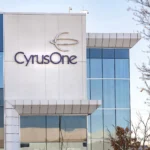
CyrusOne, the company that owns and operates the facility in Aurora, Illinois, about fifty miles from Chicago, confirmed over the weekend that operations have returned to normal. More importantly, they’ve added extra backup systems to make sure their cooling equipment doesn’t fail again. The announcement came as a relief to traders and financial institutions around the world who depend on the facility to process trillions of dollars in daily transactions.
The trouble started late Thursday evening, November 27, when the cooling system at the data centre suddenly failed. Within hours, temperatures inside the facility climbed past one hundred degrees Fahrenheit. These buildings are supposed to stay cool around the clock because the thousands of powerful computers inside generate massive amounts of heat while they work. When the cooling stops, it’s like leaving your laptop running under a blanket, except multiplied by thousands of machines worth millions of dollars.
As temperatures soared, automatic safety systems kicked in and started shutting down equipment to prevent permanent damage. That’s when trading stopped. CME Group, which operates some of the world’s largest exchanges for financial contracts, had no choice but to halt markets. The outage affected everything from gold and oil prices to currency exchanges and interest rate contracts. Markets from Tokyo to London came to a standstill.
What made this situation particularly dramatic was the timing and scope. The failure happened during the post-Thanksgiving trading session, and even during this relatively calm period, the impact rippled across continents. Traders couldn’t buy or sell. Prices stopped updating. Financial institutions that use these markets to manage risk or lock in prices for future deals were stuck waiting.
CME had a backup plan in place, including the option to switch operations to another data centre in the New York area. However, when the cooling system first failed, initial reports suggested it would be a brief interruption. Based on that information, CME decided not to activate the backup facility. Unfortunately, what started as a seemingly short problem turned into an all-day crisis.
Even after trading largely resumed on Friday, problems persisted throughout the American trading session. CME Direct, one of the exchange’s trading platforms, remained offline for most of the day. The extended disruption highlighted just how dependent modern financial markets have become on a handful of critical facilities.
While exact details of the CMB (presumably referring to the CME Group data centre in this context) upgrades are not entirely known, data centre best practices and similar prior incidents indicate many resilience-enhancing methods, many of which the CME Group is likely adopting.
What’s particularly striking about this outage is that it exposed a vulnerability in how modern markets work. Financial exchanges generally concentrate their main operations in a single location to keep everything running as efficiently as possible. There’s a good reason for this concentration: professional traders want their own computer systems located as close as possible to the exchange’s systems. In high-speed trading, even milliseconds can mean the difference between profit and loss.
The outage also revealed some puzzling details about the facility’s cooling setup. According to information on CyrusOne’s own website, the Aurora data centre already had backup cooling systems in place. Yet somehow, despite these safeguards, the entire cooling system still failed. CyrusOne has been tight-lipped about exactly what went wrong, declining to provide detailed comments when asked by reporters.
For the traders and institutions affected, the experience was described as a nightmare. The inability to trade or even see updated prices for major commodities like oil, gold, and palm oil, or for critical financial instruments like Treasury futures and stock index contracts, created chaos for anyone trying to manage investments or business risk.
By Sunday evening, when futures trading reopened at its normal time, things appeared to be back to normal. The new cooling redundancy that CyrusOne installed appeared to be working, with contracts trading normally and only minor price movements across major markets.
The incident has sparked broader conversations about infrastructure reliability in an increasingly digital financial world. As more transactions move online and markets become more interconnected globally, the concentration of critical operations in a small number of facilities creates potential weak points. One building overheating in suburban Illinois can halt trading worldwide, affecting millions of people and trillions of dollars.
The episode serves as a stark reminder that despite all the digital sophistication of modern financial markets, they still depend on physical infrastructure like cooling systems, power supplies, and buildings. When those basics fail, even the most advanced trading algorithms and fastest networks become useless. Also this occurrence emphasises the crucial need of data centres having robust, well-tested cooling infrastructure and reliable backup mechanisms in place to avoid costly and broad service outages.
We use cookies to ensure that we give you the best experience on our website. If you continue to use this site we will assume that you are happy with it.