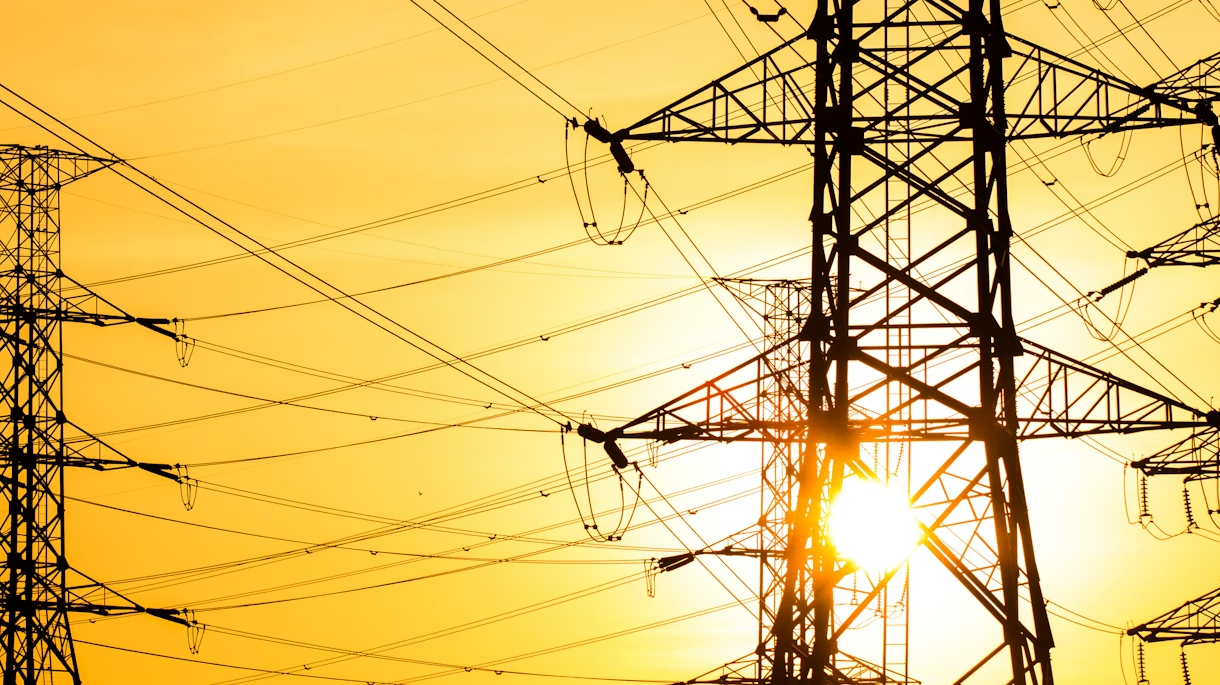
The massive buildings that keep our internet running non-stop for hours and days, store our photos, and power our favourite apps are about to start using a lot more electricity. According to recent reports, data centres across the globe will need nearly three times more power by 2035 than they use today. That’s a huge jump that’s getting everyone from tech companies to government officials talking about what this means for our electric grids and the environment.
Right now, data centres around the world consume about 40 gigawatts of electricity. To put that in perspective, imagine the amount of power it takes to keep a large city running with all its lights, air conditioners, and businesses operating. By 2035, these facilities will need around 106 gigawatts, which is like adding the power needs of several major cities all at once.
The reason behind this massive increase is pretty straightforward. Artificial intelligence is exploding in popularity, and these smart systems are incredibly hungry for power. Every time you ask an AI assistant a question, have it write something for you, or use it to create an image, there’s a powerful computer somewhere working hard to give you an answer. When millions of people do this every day, it adds up fast.
What’s interesting is that these data centres are getting much bigger than before in terms of capacities and infrastructures. Today, only about one in ten data centres uses more than a certain amount of electricity. But in the coming years, new facilities being built will be massive. Some of them will use as much power as half a million homes combined. A few of the largest ones being planned will consume even more than that.
These giant facilities aren’t being built in cities anymore either. Space is running out in urban areas, so companies are looking to build in more rural locations where there’s plenty of room and access to power lines. This shift is changing where the demand for electricity is happening across the country, forcing power companies to upgrade their systems in places that weren’t expecting such growth.
The way these facilities use their power is changing too. In the past, many data centres would sit partially empty, waiting for demand to grow. Now, with AI needing constant computing power for training and running smart systems, these buildings are staying busy nearly all the time. Instead of being used about 60 percent of the time, they’re now operating at close to 70 percent capacity, and that number keeps climbing.
All this growth is happening at a time when countries around the world are trying to reduce their carbon footprint and fight climate change. The problem is that more than half of the electricity powering these data centres still comes from burning fossil fuels like coal and natural gas. When you increase energy demand dramatically, and much of that energy comes from sources that produce greenhouse gases, it creates a real challenge for environmental goals.
Tech companies know this is a problem, and many of them have promised to use only clean energy. They’re investing billions in wind farms, solar panels, and other renewable energy sources. Some are even looking at bringing back nuclear power plants or building small reactors specifically for their data centres. But building all these clean energy sources takes time, and the demand for power is growing faster than clean energy can keep up.
There’s another complication that makes this tricky. Wind and solar power are great when the sun is shining and the wind is blowing, but data centres need electricity around the clock, every single day, without interruption. This means even with massive investments in renewable energy, there’s still a need for backup power that can kick in whenever it’s needed. Right now, that backup usually comes from natural gas plants.
The rapid growth is also putting stress on the electrical grid in some regions. In neighbouring states like Virginia, Pennsylvania, and Ohio, which are home to many data centres, the organizations that manage the power grid are raising concerns. They’re worried about whether there will be enough electricity to go around, especially during hot summer days when everyone’s air conditioner is running and data centres are also pulling massive amounts of power.
Some experts are pointing out that electricity prices could go up in areas with lots of data centres. When demand for power increases faster than supply, prices naturally rise. This could mean higher electric bills for regular people living in regions where these facilities are being built, which has sparked debates about who should pay for upgrading the power infrastructure.
Despite these challenges, not everyone thinks the picture is entirely gloomy. The same AI technology that’s causing this surge in power demand could also help solve energy problems. Smart systems can already help detect issues in the power grid before they cause blackouts, reducing outage times by up to half. AI can also make buildings more energy efficient and help factories use less power, potentially saving huge amounts of electricity globally.
Data centres are also becoming more efficient themselves. The companies that make the chips and equipment for these facilities are constantly working on ways to do more computing with less power. Cooling systems, which can use up to 40 percent of a data centre’s electricity, are getting smarter and more efficient. Some facilities are even switching from traditional air conditioning to more advanced cooling methods that use less energy.
Governments are starting to pay closer attention to all of this. They’re working on new rules about where data centres can be built and what kinds of power sources they should use. Some are offering incentives for companies to use clean energy, while others are requiring environmental reviews before approving new facilities. The challenge is balancing the need for digital services with environmental responsibilities.
The bottom line is that the digital services we’ve all come to rely on have a real physical cost in terms of energy use. Every video we stream, every photo we store in the cloud, and every question we ask an AI assistant requires electricity somewhere. As we use more of these services, especially AI-powered ones, the energy bill keeps growing. Finding ways to meet this demand without damaging the environment will be one of the big challenges of the next decade.
We use cookies to ensure that we give you the best experience on our website. If you continue to use this site we will assume that you are happy with it.