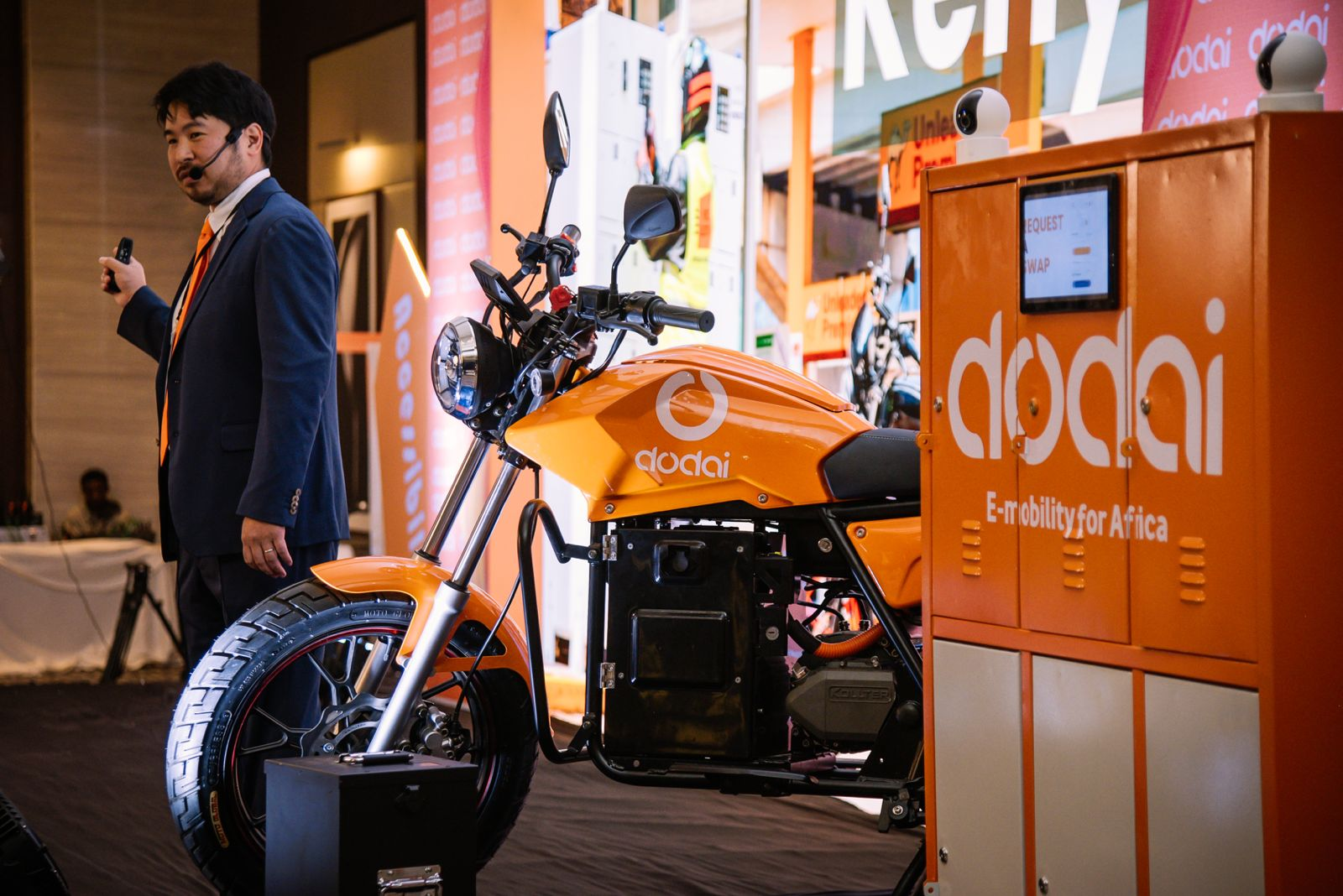
Dodai, an Ethiopia-based electric mobility startup focused on electric two-wheelers, has raised $13 million in Series A funding to grow its e-motorbike and battery-swapping network across Addis Ababa.
The round combines $8 million in equity and $5 million in debt. Equity investors include Value Chain Innovation Fund, UTokyo Innovation Platform Co., Nagase, Persistent Energy, For Seasons, CBC Co., Ltd, and Inclusion Japan (ICJ). Debt financing comes from British International Investment (BII), the UK’s development finance institution.
The raise lands as Ethiopia rapidly pushes toward electric mobility. The government banned imports of private internal combustion engine (ICE) vehicles in 2024, then widened that restriction in 2025 to cover gasoline and diesel trucks. According to the country’s Ministry of Transport and Logistics, there are now around 100,000 electric vehicles on Ethiopian roads.
British International Investment frames Dodai as part of that broader transition. “Ethiopia is emerging as one of Africa’s most compelling frontier markets for the clean mobility transition, where the right capital can unlock outsized impact and long-term value,” said BII CEO Leslie Maasdorp. “BII’s investment will support Dodai to scale critical e-mobility and battery-swapping infrastructure, and accelerate the development of a commercial market for electric motorbikes.”
Founded in 2023 by CEO Yuma Sasaki, Dodai assembles electric motorbikes and batteries locally in Ethiopia and operates a battery-swapping network that lets riders replace depleted batteries instead of waiting to charge. Since launch, the company says it has assembled and deployed more than 2,000 electric motorbikes.
Dodai previously raised $7 million in 2024 and is building its model in a market that is drawing both domestic and international manufacturers, including Ethiopian conglomerate Belayneh Kinde Group (BKG) and Chinese EV brand Yadea.
The new $13 million will fund Dodai’s next phase of network build-out. Over the next 12 months, the company plans to install 30 battery-swapping stations across Addis Ababa and grow to 3,000 users.
“This funding will help take us from early traction to real scale,” Sasaki said. “We’ve proven the model in Addis Ababa now we’re building the network and infrastructure needed to make electric mobility the default.”
Dodai’s strategy hinges on an integrated approach: local assembly plus a dense swapping network designed to remove charging friction for riders who rely on two-wheelers for daily transport and commercial work. The company is betting that this combination will make EV motorbikes more practical and attractive than traditional fuel-powered options in congested urban environments.
Looking further ahead, Dodai has set more ambitious targets. Over the next three years, it aims to reach 30,000 users and deploy 1,000 battery-swapping stations across Addis Ababa. From 2028, it plans to expand beyond Ethiopia into other high-growth African cities, including Abidjan, Kinshasa, Accra, Dar es Salaam and Cairo, taking its battery-swapping model to new urban markets.
“We chose Ethiopia because that’s where the opportunity to build from first principles really exists,” Sasaki said. “This raise allows us to double down on that bet and show what the future of mobility in African cities can look like.”
Paul Balo is the founder of TechBooky and a highly skilled wireless communications professional with a strong background in cloud computing, offering extensive experience in designing, implementing, and managing wireless communication systems.
We use cookies to ensure that we give you the best experience on our website. If you continue to use this site we will assume that you are happy with it.