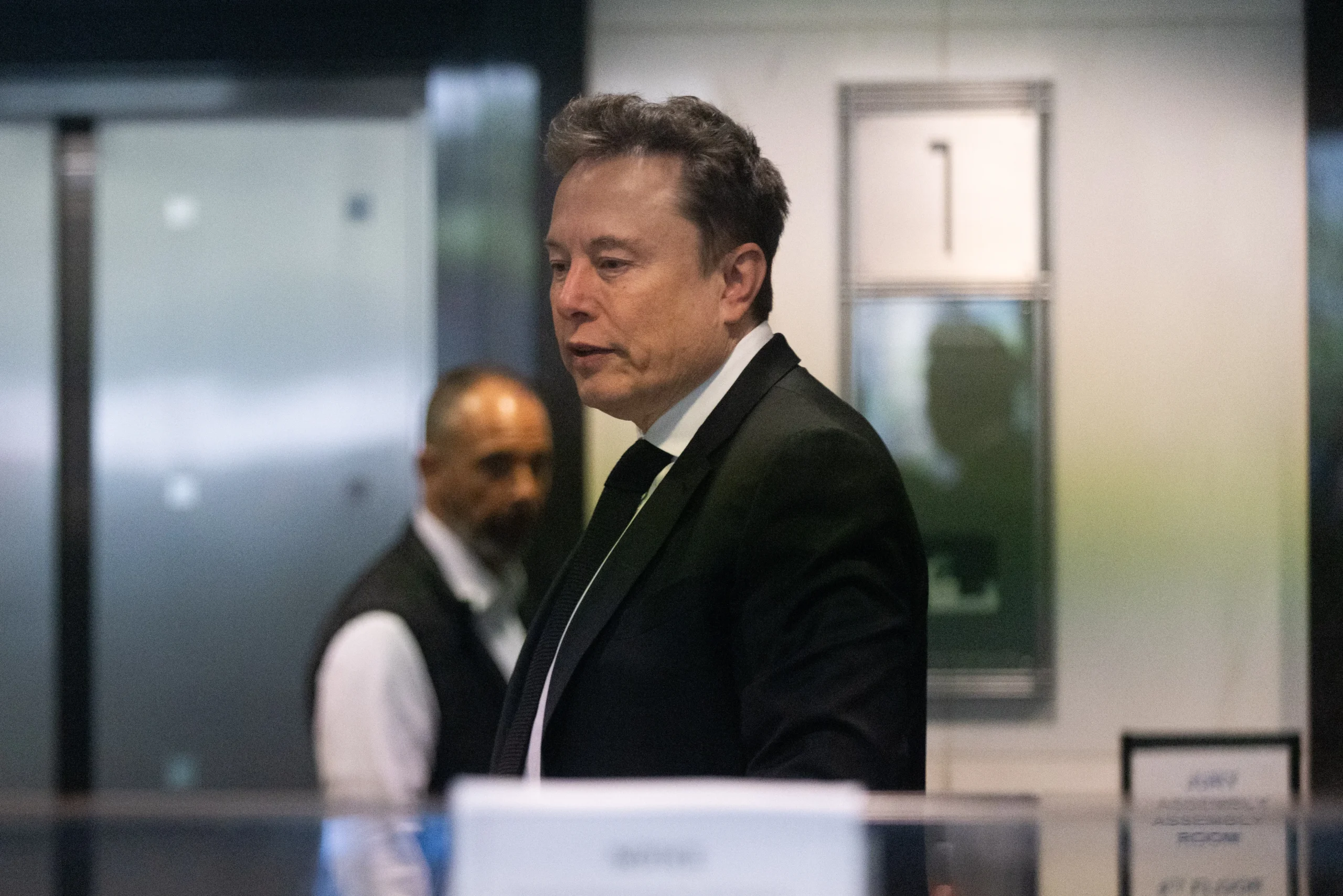
A federal jury in Oakland, California, unanimously ruled against Musk after less than two hours of deliberation, finding that his claims against OpenAI had been filed too late. Judge Yvonne Gonzalez Rogers accepted the jury’s recommendation and dismissed the case, effectively ending a trial that had become one of Silicon Valley’s most closely watched legal battles.
Musk had accused OpenAI and its leadership of abandoning the company’s original nonprofit mission, arguing that Altman, Brockman and others turned what was supposed to be an AI lab built for the benefit of humanity into a profit-driven enterprise. He claimed he was misled into contributing tens of millions of dollars to OpenAI in its early years, only to see the company later build a massive commercial business with Microsoft as a key backer.
The jury did not buy it.
The central issue was timing. OpenAI argued that Musk had known for years about the company’s shift toward a capped-profit and commercial structure, but waited too long to bring his claims. The jury agreed, concluding that the lawsuit was barred by the statute of limitations. Reuters reports that the case hinged partly on whether Musk knew about OpenAI’s for-profit direction earlier than he claimed.
That legal finding matters because it allowed the court to avoid turning the trial into a sweeping referendum on whether OpenAI betrayed its founding ideals. Musk wanted the case to be about mission, trust and control of artificial intelligence. OpenAI successfully made it about deadlines, evidence and whether the billionaire waited too long to sue.
Still, the trial was damaging in another way.
Over several weeks, it aired years of internal tension between Musk, Altman and OpenAI’s early leadership. Testimony and court filings revisited Musk’s 2018 break with the organization, his alleged desire to take control of OpenAI, and the company’s later transformation into one of the most valuable private technology companies in the world. The Guardian reported that OpenAI’s lawyers framed Musk’s lawsuit as a competitor’s attack, especially given Musk’s own AI company, xAI.
Musk had sought extraordinary remedies, including damages reportedly reaching as high as $134 billion, the removal of OpenAI leaders, and changes that would have pulled the company back toward its original non-profit structure. Microsoft, which was also named in the case, was cleared as well.
For OpenAI, the verdict removes a major legal cloud just as the company is trying to scale commercially, deepen enterprise adoption, and prepare for a potential public offering. Reuters described the decision as clearing a significant obstacle for OpenAI as it eyes a possible IPO, with the company now valued at levels that make it one of the defining businesses of the AI era.
But the victory does not erase the larger questions the trial raised.
OpenAI’s unusual structure, a nonprofit parent overseeing a powerful commercial arm has always created tension between mission and monetization. That tension exploded publicly in 2023 when Altman was briefly fired and then reinstated after employee backlash and pressure from partners. Musk’s case forced those governance questions back into the spotlight, even if he ultimately failed to win in court.
That is why this verdict is bigger than a legal loss for Musk.
It is a signal that the courts may be reluctant to unwind OpenAI’s transformation based on its founding rhetoric, especially when the people challenging that transformation waited years to act. But it also leaves unresolved the broader debate over how frontier AI companies should be governed, who should control them, and whether non-profit promises can survive once billions of dollars are on the table.
Musk’s lawyer has already indicated that the decision will be appealed. That means the legal fight may not be completely over, but the immediate outcome is clear: Altman and OpenAI have survived the most serious courtroom challenge yet to the company’s direction.
For Musk, the loss is a major setback in his long-running campaign against the company he helped create.
For OpenAI, it is a legal victory but not necessarily a reputational reset.
Because the trial may be over, but the central question remains alive: whether the company that promised to build AI for humanity can still convince the world that it is doing exactly that.
Paul Balo is the founder of TechBooky and a highly skilled wireless communications professional with a strong background in cloud computing, offering extensive experience in designing, implementing, and managing wireless communication systems.
We use cookies to ensure that we give you the best experience on our website. If you continue to use this site we will assume that you are happy with it.