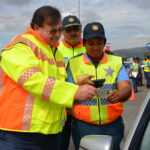
Unveiled by Prime Minister Abiy Ahmed Ali who appears in the far right position in the image above, the facility is designed to let citizens access police services quickly through digital channels rather than traditional, in-person processes. The project was developed with the Ethiopian Artificial Intelligence Institute under an agreement signed in July 2025 and draws inspiration from similar initiatives in countries such as China and the UAE.
AI at the front desk of law enforcement
At the heart of the initiative is a simple premise: move routine police interactions from queues and counters to automated, digital workflows. According to federal police commissioner general Demelash Gebremichael, the unmanned station allows people to report crimes, traffic accidents and other incidents without direct human contact or administrative bottlenecks.
Authorities argue that this kind of automation could do more than just speed up filing a report. By reducing what officials describe as “uncomfortable interactions” that often discourage people from engaging with law enforcement, they hope more citizens will be willing to come forward with information, report incidents earlier and help improve overall crime prevention.
Faster reporting and fewer barriers could, in theory, translate into quicker response times and better data for security agencies. It also aligns with a broader global conversation about using AI and self-service systems to modernise public institutions, from immigration and licensing to courts and municipal services.
The launch slots neatly into Ethiopia’s Digital Ethiopia 2030 strategy, which aims to modernise state institutions and make them more competitive through technology. If the system works as intended, the smart police service could serve as a reference point for other African countries looking to digitise public safety and justice processes.
Despite the optimism around AI-enabled policing, independent assessments of Ethiopia’s broader digital transformation point to structural constraints that could limit impact. Internet connectivity, digital infrastructure and inclusion remain uneven, especially outside major urban areas. In practice, that means large sections of the population may simply be unable to use such services reliably.
The dependence on connectivity and digital literacy raises questions about who benefits first from the smart police model and who is left out. Urban, better-connected citizens are more likely to access an unmanned digital station than people in rural or marginalised communities, potentially widening existing service gaps.
Critics also warn that rapidly digitising policing without strong safeguards can create new risks even as it promises efficiency gains. Concerns include:
Data privacy and cybersecurity: Without robust technical and legal protections, sensitive personal and incident data processed through AI-driven systems could be exposed or misused.
Surveillance overreach: Advanced digital tools, if not clearly governed, can enable expanded monitoring of citizens, raising civil liberties questions.
Impact on marginalised groups: Communities that already face discrimination or limited access to justice may be further alienated if systems fail, are poorly designed, or embed existing biases.
These concerns are not unique to Ethiopia. Governments worldwide are experimenting with AI in policing and public administration, often encountering similar trade-offs between efficiency, accountability and rights. What will be closely watched in Ethiopia is how the system is implemented in practice: how data is handled, how complaints are processed, and whether alternative channels remain available for those who cannot or will not use digital platforms.
Still, the move underscores a broader shift in African public policy, where states are increasingly turning to AI and automation to retool institutions that have long been hampered by bureaucracy and resource constraints. From the Ethiopian perspective, digitising police services is one more step toward a vision of a modern, technology-driven state under the Digital Ethiopia 2030 roadmap.
Whether Ethiopia’s unmanned smart police station becomes a showcase for digital public safety or a cautionary tale about moving too fast without guardrails will depend on how it scales beyond this first rollout and how inclusivity and rights protections are built in from the start.
Paul Balo is the founder of TechBooky and a highly skilled wireless communications professional with a strong background in cloud computing, offering extensive experience in designing, implementing, and managing wireless communication systems.
We use cookies to ensure that we give you the best experience on our website. If you continue to use this site we will assume that you are happy with it.