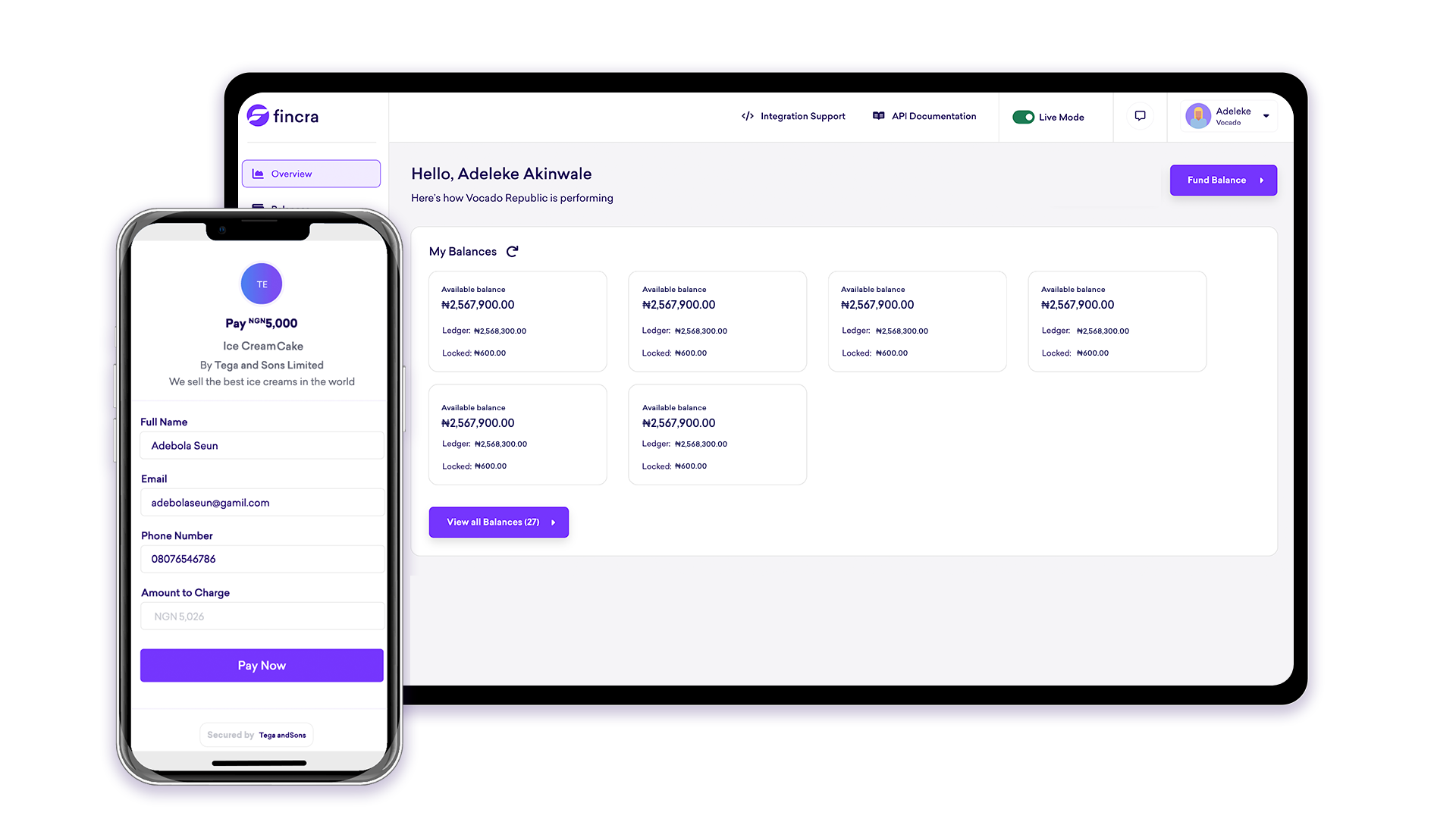
The licence allows Fincra to process local transactions directly within Ghana, including collecting payments, handling settlements in Ghanaian cedis, and facilitating inbound transfers into the country.
That matters because the African fintech landscape is changing.
For years, the continent’s fintech boom was dominated by consumer-facing apps promising faster transfers, digital wallets, and easier banking access. But increasingly, the real battle is shifting deeper into infrastructure, the regulated financial rails underneath those products.
And Fincra is betting heavily on that layer.
CEO Wole Ayodele has repeatedly argued that Africa’s biggest payments problem is not lack of apps, but lack of licensed, interoperable infrastructure capable of moving money efficiently across borders.
The Ghana approval fits directly into that strategy.
Rather than simply operating through third-party partners or correspondent banks, Fincra is building regulated presence market by market, allowing it to control settlement flows more directly and reduce dependence on intermediaries. That approach has become increasingly important as African businesses demand faster and cheaper cross-border payments.
And Ghana is a particularly strategic market.
The country has one of Africa’s most advanced mobile money ecosystems, with transaction volumes reaching roughly GH¢1.9 trillion in 2023, according to local. Informal regional trade is also growing rapidly, especially between Ghana and neighbouring West African economies, creating strong demand for reliable payment infrastructure.
That creates an opportunity for companies like Fincra to position themselves not just as payment providers, but as core infrastructure layers for African commerce.
The timing is also notable.
The Ghana licence comes only weeks after Fincra secured a Payment Service Provider licence in Canada, part of a broader strategy aimed at owning regulated access on both sides of major trade and diaspora corridors. The company already holds regulatory approvals in markets like South Africa and Tanzania, signalling an increasingly aggressive expansion push across multiple regions.
That strategy reflects a wider trend emerging across African fintech.
The easy-growth phase driven largely by venture capital and rapid user acquisition is giving way to something more operationally demanding: compliance, licensing, settlement infrastructure, and long-term financial connectivity.
In other words, fintech in Africa is maturing.
And infrastructure players may ultimately become more important than the flashy consumer apps that initially defined the sector.
That’s especially true as regulators across Africa tighten oversight around payments, remittances, and cross-border money movement. Companies with direct licences and local compliance capabilities are increasingly gaining an advantage over firms relying heavily on external banking relationships.
Fincra appears to understand that shift clearly.
Rather than positioning itself as a consumer wallet or neobank, it’s building something closer to a pan-African financial infrastructure network, one focused on enabling other businesses to move money more efficiently across fragmented markets.
That’s a less visible business model.
But potentially a far more durable one.
The bigger picture here is that Africa’s digital economy is becoming increasingly interconnected, while its payment systems remain fragmented across currencies, regulations, and banking frameworks.
Whoever solves that infrastructure problem at scale could end up controlling one of the most important layers of the continent’s digital economy.
And Fincra’s Ghana licence suggests the company wants to be one of those players.
Paul Balo is the founder of TechBooky and a highly skilled wireless communications professional with a strong background in cloud computing, offering extensive experience in designing, implementing, and managing wireless communication systems.
We use cookies to ensure that we give you the best experience on our website. If you continue to use this site we will assume that you are happy with it.