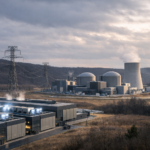
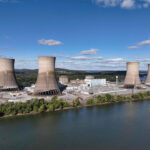
Google has inked an agreement to produce the enormous quantities of electricity required to run its artificial intelligence (AI) data centres using tiny nuclear reactors. According to Google, it will begin operating the first reactor this decade and bring additional lines online by 2035 thanks to the arrangement with Kairos Power.
Today, Google said that it has partnered with nuclear company Kairos Power to construct seven miniature reactors that would power its data centres. At a time when data centres and artificial intelligence are seeing a surge in energy consumption, the deal aims to add around 500 megawatts of carbon-free power.
Google said the new power plants will be operational by the end of the decade. Whether the reactors would connect directly to Google’s facilities (a setup known as “behind the meter”) or flow into the grid, with Google claiming the carbon-free electricity through its deal with Kairos, is unclear.
At a time when data centres and artificial intelligence are seeing a surge in energy consumption, the deal aims to add around 500 megawatts of carbon-free power.
With the agreement, Google is joining Amazon and Microsoft in relying on nuclear power to meet its electrical needs. Microsoft declared in September that it will compensate Constellation Energy to revive a Three Mile Island reactor that had been shut down in 2019. Amazon said earlier this year that it will construct a hyperscale data centre and connect it directly to another nuclear power plant in Pennsylvania.
The U.S. Department of Energy reported in July that Kairos was aiming for commercial operations by “the early 2030s,” which would be a minor change to a recent projection if the business can meet the 2030 goal. Even if Kairos meets the updated goal, it will still be competing with other fusion companies, several of whom want to build large-scale power plants before 2035.
In an effort to reduce the cost and expedite the construction of nuclear power facilities, a new generation of nuclear startups, including Kairos, are constructing so-called small-modular reactors (SMR).
The majority of nuclear power plants are enormous structures that can generate 1,000 megawatts or more, but they take years to plan and over ten years to construct. Vogtle Units 3 and 4 in Georgia, the country’s newest fission reactors, were put into service in 2023 and 2024, respectively, ending a seven-year hiatus (the next newest reactor was commissioned in 2016). Nevertheless, they were $17 billion over budget and seven years late.
SMR businesses are working to reduce costs and expedite building of nuclear power reactors by employing mass manufacturing techniques. By using molten lithium fluoride and beryllium fluoride salts rather than water to cool the reactor, Kairos attempts to push the technology farther. In contrast to Oklo, another SMR company, the startup’s plans for a 35 megawatt demonstration reactor have been approved by the Nuclear Regulatory.
Even with the governmental approval, Kairos still has a lot of obstacles to overcome. Since there are currently no commercial small-modular reactors in operation, the economics are still mainly unknown. Furthermore, Kairos’s molten salt design defies decades of water-cooled reactor industry knowledge.
However, the largest obstacle facing Kairos may not be technological in nature. According to Pew Research, 44% of Americans are still against nuclear power, despite 56% saying they support it. Reactor site selection may increase the number of opponents; the Pew poll only questioned respondents if the United States should develop nuclear power in general, not in their local communities. Furthermore, even while support for nuclear power is close to a recent peak, a much larger percentage of Americans favour solar and wind energy, which are both readily available and considerably less expensive than new nuclear power facilities.
Related Reading
More contextual TechBooky stories selected from tags, categories and article context.
We use cookies to ensure that we give you the best experience on our website. If you continue to use this site we will assume that you are happy with it.