Google is bringing its latest AI models directly into the Android keyboard. At its Android Show: I/O Edition 2026 event, the company announced Rambler, a new Gemini-powered voice dictation feature built into Gboard. The move pushes Google into more direct competition with a wave of AI transcription startups and could reshape what users expect from dictation on Android.
Rambler will initially roll out this summer to Samsung Galaxy and Google Pixel phones before expanding to other Android devices. Because Gboard is the default keyboard for most Android users worldwide, the feature will effectively arrive pre-installed for hundreds of millions of people once it broadens out, giving Google a powerful distribution edge over standalone dictation apps.
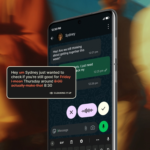
Rambler works much like other modern dictation tools, cleaning up speech in real time. It removes filler words such as “um” and “ah” and can handle mid-sentence corrections. For example, a user can say, “I am going to meet you on Wednesday at our usual coffee shop at 3 p.m. … um, 2 p.m.,” and Rambler will adjust the transcript to reflect the updated time.
Under the hood, Google is using Gemini-based multilingual models. These models support code switching, allowing users to move between languages in the same sentence for instance, shifting from English to Hindi while the system preserves context and continues transcribing accurately. That behaviour mirrors how many multilingual speakers actually talk, and it is an area where most Western-focused dictation apps have so far been slow to keep up.
Google says Gboard will clearly indicate when Rambler is active. The company also emphasises that Rambler doesn’t store voice recordings and uses audio solely for transcription. Because the feature works across all apps where Gboard is used, Google described it during the briefing as akin to “reinventing the keyboard.”
On privacy, Ben Greenwood, director of Android Core Experiences, said Google uses a mix of on-device and cloud-based processing and that the company has “invested significantly over many years” to make those features “safe and private.” That positioning appears aimed at users who may be comparing Rambler with independent dictation apps that take different approaches to handling voice data.
The launch comes after several years of rapid experimentation in AI-powered dictation. Startups like Wispr Flow, Willow, Superwhisper, Monologue, Handy and Typeless have built products for people who want fast transcription and note-taking, especially on desktop and iOS. Until now, though, much of that momentum has bypassed Android, which has remained comparatively underserved by this new crop of apps.
Google itself has been probing the space from multiple angles. Last month, it released AI Edge Eloquent, an offline-first dictation app for iOS that runs on its on-device Gemma AI models. Rambler, however, is the company’s clearest attempt yet to make advanced dictation a default part of the Android experience through Gboard.
For the startups, that raises the competitive bar. When a platform owner builds a feature into the operating system layer or a default app, independent tools have to justify their existence. In practice, that means offering clearly better accuracy, richer workflows and integrations, or stronger privacy guarantees than what is available “for free” inside the default keyboard.
The real test, then, is no longer whether third-party teams can build a good dictation app. It is whether they can build something so compelling that Android users will go out of their way to find, install and pay attention to it when Rambler is already sitting a tap away.
Related Reading
More contextual TechBooky stories selected from tags, categories and article context.
Paul Balo is the founder of TechBooky and a highly skilled wireless communications professional with a strong background in cloud computing, offering extensive experience in designing, implementing, and managing wireless communication systems.
We use cookies to ensure that we give you the best experience on our website. If you continue to use this site we will assume that you are happy with it.