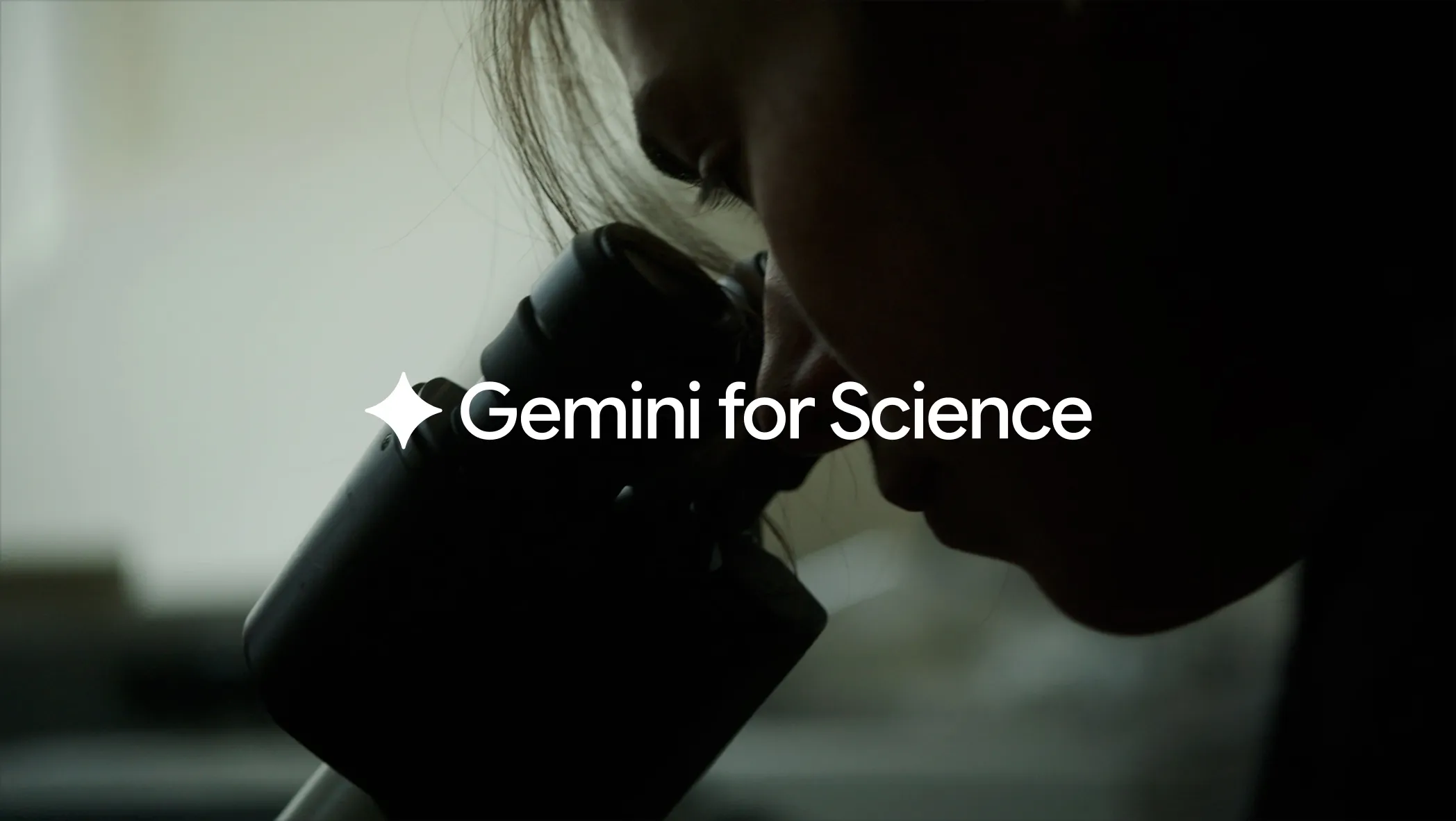
Google is turning its Gemini AI model toward scientific work, introducing a set of experimental tools designed to support researchers with some of the most time‑consuming parts of the scientific process.
Announced during Google I/O 2026, the new collection is called Gemini for Science. It brings together three main features; Hypothesis Generation, Computational Discovery and Literature Insights along with a related Science Skills capability that taps major life science databases. Google says the goal is to help researchers generate ideas, test them at scale and digest large volumes of scientific literature more efficiently.
The first tool, Hypothesis Generation, is built to support the early stages of the scientific method. According to Google’s description, it can sift through millions of scientific papers to surface potential theories or challenges a researcher might want to explore. In practice, it’s intended to help frame or refine a hypothesis, backed by references.
Google says the claims this tool produces are “deeply verified and supported by clickable citations” to maintain what it calls “absolute rigor.” That means researchers can trace suggestions back to the underlying literature rather than treating the outputs as opaque AI guesses.
Once a hypothesis is in place, the Computational Discovery tool is designed to help put it to the test. Google describes this as an “agentic search engine” that can generate thousands of tests and experiments far more quickly than a manual process. While specific scientific domains or methods are not detailed, the intent is to use AI to explore a wide space of possible experiments and conditions, and to do so at machine speed.
The third feature, Literature Insights, focuses on making the existing body of research easier to navigate. It acts as an AI chat interface over scientific literature, returning more digestible outputs when researchers query a topic. Google says it can generate reports, infographics and even audio or video overviews based on the literature it analyses, turning dense papers into formats that may be faster to absorb or share within a team.
Alongside the three headline features, Google is also introducing a Science Skills capability as part of the Gemini for Science offering. This tool is meant to pull insights from more than 30 major life science databases and tools, Google does not name them individually and to help automate complex, often manual workflows. The company says tasks that would usually take hours could be completed in minutes using this system.
All of these Gemini for Science tools are classified as experimental, and Google says access will roll out gradually starting now. Researchers and other interested users can request access by filling out a form on the Google Labs website. In addition to individual sign‑ups, Google plans to offer Gemini for Science to enterprise organizations through Google Cloud, positioning the tools for use inside larger research institutions or companies.
While AI continues to expand into every corner of the tech industry, Google is pitching Gemini for Science specifically as a way to reduce the friction around reading, organizing and testing scientific ideas. For now, how well it works in real‑world labs and research groups will depend on how these experimental tools perform as more scientists gain access.
Related Reading
More contextual TechBooky stories selected from tags, categories and article context.
Paul Balo is the founder of TechBooky and a highly skilled wireless communications professional with a strong background in cloud computing, offering extensive experience in designing, implementing, and managing wireless communication systems.
We use cookies to ensure that we give you the best experience on our website. If you continue to use this site we will assume that you are happy with it.