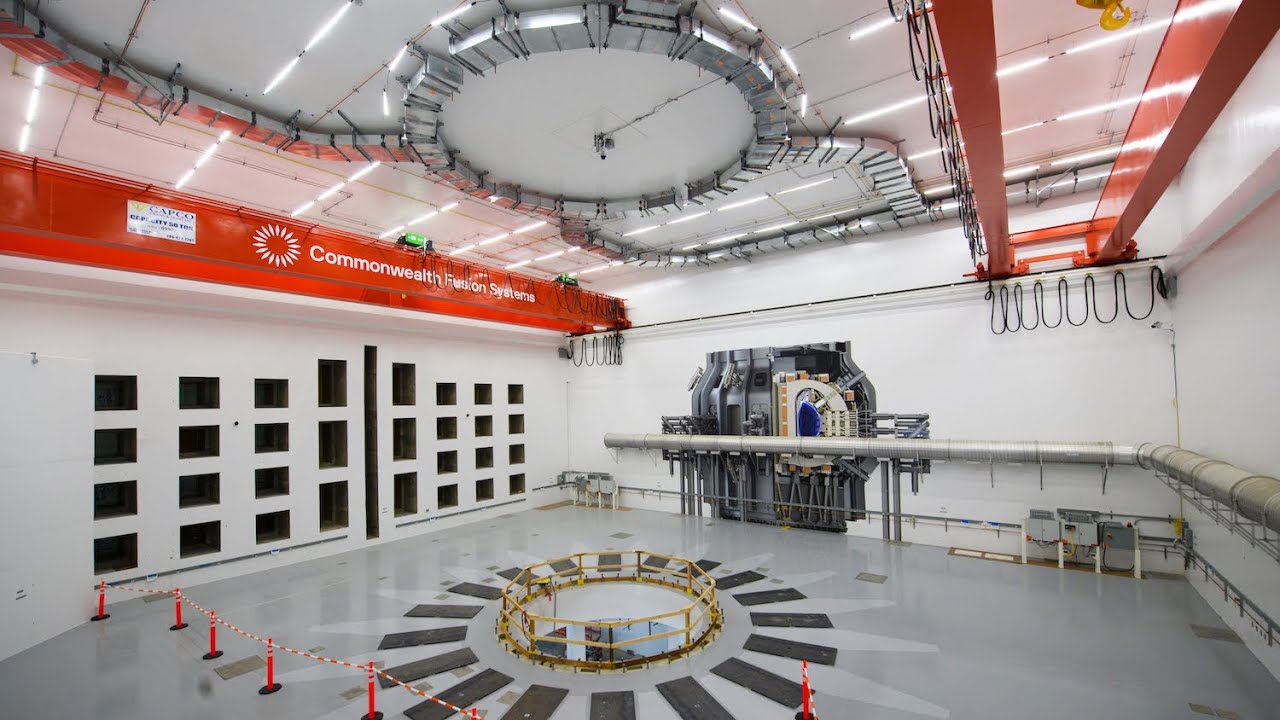
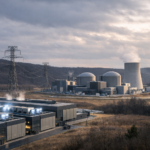
Alphabet just pulled off a first in the energy world: it signed a binding offtake agreement for 200 megawatts of nuclear-fusion electricity with Massachusetts-based Commonwealth Fusion Systems (CFS). The power will flow from CFS’s ARC plant as soon as the facility switches on in the early 2030s—making this the biggest and earliest commercial commitment to fusion energy ever inked by a private company. The announcement landed the same morning Google’s latest sustainability report revealed a sobering statistic: the company’s carbon footprint has surged 50 percent since 2019, driven largely by ballooning AI workloads and an expanding global data-centre fleet.
Google has spent years buying wind and solar PPAs to claim 100 percent “renewable matching,” but intermittent resources can’t guarantee the 24/7 clean power its AI clusters demand. Fusion, if it works at scale, offers baseload energy without carbon, long-lived waste or meltdown risk. CFS’s ARC reactor—a follow-on to its SPARC proof-of-concept—uses high-temperature superconducting magnets to confine super-hot plasma inside a compact tokamak, making the plant small enough to build on existing industrial land and theoretically cheap enough to replicate quickly.
Two-hundred megawatts could run nearly 150,000 U.S. homes or a hyperscale data-centre campus the size of Google’s new Kansas facility. In Europe, where Google operates in the UK’s London cloud region and Germany’s Frankfurt hub, that same capacity helps satisfy legally binding zero-emission targets coming into force by 2030. For Norway, already a hydropower leader, the deal is further validation that northern Europe could export clean electrons south when fusion matures. In Nigeria—where grid reliability remains a hurdle for tech expansion—analysts see longer-term potential: if fusion costs fall, Lagos’s emerging data-centre scene could leapfrog directly to CO₂-free baseload.
Google joins Microsoft, which last year agreed to purchase 50 MW from Helion Energy by 2028. But Google’s contract is four times larger and, according to CFS insiders, carries stricter “commercial operation” clauses—meaning both companies believe fusion can transition from laboratory experiments to grid-ready power within a single investment cycle. Venture funding backs that optimism: CFS has raised more than $2 billion; Helion, TAE Technologies and General Fusion have collectively passed $6 billion.
Fusion has dazzled and disappointed for 70 years. Sceptics note that ARC must exceed a net-electricity gain—a milestone no reactor has yet hit—and must do so at a cost per kilowatt-hour that can undercut firmed solar and small-modular fission. Google’s contract reportedly includes price-escalation caps and milestone-based exits, protecting Alphabet if CFS slips past its 2031 target. Still, the move signals real confidence: CFO Ruth Porat told investors the offtake is part of a “portfolio of firm, clean resources” that will anchor the company’s 2030 net-zero pledge even as AI inference grows “exponentially.”
Should ARC deliver, Google will secure a chunk of carbon-free power large enough to offset the emissions of its entire YouTube streaming region or one-third of its global office footprint. More broadly, a functioning fusion plant would rewrite decarbonisation roadmaps for data-centre operators, aluminium smelters, green-hydrogen producers—anyone who needs round-the-clock electrons without CO₂. It could also defuse political pushback over Big Tech’s energy appetite; public concern spiked after Google disclosed that training Gemini Ultra consumed as much electricity as 150,000 European households for a week.
Alphabet’s 200 MW fusion offtake isn’t a publicity stunt; it’s a high-stakes hedge that advances fusion from “someday” to “scheduled delivery.” If CFS hits its milestones, Google may not just clean up its own carbon ledger—it could prove that fusion is ready for prime time a decade ahead of most forecasts. And if it misses? The deal still accelerates regulatory frameworks, supply-chain planning and investor scrutiny—valuable groundwork for whichever fusion team succeeds next. Either way, Google’s bet pushes the dream of limitless, clean power out of science fiction and into the business pages, where the real disruptions begin.
Paul Balo is the founder of TechBooky and a highly skilled wireless communications professional with a strong background in cloud computing, offering extensive experience in designing, implementing, and managing wireless communication systems.
We use cookies to ensure that we give you the best experience on our website. If you continue to use this site we will assume that you are happy with it.