In order to improve website loading speeds and increase Nigeria’s resilience to cyberattacks, the Internet Exchange Point of Nigeria (IXPN) announced the deployment of new internet infrastructure which is intended to localise internet traffic and domain resolution in order to improve national digital resilience and speed up web access.
This was revealed by IXPN CEO Muhammad Rudman during his remarks at the 2026 Annual Members Engagement Forum in Lagos.
The project, according to Rudman, includes the construction of critical equipment that enables ISPs to resolve website addresses locally rather than depending on servers located abroad.
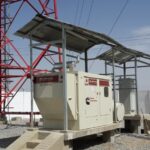
Working along with the Canadian Internet Registration Authority (CIRA), which provided hardware for an authoritative DNS server installed within IXPN’s network, was a key part of the upgrading.
Requests that convert website names into numerical addresses that computers use to find websites online are handled by the server.
Rudman, the CEO of IXPN, had claimed that the server can currently handle around 1,000 requests per second and supports a wide range of international domain names, including .org, .info, .io, .asia, .apple, and .alibaba.
The node is processing about 1,000 DNS requests per second, according to CIRA, indicating high utilisation and obvious performance advantages for the exchange’s networks, Rudman said.
“This deployment further positions IXPN as a key contributor to regional Internet resilience, reduces upstream dependence, and significantly improves local DNS performance,” he continued.
He clarified that before a website loads, a number of lookups across several servers across the world take place each time a user enters the address of the website into a browser.
IXPN improves speed and reliability by reducing the distance the request must travel by hosting essential components of this system locally.
In order to function as a regional internet resolution site, Rudman revealed that the company has also inked a memorandum of understanding with Verisign, allowing it to host primary DNS infrastructure for well-known international domains like .com and .net locally.
He pointed out that there are a number of advantages to putting these vital technologies in place locally, such as quicker access to websites and email services, better defence against cyberattacks that target essential internet infrastructure, and increased network stability overall.
He claims that the breakthrough makes Nigeria a more sophisticated digital hub and lowers the possibility of widespread internet interruptions brought on by outages or attacks impacting foreign infrastructure.
Looking back in time IXPN declared in April of last year that it had broken beyond 1 Terabit per second (1Tbps) in peak domestic internet traffic for the first time, a historic accomplishment that solidifies the nation’s increasing digital dominance.
The deployment is also supposed to serve as
Microsoft Connected Cache, a new server, was set up in Abuja to service Northern Nigeria, while capacity in Lagos was increased from 25 Gbps to 75 Gbps.
Google Global Cache: To better manage high YouTube traffic, the infrastructure was increased from 53.5 Gbps to 153.5 Gbps.
Backbone Capacity Expansion: To handle growing traffic, IXPN improved a number of important interconnection routes in Lagos, such as the link between Digital Realty and Equinix, which increased from 300 Gbps to 500 Gbps.
The group claims that Nigeria has lowered prices, increased speeds, and made sure its digital economy prospers with domestic infrastructure by limiting local internet traffic within the nation.
Rudman stated at the time that achieving this milestone for Nigeria entails lowering our dependency on foreign bandwidth, lowering latency for local services, and solidifying our position as Africa’s digital hub.
It’s a good thing to understand that it is the largest Internet Exchange Point in Nigeria. IXPN is a membership-based, non-profit organisation that acts as a vital centre for connecting ISPs, content networks, businesses, and digital platforms.
The World Summit on the Information Society (WSIS) in Tunisia in 2005 gave rise to the organisation’s concept.
Following a stakeholders’ forum held by the Nigerian Communications Commission (NCC) in February 2006, an implementation committee led by the Internet Service Providers Association (ISPAN) was established.
The NCC established a temporary board for the organisation in March 2007.
Nigeria’s significant reliance on costly international linkages has been replaced by a more effective, domestic-first internet strategy thanks to the Internet Exchange Point of Nigeria’s (IXPN) deployment of essential infrastructure, which has saved the country millions of dollars annually.
In financial savings, IXPN greatly lessens the requirement for ISPs to buy foreign bandwidth for domestic data by localising traffic.
Total Annual Savings: According to current sources, Nigeria saves about $40 million (about ₦15.2 billion) a year.
Reduction of Bandwidth Cost: While international IP transit can cost more than $27 per Mbps/month, port charges at IXPN are about $0.43 per Mbps/month. Almost $27 is saved per Mbps for each unit of traffic that is retained in Nigeria.
Operating Efficiency: By lowering bandwidth costs by roughly 20%, localised peering enables a typical ISP to reinvest in network growth.
Impact on the Nation: Since more than 70% of Nigeria’s internet traffic is now localised, the nation’s overall “offshore” bandwidth payments have significantly decreased.
Major international content providers and all local mobile network operators (MNOs) are among the more than 130 linked members of IXPN at the moment.
We use cookies to ensure that we give you the best experience on our website. If you continue to use this site we will assume that you are happy with it.