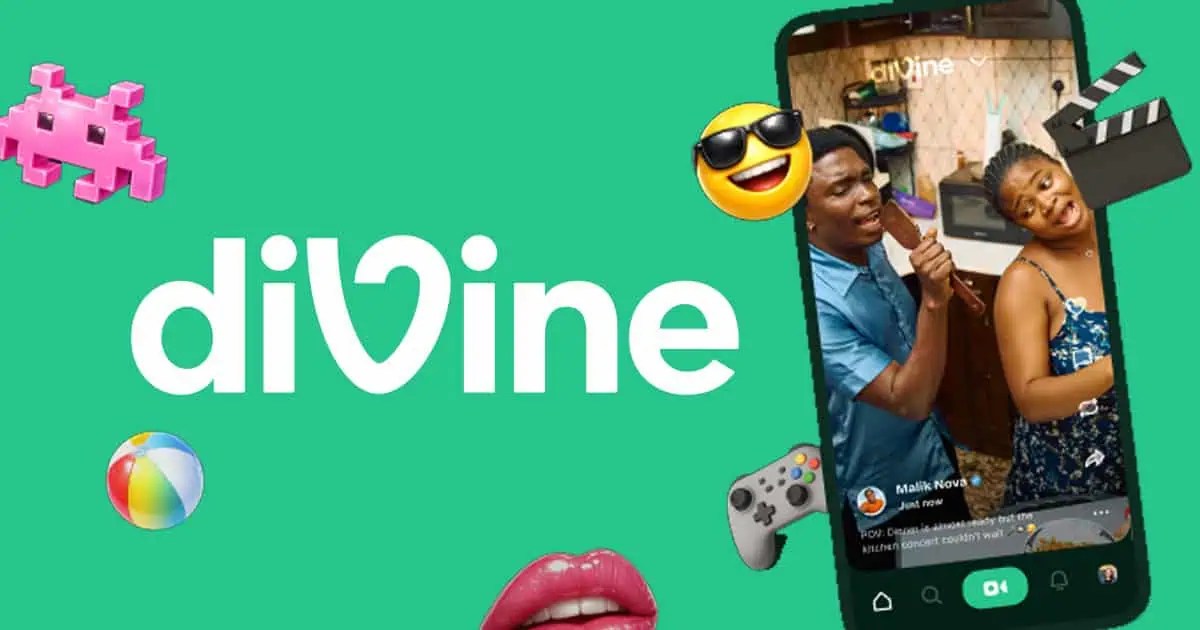
Vine’s trademark six-second looping videos are getting a second life. Divine, a new app backed by Twitter co-founder Jack Dorsey’s non-profit, is now available to the public on Apple’s App Store and Google Play, reviving both classic Vines and the ability to post new ones.
The project restores a significant chunk of Vine’s original content while layering in modern social features and a strong stance against AI-generated clips. It also doubles as an experiment in open social protocols, positioning itself as a counterweight to closed, ad-driven platforms.
Divine gives users access to an archive of roughly 500,000 Vine videos from nearly 100,000 original creators, reconstructed from backups of the long‑defunct service. Those videos were largely preserved by the Archive Team, a community archiving project that had stored Vine content in massive 40–50 GB binary files.
Evan Henshaw-Plath, an early Twitter employee who goes by “Rabble” online and is a member of Dorsey’s non-profit “and Other Stuff,” led the effort to turn those unwieldy backups into a functioning video library. He wrote big data scripts to understand the file formats and reassemble not just the clips themselves but also associated engagement data like views, likes, and comments. Not all data could be restored, but the archive has steadily grown: from about 100,000 top Vines in a test phase last November, to 300,000 ahead of launch, and now to roughly half a million videos.
The relaunch has already drawn attention from notable early Vine creators, including Lele Pons, JimmyHere, MightyDuck, and Jack & Jack. User profiles on Divine are viewable on the web even if someone doesn’t have the mobile app installed.
Dorsey’s involvement comes through “and Other Stuff,” a non-profit formed in May 2025 to fund experimental open source projects with ambitions to reshape social media. Divine is financed by this non-profit, meaning Dorsey is not a traditional investor seeking a financial return. Instead, the backing is framed as an attempt to reverse what he now sees as a mistake made while leading Twitter: shutting down Vine.
One of Divine’s defining positions is that it wants nothing to do with AI-generated video. Rabble said he personally dislikes AI content, particularly the feeling of being “tricked” or overwhelmed by low-effort output. To keep what some critics call “AI slop” off the platform, Divine requires users to either record directly in the app or verify the provenance of uploaded clips using C2PA, an open standard that tracks a piece of digital content’s origin and edit history.
The team had initially planned to ship Divine quickly after early testing, but feedback from veteran Vine creators pushed them to slow down. They revisited the design and rewrote parts of the codebase before opening the doors more broadly.
The launch version reflects that extra work. A key addition is “compilation mode,” a nod to the way many younger users grew up consuming Vines as long, themed compilations. With this mode, people can build and share their own lists of videos. For example, visiting a hashtag such as #cats will autoplay a continuous stream of matching Vines; viewers can pause to like or repost individual clips, or simply watch the feed roll by.
Beyond nostalgia, Divine is also a testbed for decentralised social technology. The app is built on Nostr, an open social protocol, and the team is experimenting with integrating the open source AT Protocol that powers Bluesky. In the future, Divine may also connect to ActivityPub, the protocol that underlies services like Mastodon and Flipboard and is used by Meta’s Threads. The broader aim is to “reclaim” social media from large tech platforms by relying on open standards instead of proprietary stacks.
Divine has no revenue model in place and is structured as a public benefit corporation. Rabble envisions that creators could still monetise their presence much as they do on other platforms, through brand deals or collaborations. He also points to Patreon-style direct support and the idea of a Pro account with extra features as potential directions, but none of that is live yet.
For many creators, the value is at least partly cultural. Lele Pons called Vine “the beginning of everything” for her career and described the app as “iconic,” saying it was a key moment both personally and for internet culture. She said she is happy to see “early classics brought back to life” and to have the chance to make new ones on Divine.
Divine is free to download on the App Store, Google Play, and the Nostr-powered Zapstore. Access will roll out first to people on the waitlist, with others joining over time via invite codes.
Paul Balo is the founder of TechBooky and a highly skilled wireless communications professional with a strong background in cloud computing, offering extensive experience in designing, implementing, and managing wireless communication systems.
We use cookies to ensure that we give you the best experience on our website. If you continue to use this site we will assume that you are happy with it.