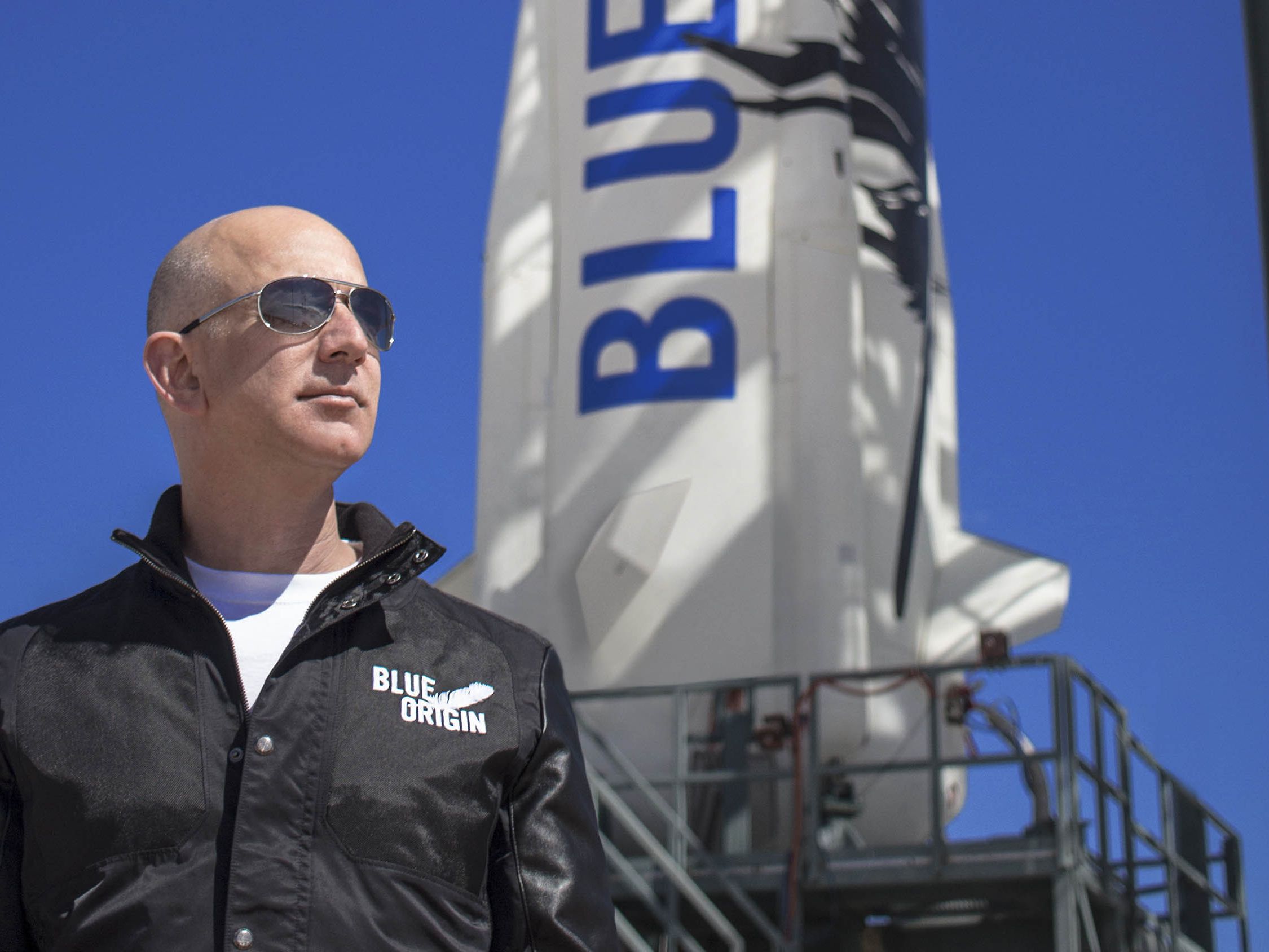
For a quarter of a century, Blue Origin has been one of the most unusual companies in technology.
While rivals spent years raising billions from venture capital firms and public markets, Jeff Bezos largely funded his space company himself, frequently selling Amazon shares to finance increasingly ambitious rockets, engines and lunar missions.
That chapter now appears to be ending.
Blue Origin is reportedly seeking $10 billion in its first-ever external fundraising round, a deal that would value the company at approximately $130 billion before the investment, according to reports from The New York Times DealBook, later confirmed by Reuters. Asset manager Coatue Management is expected to lead the round with a $4 billion commitment, while Bezos himself is reportedly investing another $2 billion, with the remaining capital coming from institutional investors.
If completed, the deal would mark the biggest strategic shift in Blue Origin’s history.
It isn’t simply about raising cash.
It’s about transforming Blue Origin from Jeff Bezos’ privately funded passion project into a company backed by some of the world’s largest investment firms.
That says as much about today’s space economy as it does about Blue Origin itself.
The timing is no coincidence.
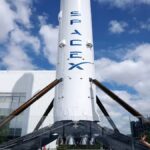
Investor enthusiasm for commercial space companies has surged following SpaceX’s blockbuster public debut, which valued Elon Musk’s company at roughly $1.75 trillion and became one of the largest technology IPOs ever. That success has fundamentally changed how institutional investors view the commercial space industry.
For years, Blue Origin remained difficult to value because there was no public market price and virtually no outside investors.
This funding round changes that.
At $130 billion, Blue Origin would instantly become one of the world’s most valuable privately held technology companies, despite generating far less revenue than its biggest rival.
That valuation reflects investor belief that the future value of space companies extends well beyond launching rockets.
It includes satellite infrastructure, national security contracts, lunar exploration, cloud computing in orbit and eventually entirely new industries that don’t yet exist.
Despite its enormous valuation, Blue Origin remains well behind SpaceX operationally.
The company has secured multibillion-dollar contracts with NASA through the Artemis lunar programme and continues to win work from the U.S. Space Force, while its BE-4 engines also power rockets built by other launch providers. But in terms of launch frequency, commercial revenue and satellite services, it still trails Elon Musk’s company by a considerable margin.
Blue Origin also suffered a setback earlier this year when its New Glenn heavy-lift rocket exploded during a static-fire test, delaying its launch schedule while engineers investigated the failure. Reuters reports that the company still expects New Glenn to return to flight later this year.
Even so, the company has continued expanding aggressively.
Beyond reusable launch vehicles, Blue Origin has invested heavily in rocket engines, lunar transportation systems and orbital infrastructure, while also exploring new opportunities in artificial intelligence.
One of its most ambitious initiatives is Project Sunrise, a proposed satellite constellation designed to host AI data centres in orbit. If realised, the project would place Blue Origin in direct competition with companies pursuing space-based computing infrastructure, including SpaceX.
The obvious question is why Jeff Bezos needs outside investors at all.
After all, he remains one of the world’s wealthiest individuals.
The answer is scale. Building rockets is expensive.
Building lunar landers, satellite networks, reusable launch systems and orbital AI infrastructure is even more expensive.
Reuters reports that Blue Origin is expected to spend nearly $5 billion this year alone, a level of investment that becomes increasingly difficult to sustain through personal funding, regardless of personal wealth.
Bringing in institutional investors also gives Blue Origin something else.
A market valuation.
That makes future fundraising easier, strengthens confidence among government customers and creates a clearer path should the company eventually decide to pursue a public listing.
For years, the commercial space race was largely financed by billionaires. Elon Musk funded SpaceX. Jeff Bezos funded Blue Origin.
That model is changing.
Wall Street is now pouring capital into companies building rockets, satellites, launch services and AI infrastructure in orbit because investors increasingly believe the next trillion-dollar technology industry won’t be confined to Earth.
Blue Origin’s planned fundraising reflects that shift. Jeff Bezos isn’t just raising money.
He’s opening the door for institutional investors to own a piece of one of the world’s most ambitious space companies.
And after watching SpaceX capture the market’s imagination, Wall Street appears more than willing to come along for the ride.
Related Reading
More contextual TechBooky stories selected from tags, categories and article context.
Paul Balo is the founder of TechBooky and a highly skilled wireless communications professional with a strong background in cloud computing, offering extensive experience in designing, implementing, and managing wireless communication systems.
We use cookies to ensure that we give you the best experience on our website. If you continue to use this site we will assume that you are happy with it.