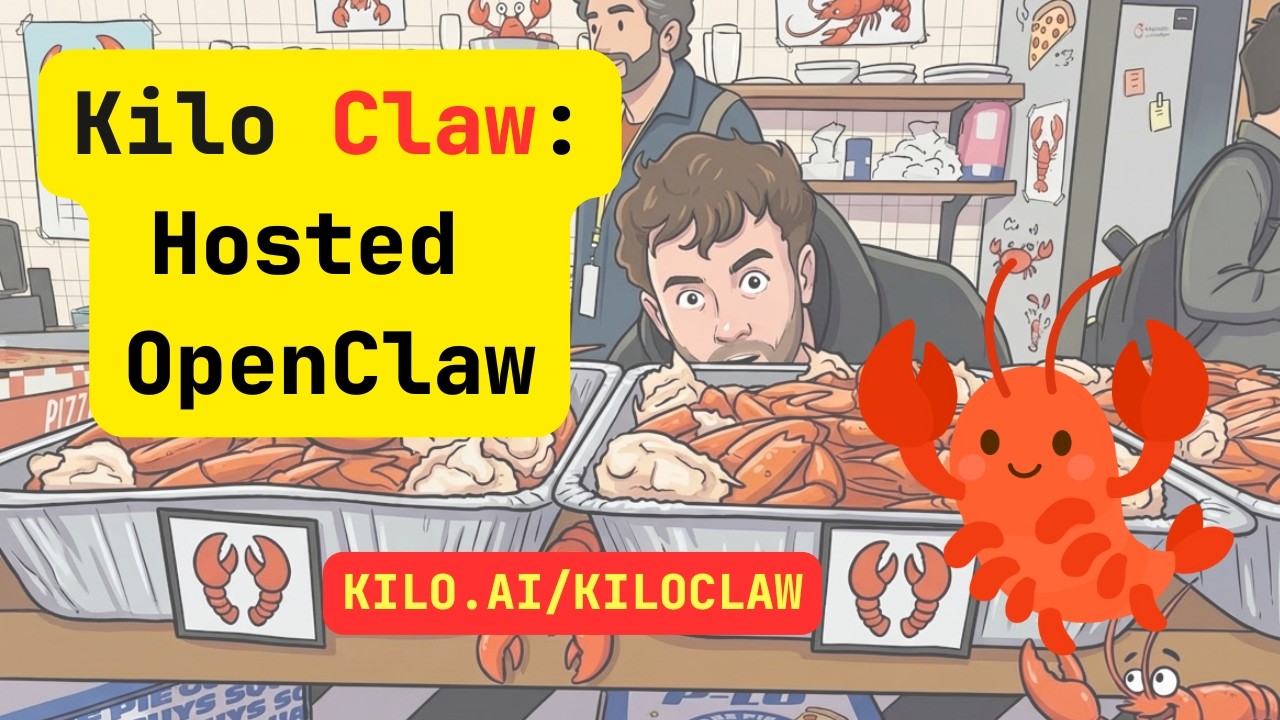
Kilo, an AI infrastructure startup backed by GitLab co-founder Sid Sijbrandij, has launched the general availability of KiloClaw, a fully managed service aimed at taking OpenClaw agents from idea to production in under 60 seconds.
The company is targeting one of the biggest pain points in modern AI development; the gap between building an agent and actually running it reliably. Instead of hours spent on configuration, dependency management and server setup, KiloClaw is pitched as a shortcut past what the company describes as the “SSH, Docker, and YAML” barriers that still stand between many developers and production-grade AI agents.
OpenClaw has quickly become a standout project in the AI agent ecosystem, amassing more than 161,000 stars on GitHub. Its appeal stems from doing more than just chat: OpenClaw-powered agents can perform concrete tasks such as controlling web browsers, managing files and integrating with over 50 chat platforms, including services like WhatsApp and Signal.
But running that capability in production has not been straightforward. According to Kilo co-founder and CEO Scott Breitenother, speaking in an interview with VentureBeat, the core software is not the main hurdle getting OpenClaw reliably deployed and running is. That gap is what KiloClaw is designed to close.
KiloClaw provides a hosted environment for OpenClaw agents so developers do not have to provision their own machines or virtual private servers, or maintain bespoke setups often likened to a “Mac Mini on a desk” deployment model. Instead, KiloClaw abstracts away that infrastructure layer, giving developers a managed path to running agents without owning or operating the underlying hardware.
Multi-tenant VMs on Fly.io
Under the hood, KiloClaw runs on a multi-tenant virtual machine architecture powered by Fly.io, a Chicago-based, remote-first startup that offers a developer-focused public cloud. By building on Fly.io’s platform, KiloClaw aims to provide isolation and security guarantees that would be difficult for individual developers to replicate on ad hoc infrastructure.
The shift from single-user or hobbyist hardware setups to a managed, multi-tenant VM architecture is central to Kilo’s pitch. Rather than treating OpenClaw deployments as one-off installations, KiloClaw frames them as hosted services that can be spun up quickly and run on shared, cloud-based infrastructure.
Kilo positions this as part of a broader transition in software development, often described as “vibe coding,” where the focus is less on managing low-level infrastructure and more on how reliably AI systems can be deployed and operated. In that view, the quality of the model is only part of the equation; the robustness of the platform that runs it is just as important.
For now, KiloClaw’s core promise is straightforward: shorten the path from OpenClaw’s agent capabilities to a production-ready deployment by offering a fully managed, Fly.io-backed hosting layer that developers can access without wrestling with traditional DevOps tooling.
Paul Balo is the founder of TechBooky and a highly skilled wireless communications professional with a strong background in cloud computing, offering extensive experience in designing, implementing, and managing wireless communication systems.
We use cookies to ensure that we give you the best experience on our website. If you continue to use this site we will assume that you are happy with it.