The adoption of mobile payments has not fully unfolded. However, the unprecedented sales of Apple’s (AAPL) latest phones signal a potential surge in their use.
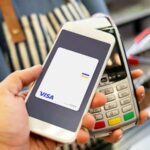
Apple Pay – the ground-breaking mobile payment system, compatible with iPhone 6 and iPhone 6 Plus models – provides users an effortless way to make purchases. Users can securely store their credit card information on their phone, enabling them merely tap their phone on the in-store terminal to complete payment.
In light of recent data breaches at prominent retailers such as Home Depot and Target, consumers may understandably harbor concerns about the security of such new technology. Indeed, an Accenture report from the previous year revealed that 45% of those surveyed who do not use mobile payments attributed their reluctance to security concerns.
Despite such hesitations, mobile payments are expected to gain traction, especially considering the enthusiasm revolving around the newest generation of iPhones. The iPhone 6 and iPhone 6 Plus saw a staggering 4 million preorder figure. A 2014 study by Bain & Co. suggested that while only 3% to 7% of consumers currently use their phones to make in-store purchases, this figure doubled from 2012 to 2013. Moreover, an estimated 27% of shoppers expressed willingness to try mobile payments.
Set to launch in October, Apple Pay is supported by three major card payment stakeholders: Visa, MasterCard, and American Express credit and debit cards. This article will unravel the security measures integrated into Apple Pay:
1. EMV Technology
Often referred to as “chip and pin” technology, EMV (which stands for Europay, MasterCard, and Visa) technology has found widespread acceptance in Europe. Deemed safer than the magnetic stripe technology currently employed by U.S. credit cards, experts predict a complete switch to this technology in the U.S. by October 2015.
James Anderson, Group Head of Mobile and Emerging Payments at MasterCard, shares that EMV technology forms the cornerstone of each Apple Pay transaction. When a user issues a payment request using Apple Pay, the phone generates a unique sequence of numbers referred to as a cryptogram. This process ensures the safety of each transaction, as it thwarts any fraudulent transactions by hackers.
2. Token Technology
Jim McCarthy, who led the team that developed Apple Pay technology at Visa, explains that Apple Pay employs “tokenization” technology, which elevates the security offered by EMV technology. Instead of storing your 16-digit credit card number, the phone records a unique number, termed a token.
“This number is bound to the device itself,” elaborates McCarthy, meaning the token should only be used by the device that generated it. In essence, even if a hacker manages to access your 16-digit token, they can’t make purchases without the physical phone.
Tokenization carries another vital benefit – in the event that your iPhone is lost, there is no need to replace your credit card. Simply disable that token using the “Find My iPhone” tool, says Anderson. When you get hold of a new phone, you will be assigned a new unique token.
3. Touch ID
Another crucial security feature of Apple Pay is “Touch ID.” For a transaction to be processed, a user must either use the phone’s touch ID feature or input their passcode.
“The legitimate fingerprint is mandatory to authenticate the transaction,” argues Anderson, who praises the feature’s intuitiveness. “As you tap the phone on the terminal, it swiftly prompts you to place your finger on it, quickly reads the input, and swiftly approves the transaction. It’s an additional layer of security we incorporated into the system,” he elucidates.
To conclude: If someone were to steal your iPhone, the thief will not be able to make purchases unless they have your fingerprint or know your passcode.
Source: Gabrielle Karol/ Fox Business
This article was updated in 2025 to reflect modern realities.
Paul Balo is the founder of TechBooky and a highly skilled wireless communications professional with a strong background in cloud computing, offering extensive experience in designing, implementing, and managing wireless communication systems.
We use cookies to ensure that we give you the best experience on our website. If you continue to use this site we will assume that you are happy with it.