Meta is rolling out a new safeguard for its AI-powered glasses aimed at stopping people from secretly recording others. But the change lands amid a broader AI strategy that leans heavily on collecting and using more personal data across Meta’s platforms.
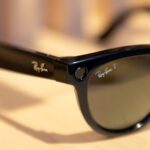
The company’s AI glasses already have a recording indicator, an LED light that turns on when the camera is active. Meta now says it will disable the camera entirely if that LED has been tampered with or destroyed. The move follows reports that some owners were using tape or other methods to cover or defeat the light so that people around them would not realize they were being filmed.
Meta is positioning the update as an industry-leading safety measure. In a blog post, the company said that “no other kind of camera has done this and we’re proud to lead the industry effort,” while acknowledging that it was responding directly to real-world misuse attempts. The safeguard builds on a previous change that disabled recording when the LED was blocked; Meta says some users went further, using “sophisticated efforts to modify or destroy the capture LED.”
By confirming that it has to defend against users who want to record without others’ knowledge, Meta is effectively conceding that some buyers are using AI glasses as covert surveillance tools, including to record people often women without consent.
The new hardware protection is arriving as Meta’s wider AI roadmap pulls in the opposite direction on privacy. Meta’s AI glasses have already earned a reputation as a “creepy” technology in the public conversation, and the company is under pressure to show that it is taking safety seriously. At the same time, its current and planned AI products assume deeper access to users’ content and behaviour.
Meta is reportedly testing a prototype of AI glasses that would “continuously collect audio while taking photos every few seconds,” according to sources cited by the Financial Times. That concept suggests a future in which the devices are always listening and frequently capturing what the wearer sees a far more intensive level of monitoring than occasional manual recording.
On its blog, Meta tries to reassure potential buyers by answering basic privacy questions such as “who can see the photos and videos I take on my glasses?” The company’s answer is: “You, and only you unless you choose to share them.” But elsewhere, Meta’s policies make clear that images users share with Meta AI can be fed into training its AI systems.
Beyond the glasses, Meta is steadily broadening the types and volume of data that can be used for its AI models. The company has:
Trained its AI on users’ images.
Enabled AI features that use personal content by default unless users actively opt out.
Explored biometric facial recognition and more continuous recording scenarios.
On the same day it announced the new LED-based safeguard for the glasses, Meta also said that Meta AI can now use anyone’s public Instagram photos to generate AI images, again unless they opt out. It has also built features that let Meta AI work with pictures in a user’s phone Camera Roll that have never been shared, and shipped an AI app with privacy controls weak enough that users have effectively doxed themselves by exposing embarrassing searches.
In parallel, Meta records employees’ keystrokes to train its AI and has plans to sell targeted ads based on data from users’ AI chats. Apple, which has staked its own brand on strict privacy protections, has reportedly declined to partner with Meta due to privacy concerns.
The privacy debate around AI glasses is not theoretical. Meta is already facing multiple investigations and lawsuits tied to how its AI glasses handle user data and bystander privacy.
One lawsuit followed Meta’s cancellation of a contract with an outsourced tech firm in Kenya. Workers there alleged they were required to watch graphic footage including sex, nudity and people using the toilet captured by users’ AI glasses as part of the process of training Meta’s AI. The case underscores how data gathered by wearables can expose not only the wearer but everyone around them to unexpected, often intimate scrutiny.
Meta’s record on privacy and safety was controversial long before its AI push. The company has faced years of criticism and legal action over child safety, alleged “growth at all costs” decisions, and major data scandals. Whistleblowers have published books detailing alleged abuses, and the 2018 Cambridge Analytica scandal became a touchpoint for how social media data can be harvested and weaponized.
Following Cambridge Analytica, Meta launched a “Privacy Progress Update” page where it states that “since 2019, we’ve invested significantly in people, products, and technology to continue to evolve our rigorous privacy program.” Yet its recent AI moves from harvesting public Instagram posts for training to pulling in Camera Roll images and AI chat data highlight how central large-scale data collection remains to its business and product strategy.
For critics, that tension sits at the heart of Meta’s current AI trajectory: the company is happy to highlight visible safeguards like an LED-linked camera shutdown on its glasses, but continues to design services and models that depend on more pervasive and often opaque use of personal data.
Consumers and regulators are taking notice. As AI becomes more embedded in phones, social apps and wearables, questions about who gets to see, label and learn from our images, audio and everyday interactions are no longer niche policy debates. They go to the core of whether people can trust the systems around them not to turn their lives and the lives of those around them into raw material for products they never knowingly agreed to train.
The new LED safeguard on Meta’s AI glasses may be a necessary fix to a very real misuse problem. But set against Meta’s wider pattern of expanding data collection for AI, it is unlikely to settle the broader distrust many users now feel toward how their images, voices and behaviour are captured and repurposed across social platforms.
Related Reading
More contextual TechBooky stories selected from tags, categories and article context.
Paul Balo is the founder of TechBooky and a highly skilled wireless communications professional with a strong background in cloud computing, offering extensive experience in designing, implementing, and managing wireless communication systems.
We use cookies to ensure that we give you the best experience on our website. If you continue to use this site we will assume that you are happy with it.