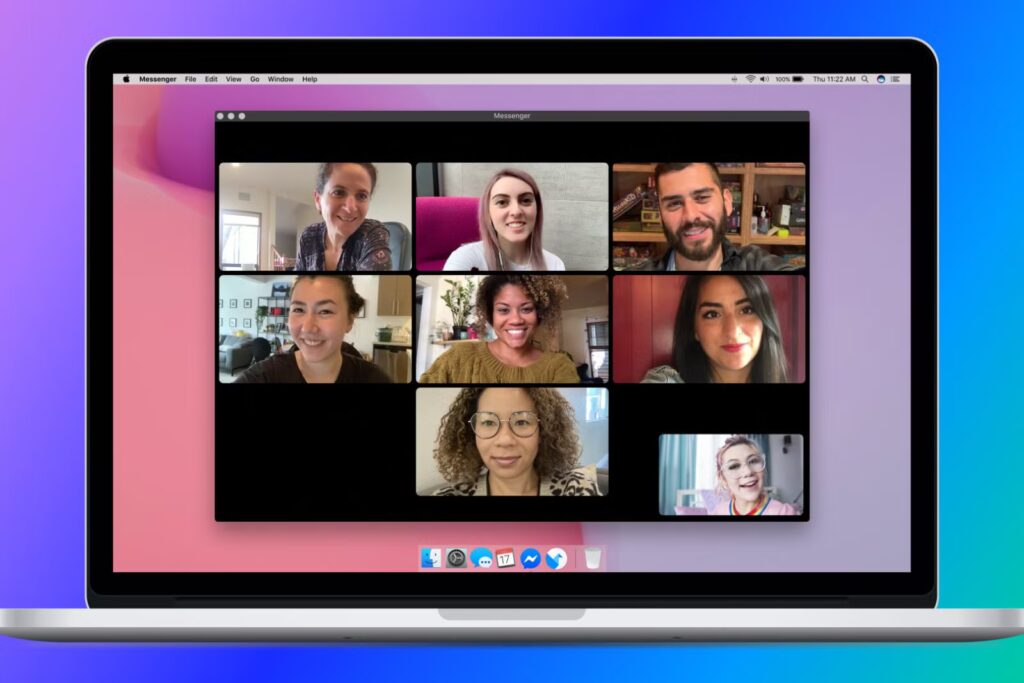
Meta is taking a step as it formally announced that its Facebook Messenger desktop application for Mac and Windows has been officially withdrawn by Facebook parent company Meta. Meta went ahead to advise that if users wish to use the service, the app now reroutes them to the Facebook website and Messenger.com. The Messenger app, which was released during the COVID-19 pandemic but found it difficult to compete with other business-focused competitors like Zoom, has been shut down. In October of this year, the business corporation released information about the app’s closure notice. According to AppleInsider, users will begin to receive in-app alerts about the shutdown on December 15. They will have 60 days retention time for users to make the seamless change before their ability to access the apps is prohibited. Additionally, Meta advises users to remove desktop applications if they are no longer functional.
The Mac Messenger app is being phased out and support for this app will be discontinued. The support page states, after deprecation, its users won’t be able to log into this app and will be automatically redirected to use Facebook website for messaging purposes for onward continuity through its website. This is a transition of its users to its we-based messaging platform.
Some reasons why the desktop version of Messenger was discontinued are shared below according to the company, Meta.
First the app’s absence of features like screensharing and support for big video call groups made it less appealing than its present rivals.
In 2023, Meta started that by integrating Messenger back into the Facebook app, it indicates a diminished emphasis on stand-alone desktop experiences.
Messenger was developed on the Mac using by relying on Apple’s Catalyst framework, which was criticised for delivering apps that didn’t feel completely native and for requiring additional developer work.
Last year, the program transitioned by moving to a progressive web version for Windows, which was considered to be more flexible, which they further felt that is users based decreased the need for a specialised desktop version.
The transitioning to the web-based or the online-based messaging platform according to Meta which had been an earlier switch to Progressive Web client (PWA) in September 2024, signalled a larger shift towards browser-based experiences, and this comes after the decision to withdraw the Messenger client for Mac and Windows generally due to low users usage. Though the Mac and Windows users can now access Messenger via Facebook.com, Windows users can still utilise the Facebook desktop software.
Also Meta has recommended that its users should enable and secure the storage for chat history and to this, users should create a PIN to secure encrypted communications, and verify settings under Privacy and safety > End-to-End Encrypted Chats > Message Storage in order to facilitate a seamless transitioning. The chat history will be available on all platforms once safe storage is fully activated.
Users who liked the ease of a dedicated desktop software, particularly for multitasking and work-related communication, are likely to be disappointed by Meta’s decision to close the Messenger app. The web version will still provide essential functions like encrypted messaging and media sharing, according to Meta.
Also after the shutdown, users of Messenger without a Facebook account will be transferred to Messenger.com, where they can log in without setting up a Facebook account.
The Facebook’s support centre, which has distinct sections for Mac and Windows users, has more information for users regarding the change. This page also will guide users on to seamlessly transition.
We use cookies to ensure that we give you the best experience on our website. If you continue to use this site we will assume that you are happy with it.