For years, Meta occupied a unique position in the artificial intelligence race.
While rivals such as OpenAI and Anthropic built premium AI services behind paid APIs, Meta championed a different philosophy. Its Llama family of models helped popularise open-weight AI, allowing developers and businesses to download, customize and deploy powerful language models without paying for every API call.
That strategy is now changing.
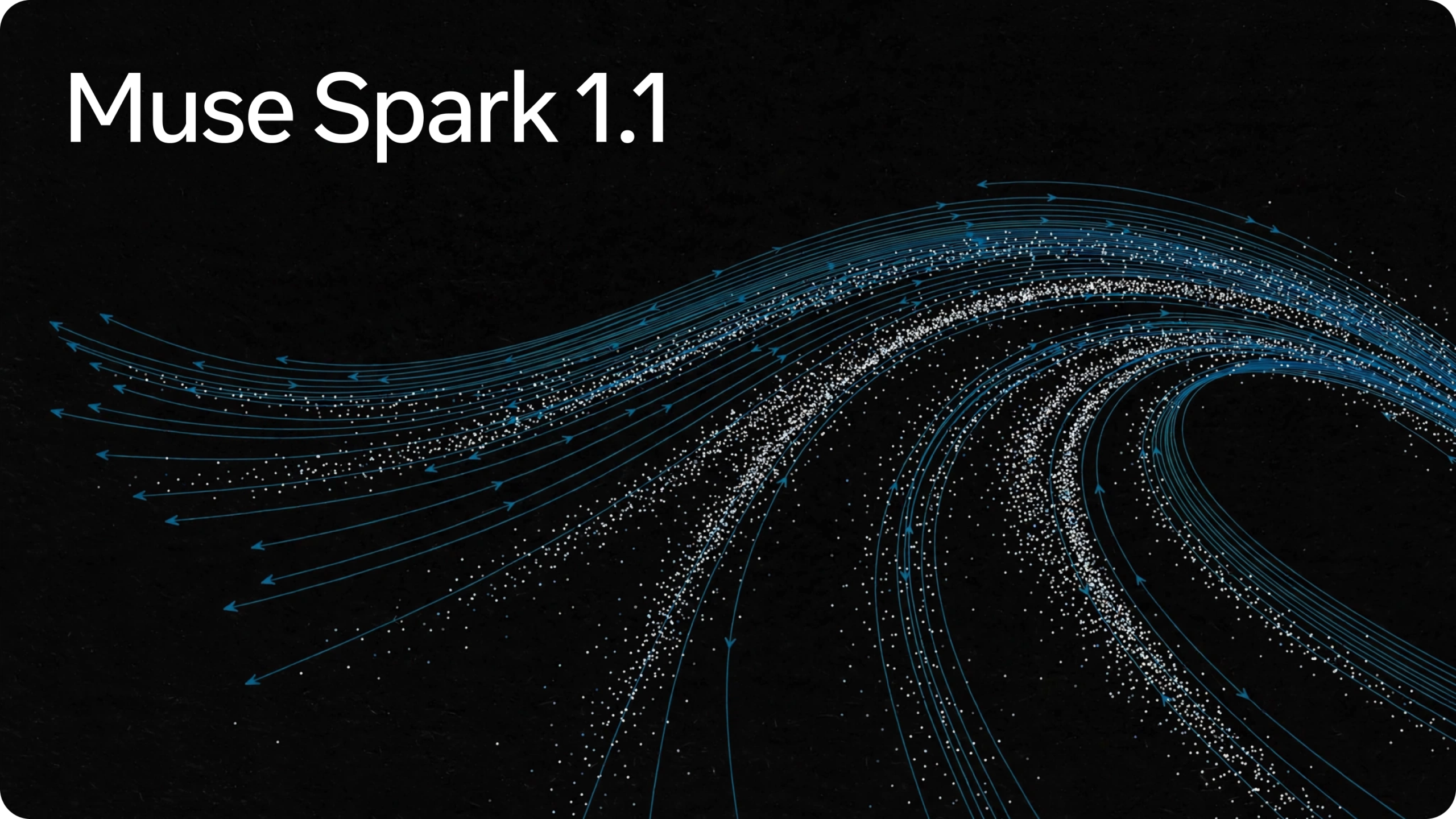
Meta has unveiled Muse Spark 1.1, its most capable AI model to date, alongside the Meta Model API, a commercial platform that allows developers to build applications directly on Meta’s newest AI models. The announcement represents much more than another model release. It signals Meta’s entry into the premium AI services market, a business that has so far been dominated by OpenAI and Anthropic.
For Mark Zuckerberg, this isn’t simply about catching up in the AI race.
It’s about turning Meta into one of the companies that developers pay every day. Meta’s AI strategy has always looked different from its competitors.
The company spent years promoting open AI models while arguing that openness would accelerate innovation and create a healthier AI ecosystem. That approach helped Llama become one of the world’s most widely adopted foundation models, powering thousands of research projects and commercial applications.
Muse Spark 1.1 doesn’t abandon that legacy, but it does expand it.
With the introduction of the Meta Model API, developers can now access Meta’s newest frontier models through a managed service rather than downloading weights and running them on their own infrastructure. According to Meta, the platform launches with public preview access in the United States, free API credits for developers and pricing designed to be “aggressive and attractive” as the company competes for enterprise customers.
In other words, Meta is no longer just building AI.
The company is also making a deliberate play for software developers.
According to Meta, Muse Spark 1.1 delivers substantial improvements in software engineering, including better debugging, stronger multi-agent workflows and the ability to understand multimodal inputs such as documents, images and videos. The model also powers the “thinking mode” inside Meta AI, giving users access to more advanced reasoning capabilities across Meta’s AI applications.
That focus reflects one of the fastest-growing markets in artificial intelligence.
OpenAI has expanded ChatGPT for coding.
Anthropic’s Claude has become a favourite among software engineers. Google continues integrating Gemini into development tools.
Now Meta wants a share of the same audience.
Rather than competing only on chatbot quality, the company is competing for the developers who will build the next generation of AI-powered applications.
Meta’s decision isn’t difficult to understand. The company is investing unprecedented amounts in artificial intelligence.
Meta expects to spend between $125 billion and $145 billion on AI infrastructure this year, including new data centres, custom chips and computing capacity. Those investments have raised an obvious question among investors:
How does Meta generate enough revenue to justify that spending?
A commercial AI platform provides one answer.
Instead of using its infrastructure exclusively for Facebook, Instagram, WhatsApp and Meta AI, the company can now earn recurring revenue from developers and enterprises that want access to its latest models. Analysts believe that recurring API income could become an important complement to Meta’s advertising business over the coming years.
It also supports another strategic goal. The more developers build on Meta’s models, the harder it becomes for competitors to pull them into rival ecosystems.
Just two years ago, companies competed to build the smartest chatbot.
Today, they are competing to become the operating system for artificial intelligence. That means attracting developers, enterprises and startups not just consumers. OpenAI wants developers building on GPT.
Anthropic wants them building on Claude. Google wants them building on Gemini.
And now Meta wants them building on Muse Spark. The launch of the Meta Model API makes that ambition unmistakable.
Muse Spark 1.1 is an important model. The Meta Model API may prove to be the more important product.
By moving into paid AI services, Meta is acknowledging that the future of artificial intelligence won’t be won by releasing impressive models alone.
It will be won by convincing millions of developers to build businesses on your platform. For years, Meta helped democratize AI through open models.
Now it wants to monetize that expertise.
That may become one of the biggest strategic shifts in the company’s history and one of the clearest signs that the AI industry’s next battle will be fought not just in research labs, but in the developer tools that power tomorrow’s software.
Related Reading
More contextual TechBooky stories selected from tags, categories and article context.
Paul Balo is the founder of TechBooky and a highly skilled wireless communications professional with a strong background in cloud computing, offering extensive experience in designing, implementing, and managing wireless communication systems.
We use cookies to ensure that we give you the best experience on our website. If you continue to use this site we will assume that you are happy with it.