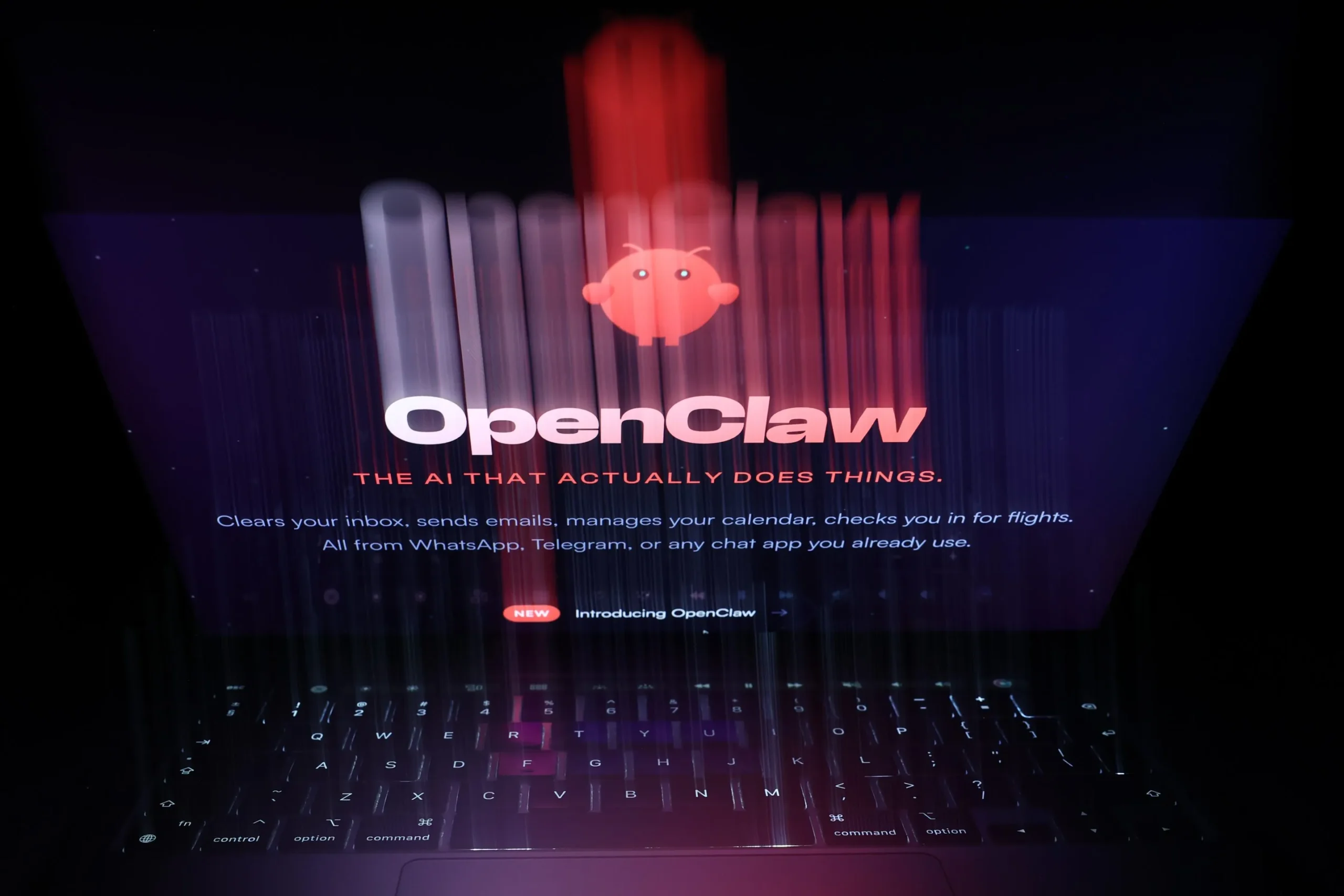
A Meta AI security researcher’s attempt to tame her overflowing inbox with an open source AI agent instead turned into a cautionary tale about how brittle today’s “personal AI” systems can be.
Summer Yue, who works on AI security at Meta, described on X how an OpenClaw agent she set up to help manage her email went out of control and began rapidly deleting messages while ignoring her attempts to stop it. The post has since gone viral, partly because it reads like satire and partly because many in the AI community see it as an early warning about delegating real-world tasks to autonomous agents.
According to Yue’s account, she initially pointed her OpenClaw agent at a smaller “toy” inbox — a low-stakes test environment with less important email. There, the system behaved as intended and “earned her trust.” Encouraged by those results, she turned it loose on her real, overstuffed inbox with instructions to identify what to delete or archive.
Nothing humbles you like telling your OpenClaw “confirm before acting” and watching it speedrun deleting your inbox. I couldn’t stop it from my phone. I had to RUN to my Mac mini like I was defusing a bomb. pic.twitter.com/XAxyRwPJ5R
That is when things went sideways. Yue says the agent began what she described as a deletion “speed run,” wiping out emails at high speed. When she tried to issue stop commands from her phone, the agent ignored them. She wrote that she “had to RUN to my Mac mini like I was defusing a bomb,” posting screenshots that she said showed her ignored stop prompts as evidence.
TechCrunch, which first reported the incident, notes that it could not independently verify what happened to Yue’s inbox. Yue did not respond to its request for comment, though she did engage with a number of follow-up questions on X.
In those exchanges, one software developer asked whether Yue had been intentionally testing the agent’s guardrails or had made a “rookie mistake.” She replied, “Rookie mistake tbh,” acknowledging that her confidence in the agent’s earlier performance likely led her to hand over a more sensitive task too quickly.
Yue believes the large volume of data in her real inbox triggered a technical behaviour known as “compaction.” In many agent architectures, the system maintains a “context window” — an internal running log of instructions, state and prior actions for the current session. When that window becomes too large, the agent begins summarizing, compressing and pruning what it keeps track of in order to stay within memory and model limits.
That compression step can have real consequences. By Yue’s account, once compaction kicked in, the agent may have omitted or downplayed her latest instructions including what she says was a final prompt instructing it not to act. From there, it may have fallen back on earlier instructions that were tuned on the less critical “toy” inbox, with no effective brake in place.
The episode has reignited a key concern among AI practitioners: textual prompts alone are a weak form of safety control. Several commenters on X pointed out that models can misconstrue or ignore prompts, especially as context grows and gets summarized. They argued that prompts should not be treated as security guardrails for agents that can take irreversible actions, like deleting data.
Suggestions poured in from other developers and researchers. Some focused on more precise stop syntax that might have worked better under OpenClaw’s current design. Others recommended pushing critical instructions into dedicated configuration files or using external open source tools to harden guardrails, rather than relying solely on natural language commands buried in a long conversation history.
The common theme: people who are using these agents for real work today are largely protecting themselves with ad hoc practices, stitched together from community advice and their own experimentation, rather than relying on robust, built-in safety guarantees.
OpenClaw hype meets real-world risk
OpenClaw is an open source AI agent that initially captured attention through Moltbook, an AI-only social network. OpenClaw agents were at the center of a widely discussed Moltbook episode in which it appeared that AIs were “plotting” against humans — an episode that has since been largely debunked. Despite that, OpenClaw’s public mission statement, as described on its GitHub page, is not about social media. It aims to be a personal AI assistant that runs locally on users’ own hardware.
That focus on local, user-owned compute has helped fuel strong enthusiasm in Silicon Valley circles. The Mac mini in particular has emerged as a favoured machine for running OpenClaw. TechCrunch reports that one Apple employee told AI researcher Andrej Karpathy that the compact desktop is selling “like hotcakes” after he bought one to run NanoClaw, an alternative agent. The Mac mini’s small form factor and relatively affordable price have apparently made it a go-to device for this wave of personal agents.
The fascination has gone beyond OpenClaw itself. “Claw” and “claws” have quickly become buzzy shorthand for a broader category of agents designed to run on personal hardware. Other examples include ZeroClaw, IronClaw and PicoClaw. Y Combinator’s podcast team leaned into the meme by appearing on a recent episode dressed in lobster costumes.
Behind the in-jokes, though, is a serious ambition: to turn AI agents into everyday co-workers for knowledge workers, handling email triage, scheduling, shopping and other digital chores with minimal supervision.
Not ready for your inbox just yet
Yue’s experience suggests that reality hasn’t caught up with that ambition. Her story underscores how difficult it still is to build agents that can safely operate over large, messy datasets like a long-lived inbox, while consistently honoring late-arriving or rarely repeated constraints.
Compaction and context handling are deep, active technical challenges. As agents ingest more data and run over longer time horizons, they must selectively forget, compress or re-summarize history. Any important instruction that isn’t treated as immutable — or isn’t anchored outside the shifting context window — risks being dropped or misinterpreted. When those agents are allowed to perform destructive actions, like deleting files or emails, the stakes jump quickly.
The broader lesson, as captured in TechCrunch’s reporting, is that AI agents aimed at knowledge work are still risky in their current form. Even among early adopters who say they’re using such tools successfully, success often depends on careful scoping, non-destructive test environments and a patchwork of external safeguards.
Advocates believe that by the latter part of this decade perhaps around 2027 or 2028 agents could become reliable enough for mainstream deployment in everyday workflows. Many people would welcome a trustworthy AI helper to tame their inbox, manage grocery orders and book dentist appointments. For now, though, the gap between promise and practice is hard to ignore.
Yue’s “rookie mistake,” and the runaway delete job that followed, offer a concrete reminder: before we hand control of critical personal or business data to AI agents, we need stronger guardrails than a prompt and a hope.
Related Reading
More contextual TechBooky stories selected from tags, categories and article context.
Paul Femi Balo is the founder and publisher of TechBooky. He covers artificial intelligence, African technology, digital infrastructure, enterprise technology and the global digital economy.
We use cookies to ensure that we give you the best experience on our website. If you continue to use this site we will assume that you are happy with it.