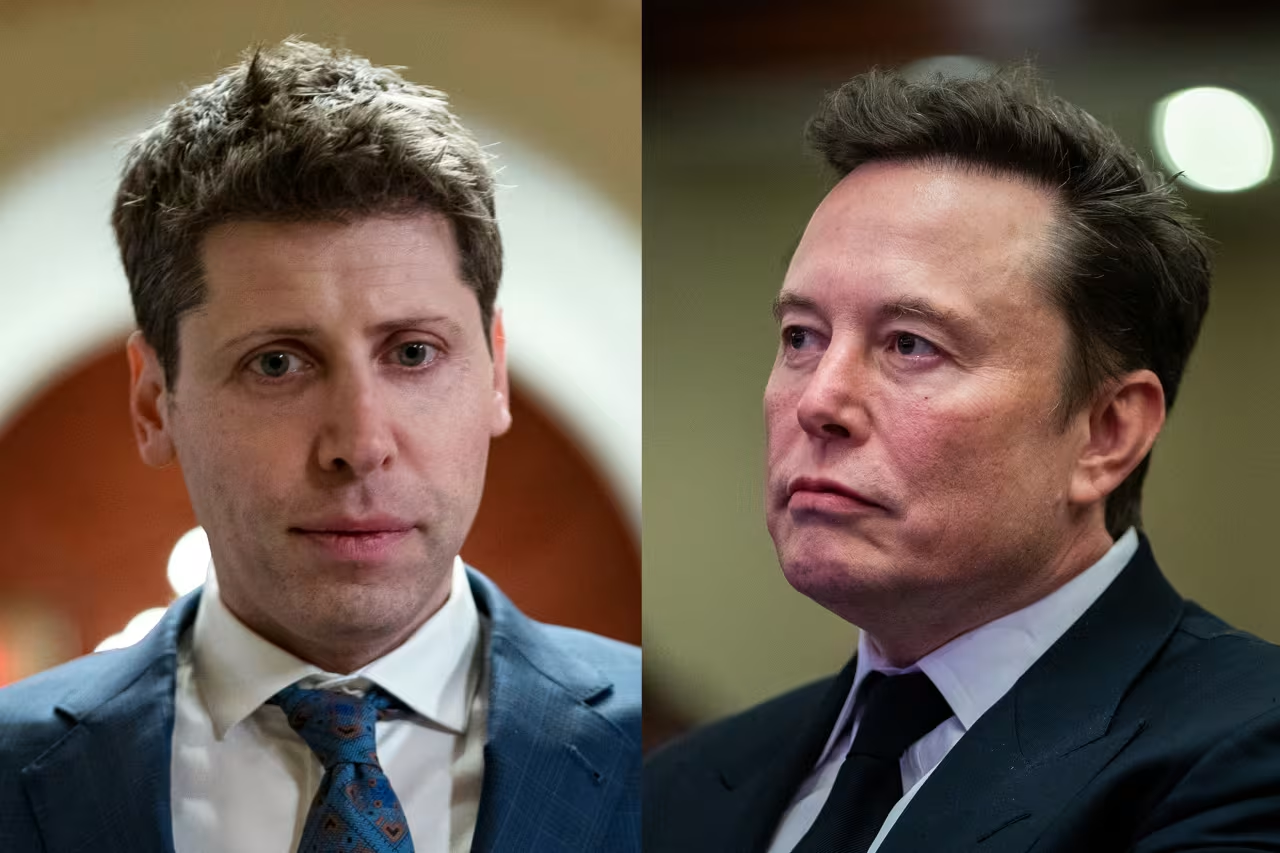
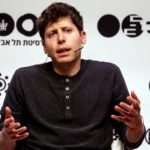
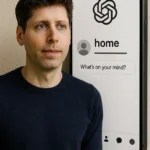
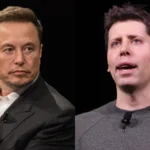
The trial, which began with jury selection on April 27th, stems from a 2024 lawsuit in which Musk accuses OpenAI of abandoning its founding goal of building AI to benefit humanity and instead steering toward profit maximisation. OpenAI now counts Microsoft as its most powerful backer and is best known for ChatGPT.
Musk’s case: from founding vision to alleged mission drift
Musk, a co-founder of OpenAI, is asking the court to remove Altman and OpenAI president Greg Brockman, to force OpenAI to stop operating as a public benefit corporation, and to direct up to $150 billion in damages to the OpenAI nonprofit if he prevails. OpenAI, for its part, has characterised the lawsuit as a “baseless and jealous bid to derail a competitor,” arguing Musk is trying to advance his own companies, including SpaceX, xAI, and X, whose Grok chatbot now competes with ChatGPT.
The billionaire entrepreneur officially began his testimony as the first witness, following opening arguments from lawyers representing Altman, OpenAI, and Microsoft. Musk has invested up to $38 million in OpenAI in its early years before tensions over structure and mission led him to walk away and later found xAI, now owned by SpaceX.
On the stand, Musk spent an unusually long time walking the jury through his personal and professional history, starting with his upbringing in South Africa and his arrival in Canada for college “with 2,500 in Canadian travellers’ checks and a bag of clothes and books.” He traced his path through Zip2 and PayPal to his current portfolio of companies, including Tesla, SpaceX, and Neuralink, framing his track record as proof that he backs his convictions with his own capital. “I believe you shouldn’t ask other people to invest unless you’re going to put your own money in,” he told the court.
Musk is attempting to convince jurors that he was central to OpenAI’s creation and that its original design was a pure nonprofit effort aimed at AI safety rather than commercial dominance. “I came up with the idea, the name, recruited the key people, taught them everything I know, provided all the initial funding, besides that nothing,” he said, drawing a few chuckles in the courtroom. He described the organisation as “specifically meant to be a charity that does not benefit any individual person,” saying he could have founded it as a for-profit outfit but “chose not to.”
Through emails and testimony, Musk is emphasising that he believed OpenAI would operate as a 501(c)(3) nonprofit that would “aim to bring in more money than it spends, and in doing so, that becomes cash reserves or savings” for the charity. He said he was “fundamentally involved” in its public launch reviewing and drafting parts of the announcement, checking the website, and doing media interviews and that he believed he and Altman were aligned on mission at the time.
The name “OpenAI,” he said, emerged from discussions with Altman, Brockman, and chief scientist Ilya Sutskever. Musk told the jury he favoured the name because “the ‘open’ in OpenAI represents open source,” linking it to one of his major grievances today: OpenAI’s limited release of open source models.
He also questioned the early equity split proposals inside OpenAI. Musk described his co-founders’ push for a four-way split as “unfair,” arguing, “it wouldn’t make sense to create a company that has an equal split if one of the founders is also providing all the money.” He testified that he sought a larger stake that would dilute over time, which he said was partly about ensuring OpenAI took a direction he considered safe.
According to Musk, the founding team did discuss revenue-generating structures, but always as secondary to a core nonprofit. He recounted “informal verbal conversations and email and text discussions” between himself, Altman, Brockman, and Sutskever about potential ways to fund the charity, including a “small adjunct” for-profit arm and even a possible cryptocurrency issuance. “One of the ideas that was proposed was a cryptocoin issuance but I was against that because it sounded kinda scammy,” he said. He added that he “was not averse to a small for-profit that would provide funding to the nonprofit as long as the tail didn’t wag the dog.”
Musk is also trying to show he was instrumental in securing crucial hardware for OpenAI’s early research. He described reaching out to Nvidia CEO Jensen Huang in 2016 about the company’s DGX systems, which he called “the first AI supercomputer ever developed.” In court, an email exchange was entered into evidence in which Musk wrote from his Tesla email but stressed the request was for OpenAI, not Tesla. Huang responded that he would “make sure OAI is one of the first ones” to get access, according to Musk’s account.
AI safety, Google, and Microsoft’s counter-narrative
A large portion of Musk’s testimony focused on AI safety and his long-running concerns over artificial general intelligence (AGI). He told jurors that OpenAI was born out of arguments with Google co-founder Larry Page, who he says dismissed his concerns about humanity’s survival and even called him a “speciesist” for prioritising humans over AI systems. “OpenAI exists because Larry Page called me a speciesist,” Musk said, framing the lab as a deliberate “counterpoint to Google,” which he saw as dominant in AI research at the time and insufficiently cautious.
Musk said he had been thinking about AI since the 1990s, when he believed it could “solve all the diseases and make everyone prosperous, or it could kill us all.” By 2015, he recalled, he was having “many dinners with many people talking about AI safety,” including Altman. He also told the court that he warned former US president Barack Obama about AI years before it became a mainstream concern, and described the current landscape as an “AI acceleration” driven by multiple US firms and China, with “no agreement to limit AI.”
He defined AGI for the jury as a point where “the AI becomes as smart as any human arguably smarter than any human,” and claimed “we are getting close to that point,” saying his “guess is that AI will be probably as smart as any human as soon as next year.”
Musk connected his brain-computer interface company Neuralink to those concerns, saying its “longterm goal is AI safety in the sense that if we can closely tie the human world to AI… if there’s symbiosis we’re more likely to have a future with AI that’s good for humanity.” He also portrayed himself as relentlessly focused on work, telling the jury, “I work 80 to 100 hours a week,” and that he doesn’t take vacations or own vacation homes or a yacht.
At one point, he argued the implications of the case reached far beyond OpenAI itself, claiming that a verdict for Altman, Brockman, OpenAI, and Microsoft “will become precedent and give precedent to looting every charity in America.”
On the defence side, Microsoft’s lawyer Russell Cohen used his opening argument to distance the company from the core dispute. Cohen said the case has “little to do with Microsoft,” noting that Microsoft was not involved when Musk was donating to OpenAI and only came in later when the lab was seeking massive investment to support its research. According to Cohen, each funding round including those around the turmoil of November 2023 delivered more resources, which in turn produced better models and justified further investment.
Cohen also told jurors that neither Musk nor anyone else had asserted restrictions that would have prevented Microsoft from investing in OpenAI, and he echoed arguments from OpenAI’s side that Musk only began challenging the arrangement after OpenAI and ChatGPT became successful and he launched xAI as a direct competitor.
Altman attended opening arguments but left the courtroom afterwards, according to the account entered into the record, just as Musk’s legal team moved to question whether safety remains as central to him today.
The trial is still in its early stages, with Musk’s testimony ongoing and more witnesses expected as both sides try to convince a jury what OpenAI was meant to be and who it should ultimately serve.
Related Reading
More contextual TechBooky stories selected from tags, categories and article context.
Paul Balo is the founder of TechBooky and a highly skilled wireless communications professional with a strong background in cloud computing, offering extensive experience in designing, implementing, and managing wireless communication systems.
We use cookies to ensure that we give you the best experience on our website. If you continue to use this site we will assume that you are happy with it.