• Archives
  • Cryptocurrency
  • Earnings
  • Enterprise
  • About TechBooky
  • Submit Article
  • Advertise Here
  • Contact Us
TechBooky
  • African
  • AI
  • Metaverse
  • Gadgets
Generic selectors
Exact matches only
Search in title
Search in content
Post Type Selectors
Search in posts
Search in pages
  • African
  • AI
  • Metaverse
  • Gadgets
Generic selectors
Exact matches only
Search in title
Search in content
Post Type Selectors
Search in posts
Search in pages
TechBooky
Generic selectors
Exact matches only
Search in title
Search in content
Post Type Selectors
Search in posts
Search in pages
Home General Science

NASA’s James Webb Telescope, The Most Potent Space Telescope To Date

Ayoola by Ayoola
December 27, 2021
in Science
Share on FacebookShare on Twitter

The National Aeronautics and Space Administration (NASA) had a previous flagship product (The Hubble Telescope) whose potency has left many in awe but its latest addition; the James Webb Space Telescope (JWST) may as well leave us spell-bound as it’s more than 100 times potent than its predecessor.

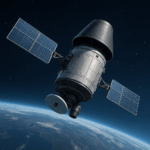
After about 31 years of Space exploration with the Hubble Telescope, NASA has launched a new flagship in the orbit, the JWST, a flagship as large the size of a tennis court, while being shaped like a spaceship out of Star Wars.

The JWST, having eclipsed its forerunner, the Hubble, can reveal in meticulous detail, galaxies just as they existed 13.5 billion years ago, at the very inception of the universe.

The old Telescope by NASA, Hubble was designed in such a way that it would capture only visible light, something humans can see with the normal eye. It allowed us gaze far into the universe, made us understand planet formation, gave us the opportunity to know the age of the universe but that may appear obsolete soon with the launch of a newer and more potent flagship.

Hubble has since 1990; 31 years ago taken more than 1.5 million photos that may have helped shape our understanding of the universe as far as we can see it,  but JWST is far more effective with its ability to see in infrared, see past gas and dust clouds that float throughout space.

Most of the lights are made from infrared light and this begs for more discoveries, with the new technology making it possible to spot the farthest and most ancient galaxies the universe hides in its expanse.

One of the greatest distinctions between the telescopes is that Hubble can see wavelengths of light ranging from 90 to 2,500 nanometers, while JWST, can reach wavelengths of up to 600 to 28,500. It should be noted that the human eye can only see 380 to 700 nanometers.

The James Webb Space Telescope (JWST) do not just sport infrared sensors to give it an edge over its predecessor but has a gold-coated, 21.5-foot-wide mirror three times the size of Hubble’s mirror. This characteristic is very significant as the larger the area absorbing light, the more detail it can collect, an implication that the blurry specs known as galaxies photographed back in 2004 can be seen and studied in a much higher resolution.

With Hubble holding sway for about 15 years in the heavens, it may now be time for the next generation of space observation to step up and it is on the aegis of this that JWST is coming to the fore.

The new Telescope, armed with advanced infrared sensors and a gigantic mirror, is expected to continue snapping pictures of faraway galaxies for the next 5 to 10 years, and the first photograph is being expected in the summer.

Related Posts:

  • Google Bard Photo Illustrations Google logo displayed on a phone screen and Bard sign on Google website displayed on a s
    Google Loses $100bn After AI-Powered Chatbot Makes…
  • feb_6_AI_hero.width-1000.format-webp
    Google Unveils ChatGPT Competitor Known As Bard
  • 80a48c29161e05a24abc71bcdb82cb9a
    Teen-Founded Space Startup Secures Millions for…
  • NASA-Earth-Hero-Final
    NASA, Microsoft Develop AI to Simplify Earth Science Data
  • Illustration shows SpaceX logo and Elon Musk photo
    Elon Musk's SpaceX Is Raising $750 Million In A New…
  • ChangE-4_-_PCAM-1024×616
    China's Chang'e 6 Spacecraft Lift Samples Collected…
  • Snapdragon-8
    Qualcomm and Apple to Introduce 2nm Snapdragon…
  • Xenolinguistics_alien_lauguage
    Harvard Investigates Potential Alien Object…

Discover more from TechBooky

Subscribe to get the latest posts sent to your email.

Tags: hubble telescopejames webb telescopeNASAspace
Ayoola

Ayoola

Ayoola Faseyi, an Abuja based Journalist with interest in Technology and Politics. He is a versatile writer with articles in many renowned News Journals.He is the Co-Founder of media brand, The Vent Republic.

BROWSE BY CATEGORIES

Receive top tech news directly in your inbox

subscription from
Loading

Freshly Squeezed

  • Apple TV App Update Enables Google Cast on Android December 16, 2025
  • Google Set to Retire ‘Dark Web Report’ Feature in February December 16, 2025
  • Google Releases Pixel Buds Pro Update December 16, 2025
  • Meta Ends Support for Facebook Messenger Desktop App December 16, 2025
  • Spotify Outage Affects Thousands Of Users December 16, 2025
  • Nigeria’s Telecom Sector Attracts $991M in FDI December 16, 2025
  • Snapchat Releases Its Annual Year-In-Review Recaps December 16, 2025
  • Netflix Responds to Concerns About Warner Bros Deal December 15, 2025
  • Microsoft Copilot is Now Being Automatically Installed on LG TVs December 15, 2025
  • Dani Dudeck Joins Netflix as Chief Communications Officer December 15, 2025
  • Google Search Introduces A New ‘Plus’ Menu December 15, 2025
  • YouTube and PayPal Partner on Stablecoin Payouts for Creators December 15, 2025

Browse Archives

December 2025
MTWTFSS
1234567
891011121314
15161718192021
22232425262728
293031 
« Nov    

Quick Links

  • About TechBooky
  • Advertise Here
  • Contact us
  • Submit Article
  • Privacy Policy
Generic selectors
Exact matches only
Search in title
Search in content
Post Type Selectors
Search in posts
Search in pages
  • African
  • Artificial Intelligence
  • Gadgets
  • Metaverse
  • Tips
  • About TechBooky
  • Advertise Here
  • Submit Article
  • Contact us

© 2025 Designed By TechBooky Elite

Discover more from TechBooky

Subscribe now to keep reading and get access to the full archive.

Continue reading

We use cookies to ensure that we give you the best experience on our website. If you continue to use this site we will assume that you are happy with it.