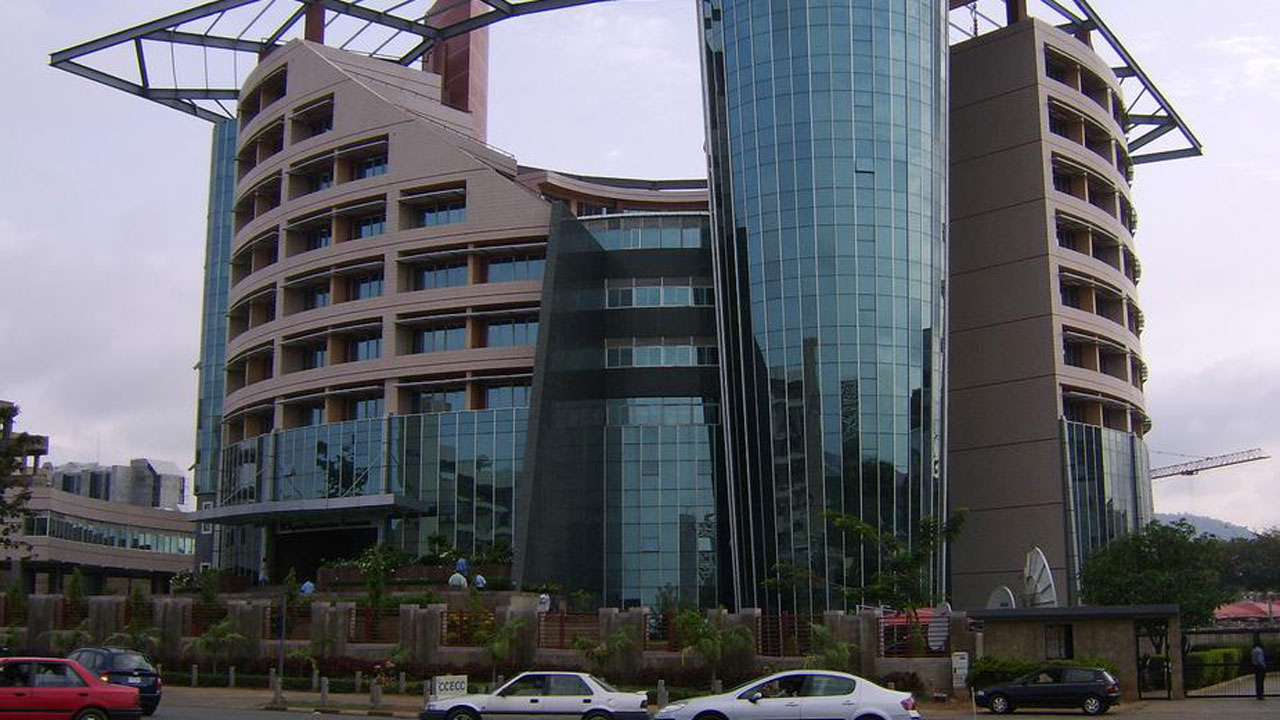
According to the Nigerian Communications Commission (NCC), telecommunications companies have invested more than N2.5 trillion in network infrastructure in 2025, which is an aim to step up efforts to address the nation’s growing concerns over poor and unacceptable service delivery. After a time of severe consumer criticism over dropped calls, poor internet, and data depletion, this aggressive capital investment was made.
The regulator also had claimed that Tower Companies invested an extra N373.8 billion to build and modernize telecommunications infrastructure across the country in the previous year, while Mobile Network Operators (MNOs) committed nearly N2.13 trillion to infrastructure renovations.
The revelation was made in a statement made by NCC, which was released yesterday, Wednesday, and that Nnenna Ukoha, its head of public affairs, signed.
As the industry is currently going through one of its largest cycles of network expansion and modernization in recent memory, after a protracted era of underinvestment, the commission claims that the Tower Companies invested an additional N373.8 billion in the industry, while Mobile Network Operators invested over N2.13 trillion in network infrastructure and enhancements in 2025 alone.
The NCC reports that the spending has helped to add or upgrade over 2,800 telecom locations nationwide, which has eased traffic, expanded coverage, and increased capacity.
Given that the telecom services are now necessary for daily life, business, education, and financial activities, it acknowledged the public’s rising discontent with unexpected dropped calls, poor or slow internet speeds, erratic and inconsistent data connections, and frequent service interruptions.
In the statement, which states that the Commission has recognised the frustration experienced by consumers when unexpected dropped calls, poor or slow internet speeds, erratic and inconsistent data connections, and frequent service interruptions or disruptions affect daily activities.
The regulator added, claiming that despite these difficulties, it has increased the quality of service monitoring over the last two years by employing more improved and more efficient data-driven oversight of tower firms, operators, and internet service providers.
The NCC says that the network expansion initiatives are still underway in 2026 as operators react to the growing national demand for digital services and data usage.
About 3,000 of the more than 12,000 telecom sites that sector participants have pledged to build and upgrade this year have already been finished, according to the commission.
It also stated that in its effort to speed up next-generation connectivity, more than 730 new 5G sites had been installed in 27 states already nationwide.
Also, expanded 4G and 5G deployment, fiber backhaul extension, urban network upgrades, rural coverage expansion, and equipment replacement are just a few of the continuing interventions that are highlighted by the NCC.
In order to increase productivity and service delivery, it also revealed that idle spectrum has been redistributed among the major mobile operators in accordance with its Spectrum Trading Guidelines.
According to recent evaluations, network performance has gradually improved, with 4G penetration increasing from 45% in January 2024 to 54% at present and median download rates growing from 16.5Mbps to 20Mbps.
In addition, it reported that power availability at telecom locations increased from 99.3% in January 2025 to 99.7%.
Nonetheless, the NCC acknowledged that problems still exist in a number of areas, such as unexpected dropped calls, poor or slow internet speeds, erratic and inconsistent data connections, and frequent service interruptions or disruptions.
In accordance with the updated Quality of Service Regulations 2024, the regulator said it has started taking enforcement action against operators who do not adhere to the necessary criteria.
It cautioned that this enforcement will continue, and where operators fail to deliver measurable improvements, the commission will take appropriate regulatory action, including escalation where necessary.
Persistent fibre cuts, equipment theft, vandalism, power outages, and restricted site access were all noted by the NCC as significant external problems that are influencing service delivery.
Roughly over 27,000+ preventable fibre-cut occurrences were reported in 2025, primarily as a result of vandalism and construction, which can be regarded as human actions.
In order to prevent telecom equipment theft and enforce the Presidential Order on Critical National Information Infrastructure, the commission had stated that it is collaborating with the Office of the National Security Adviser and other relevant bodies and security agencies.
In order to lessen fiber damage during road construction projects, it further stated that it is working with state and federal ministries of works as well.
The NCC’s outage reporting system will publish information on disruptions, and operators have been instructed to alert users during significant outages and restore services within specified timeframes.
In order to help smaller internet service providers and lower access costs, the commission also stated that it is conducting a market assessment to create a wholesale broadband segment.
The NCC stated that operators have invested more than $1 billion in infrastructure expansion to increase capacity since a 50% tariff change was approved last year.
It reaffirmed that enforcement would continue to make sure operators provide quantifiable gains in service quality across the country notwithstanding continuous investments.
We use cookies to ensure that we give you the best experience on our website. If you continue to use this site we will assume that you are happy with it.