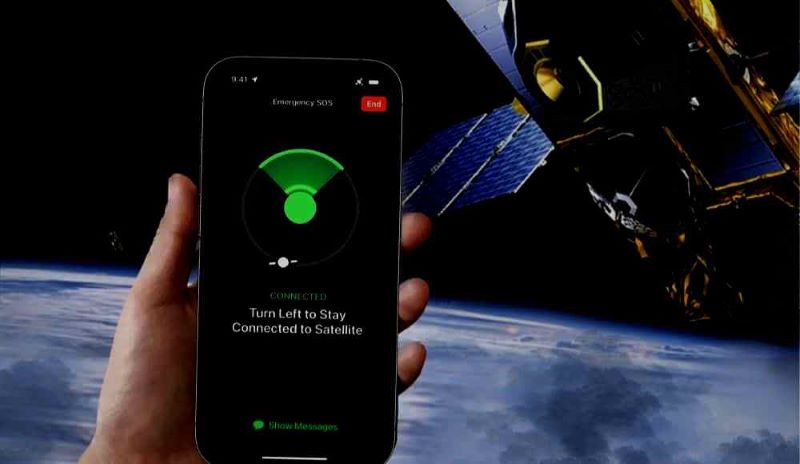
In order to provide mobile coverage to an estimated 23.3 million Nigerians who are still underserved or unserved in areas by terrestrial networks, the Nigerian Communications Commission (NCC) has announced plans to use and implement satellite-to-phone technology, commonly known as Direct-to-Device or D2D.
The Commission stated that the action is intended to tackle enduring connectivity gaps identified in its 2024 cluster gap analysis in a consultation paper posted on its website.
There are 87 clusters in the study with insufficient service.
The NCC stated that it is looking for feedback from interested parties on how to successfully implement satellite direct-to-device services while maintaining consumer safety, spectrum efficiency, and competition.
Satellite-to-phone service, sometimes referred to as direct-to-device or direct-to-cell connectivity, fills in coverage gaps in distant places by enabling regular smartphones to connect directly to satellites for calls, messages, and data without using terrestrial cell towers.
The Commission pointed out that mobile devices may now link directly to satellites thanks to advancements in satellite and non-terrestrial network technology, providing a viable alternative for regions where traditional infrastructure deployment is challenging or expensive.
In order to accomplish national connectivity goals, “NCC is exploring a mix of approaches tailored to specific locations and operational conditions,” according to the consultation paper. It further stated that network deployment plans, spectrum distribution, and regulatory frameworks for satellite D2D services in Nigeria will be shaped by evidence-based stakeholder input.
The project is in response to the NCC’s 2025–2030 Spectrum Roadmap, which highlights non-terrestrial networks as a crucial addition to the current mobile infrastructure.
The significant relevance of satellite technology in increasing connectivity is further highlighted by industry developments, such as Airtel Africa’s recent deal with SpaceX to deploy Starlink-powered direct-to-cell services in Nigeria.
According to the authority, the consultation, which began on January 12, 2026, will help make decisions about appropriate technology, performance standards, and operational factors to guarantee that satellite services serve the objectives of universal access.
Global interest in satellite D2D connectivity is growing as operators and regulators look for ways to combine satellite services with mobile networks, especially in areas where millions of people lack dependable coverage due to cost, geography, and security issues.
Approximately 105 million of Nigeria’s 233 million inhabitants reside in rural areas with little to no access to the internet and mobile phones.
In December 2025, Airtel Africa, including its Nigerian operations, teamed up with SpaceX’s Starlink to deliver direct-to-cell service in 14 markets, beginning in 2026 with texting and select data via more than 650 satellites.
With 59 million Nigerian customers in underserved areas, Airtel is now the first African provider to offer Starlink D2D.
The Commission claims that although coverage is still restricted, initiatives like MTN-Huawei’s RuralCow use solar-powered mini-stations to cut returns to three years.
It stated that “satellite direct-to-device services, like Airtel-Starlink, are emerging as a cheaper way to connect rural blackspots.”
The NCC said that 23 million Nigerians are totally disconnected, meaning that 61% of rural citizens remain offline, despite the country’s approximately 50% internet penetration rate.
The NCC clarified that traditional base stations are costly, with returns requiring five to ten years, due to high prices, small, dispersed settlements, a lack of electricity, and limited fibre.
“Difficult terrain and insecurity slow expansion further, while cities like Lagos get most of the infrastructure,” the report stated. Despite government backing from programmes like the Universal Service Provision Fund, telecom companies concentrate on urban areas for faster returns.
The purposes and benefits of these are overcoming the digital divide; although 50% of people in the country have access to broadband, 61% of rural households are still offline because it is expensive and difficult to construct physical fibre and base stations in remote areas. Secondly, the cost-effectiveness as compared to traditional infrastructure, which can take five to ten years to see a return on investment in sparsely inhabited areas, satellite D2D is thought to be a more cost-effective option.
Lastly, the National Security & Inclusion initiative seeks to offer dependable connectivity in areas where topography or instability prohibit the growth of terrestrial networks.
We use cookies to ensure that we give you the best experience on our website. If you continue to use this site we will assume that you are happy with it.