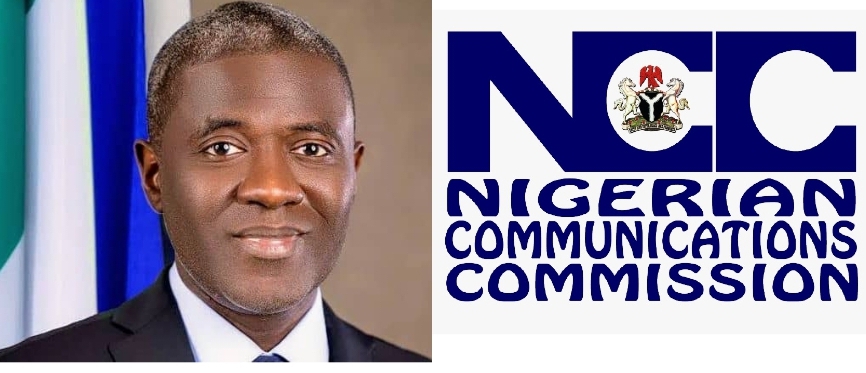
NCC Executive Vice Chairman and CEO Dr. Aminu Maida
Along with new recommendations for opening the lower 6GHz and 60GHz spectrum bands, the Nigerian Communications Commission (NCC) has released a draft Spectrum Roadmap for 2026–2030 in an attempt to boost Nigeria’s digital economy, increase internet access, attract investment, and generate jobs.
Speaking at the launch on Monday in Abuja, NCC Executive Vice Chairman and CEO Dr. Aminu Maida underlined that spectrum is a vital national resource supporting financial platforms, emergency networks, satellite communications, mobile connectivity, broadband services, and smart technologies.
The roadmap is intended to offer a forward-looking framework that inspires investor confidence, promotes innovation, and guarantees high-quality communication services throughout the nation, according to Atiku Lawal, Head of Spectrum Administration for the EVC. “As Nigeria positions itself to meet rising data demand and global competitiveness targets, the initiatives are expected to stimulate broadband investment, expand digital infrastructure, create jobs, and strengthen Nigeria’s digital economy,” he continued.
Effective spectrum planning, according to Lawal, will lower the cost of broadband deployment, promote network growth into underserved areas, and open doors for companies that depend on digital connectivity. He pointed out that data-intensive applications, artificial intelligence, cloud services, and the Internet of Things are driving up demand for spectrum, necessitating more intelligent planning and adaptable regulation.
The Spectrum Roadmap 2026–2030, he claimed, offers clarity, certainty, and openness while coordinating spectrum management with national priorities like closing the digital divide, improving experience quality, fostering innovation, and supporting market-driven investment.
Opening the lower 6GHz and 60GHz bands, according to the NCC, will increase capacity for high-speed, reasonably priced, and dependable connectivity, especially for Wi-Fi in public areas, companies, schools, and residences. According to Lawal, “expanded access to unlicensed spectrum will lower barriers to innovation, support new digital services, and enable SMEs to leverage affordable connectivity for growth.”
He claims that in order to guarantee effective and secure usage of the bands, the proposed standards explicitly specify deployment scenarios, power limitations, interference mitigation techniques, and compliance frameworks.
Speaking on behalf of the Spectrum Administration Head, Engr. The roadmap is more than just a technical paper, according to Joseph Emeshili, who called it a strategic strategy to increase economic participation, close the digital divide, and provide dependable connectivity to all Nigerians, particularly those living in rural areas. The entire potential of Wi-Fi 6 will be made possible by the lower 6GHz band, he continued, while multi-gigabit wireless communications for cutting-edge applications like artificial intelligence, cloud computing, and smart cities would be supported by the 60GHz spectrum.
The NCC Executive Commissioner for Technical Services is represented by Engineer Gidado Maigana. According to Abraham Oshadami, spectrum planning is essential for achieving broadband goals, luring investment, and guaranteeing Nigeria’s continued competitiveness in the world. He pointed out that increased spectrum access will enhance network quality, lower implementation costs, and hasten the shift to a digitally driven economy, and that stakeholder input will boost final policies.
The blueprint in which NCC aims for a digital economy that accounts for 21% of Nigeria’s GDP by 2027, which is in line with the Federal Government’s Renewed Hope Agenda. This also states that its strategy supports President Bola Ahmed Tinubu’s objective of creating a $1 trillion digital economy by 2030 and is in line with national development priorities and the Federal Government’s Renewed Hope Agenda. The ICT industry already made up 17.68% of the country’s GDP as of late 2024. Over time, the project is anticipated to reduce broadband costs, promote employment growth, and preserve Nigeria’s competitiveness in the global technology market.
We use cookies to ensure that we give you the best experience on our website. If you continue to use this site we will assume that you are happy with it.