Google is testing a change that could cut the default free storage on new accounts from 15GB down to 5GB unless you link and verify a phone number.
Until now, anyone creating a new Google account could expect 15GB of free cloud storage across services like Gmail, Drive and Photos, regardless of whether they added a phone number. That baseline is now shifting for some new users.
From 15GB for everyone to “up to 15GB”
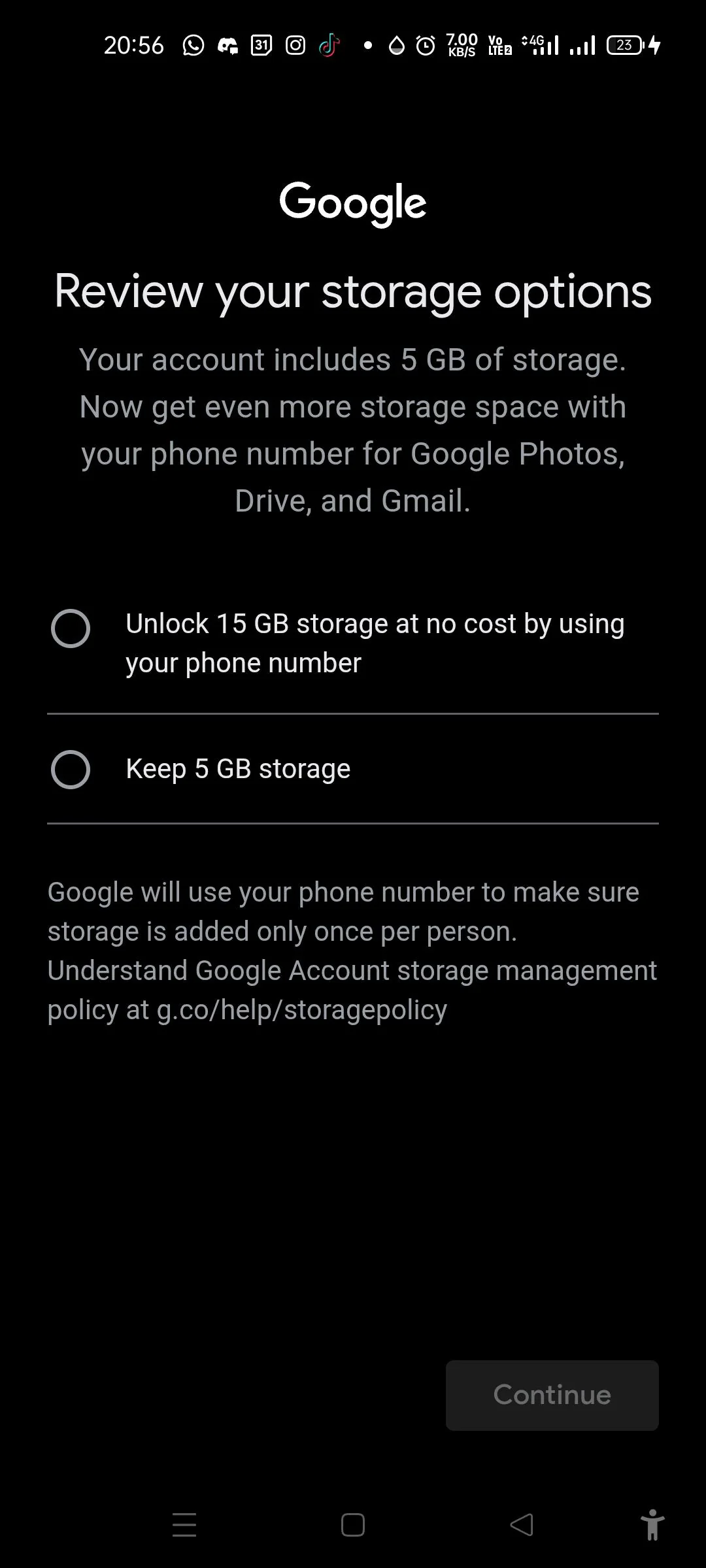
A screenshot shared online shows a new prompt during account sign-up that offers only 5GB of free storage by default. The full 15GB is unlocked only after you add and verify a phone number. In that prompt, Google frames the change as a way to ensure “storage is added only once per person.”
Google’s own documentation has quietly moved in the same direction. A recently updated support page no longer guarantees “15 GB” outright when you create an account; it now says you’ll get “up to 15 GB.” Archives from the Wayback Machine indicate this wording changed sometime between February 4 and March 23.
The company confirmed to Engadget that this is a test, not a blanket global rollout. A Google spokesperson described it as “a new storage policy for new accounts created in select regions” and said the goal is to keep providing “a high quality storage service” while also encouraging users to “improve their account security and data recovery.”
That “select regions” language helps explain why experiences differ. Some commenters on Reddit report they still receive 15GB of free storage without linking a phone number, suggesting the new policy hasn’t hit their locations yet.
Phone numbers, security and the fine print
In practice, this shift may not feel dramatic for many people. In most cases, creating a new Google account already requires linking a phone number, and that was true before this test began. Engadget notes reporting from 9to5Google that there are a few exceptions, such as setting up an account on an Android device that doesn’t have a SIM card installed.
Google is publicly positioning the move around security and account recovery, pointing to benefits like:
Helping ensure storage is granted once per person
Encouraging people to add recovery information
The company hasn’t publicly tied the change to storage capacity or infrastructure limits, though the original report notes that Google’s broader “memory and storage crunch” is an easy, if unspoken, backdrop to consider.
For now, this is limited to new accounts in certain regions, and the company is describing it explicitly as a test. Existing Google accounts and their current free storage allocations are not mentioned in the test description.
Paul Balo is the founder of TechBooky and a highly skilled wireless communications professional with a strong background in cloud computing, offering extensive experience in designing, implementing, and managing wireless communication systems.
We use cookies to ensure that we give you the best experience on our website. If you continue to use this site we will assume that you are happy with it.