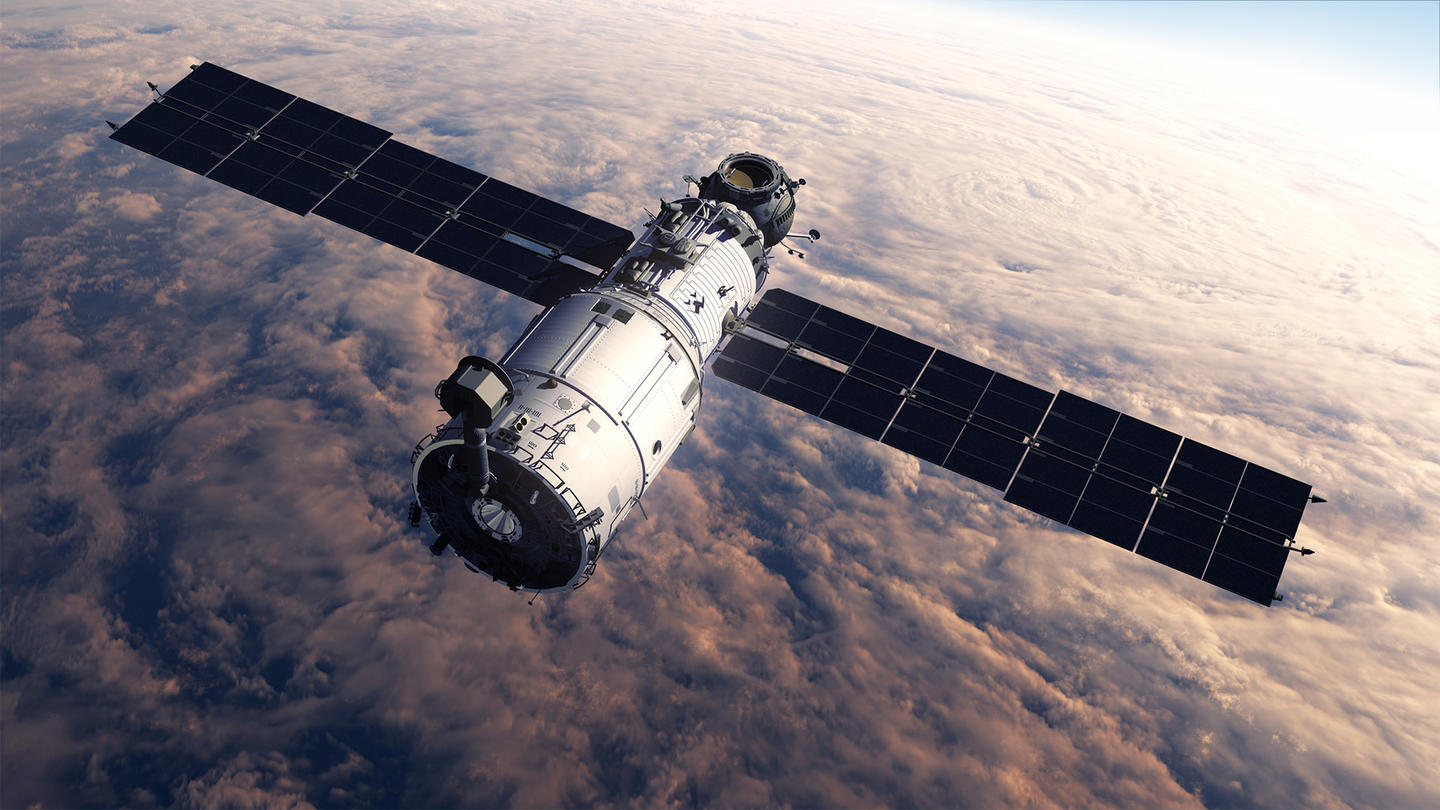
Following President Bola Tinubu’s approval of two new satellites, Communications Minister Dr. Bosun Tijani announced Monday that Nigeria is poised to become a leader in space technology. He stated that the acquisition of Satellites 2A and 2B reflects the administration’s commitment to advancing space-based innovation.
In order to establish Nigeria as a pioneer in African space technology, President Bola Tinubu has authorised the purchase of two new communication satellites, NigComSat-2A and NigComSat-2B. This plan, which was announced on Monday, during the second “Nigerian Satellite Week” in Abuja, is to replace the aging NigComSat-1R and improve the country’s connection, security, and digital economy.
NigComSat‑2A and NigComSat‑2B are set to launch in 2028 and 2029. The satellites aim to boost security, drive economic growth, and extend connectivity to all 774 LGAs. The project has moved from tender to financing and implementation under NIGCOMSAT.
Speaking at the launch of NigComSat’s “Satellite Week” in Abuja, Tijani noted that Nigeria already leads West Africa in satellite presence and said the new satellites will significantly impact the nation’s digital economy and prosperity. He did not disclose the cost.
The event, themed “Harnessing Space Technology for an Extraordinary Nigeria,” was attended by top security officials, including the Chief of Defence Staff, Chief of Army Staff, Inspector General of Police, and the Minister of Defense.
Tijani emphasized the need for satellite-based solutions in security, agriculture, education, logistics, and health, noting that satellite technology remains essential for remote sensing, intelligence gathering, and military operations globally.
Alongside the satellite purchase, the federal government announced a ₦12 billion research fund for the digital economy ecosystem. Tijani said the initiative would support 36 research clusters, each receiving $1.5 million, and strengthen evidence-based policymaking. The effort is backed by Project BRIDGE, a government program to deploy 90,000 kilometres of fibre optic infrastructure across Nigeria.
NigComSat Managing Director Jane Nkechi Egerton-Idehen described the event as proof that Nigeria’s space ambitions are being pursued with rigor and measurable results. She highlighted NigComSat’s achievements over the past three years, including training programs in VSAT technology across four states to equip young Nigerians with skills in connectivity, education, agriculture, and commerce.
She noted that while the global space economy is undergoing a major transformation driven by satellite broadband and low-Earth orbit commercialization, Nigeria has been an active participant building the necessary capacity to lead.
Speaking on behalf of the Chief of Army Staff, Major General Kennedy Osamwegie reaffirmed that space-based technology is now essential to modern military operations, including surveillance, reconnaissance, and intelligence gathering, and called for collaboration among key stakeholders to unlock its full potential for Nigeria’s development.
President Tinubu approved the operationalization of the Bola Ahmed Tinubu Space Centre in Epe, enabling Nigeria to launch and maintain satellites independently. Immediate funding was allocated for asset maintenance and the revised 25‑year National Space Policy. As the sole West African nation with a communication satellite, Nigeria aims to maintain its regional leadership with the new assets.
We use cookies to ensure that we give you the best experience on our website. If you continue to use this site we will assume that you are happy with it.