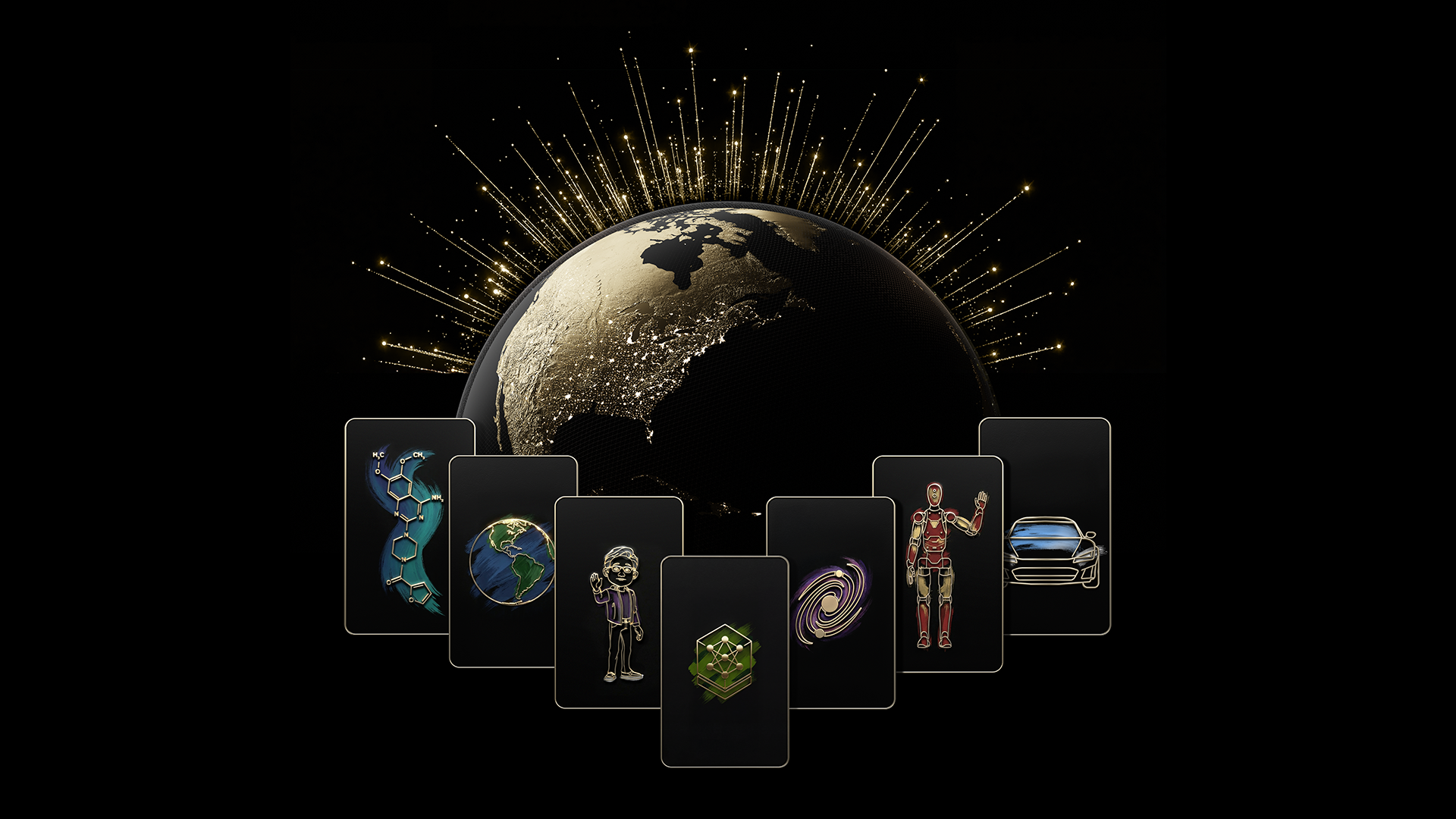
NVIDIA is broadening its push into open AI with a fresh wave of models aimed at agentic AI, robotics and healthcare, a sign that the company wants to shape not just the hardware layer of the AI boom, but the model ecosystem too. Announced on March 16, 2026 at GTC, the expansion spans Nemotron, Cosmos, Isaac GR00T, Alpamayo and BioNeMo, with NVIDIA positioning the release as a foundation for intelligent systems that can reason, act and operate across both digital and physical environments.
A major part of the update is the expansion of the Nemotron family, which now includes new multimodal and voice-capable models for developers building more capable AI agents. That matters because the industry is moving beyond chatbots toward systems that can understand speech, images, tools and workflows in a more unified way. NVIDIA is clearly trying to ensure its open-model stack keeps pace with that shift, especially as enterprises look for alternatives that are customizable and easier to deploy across their own infrastructure.
The company is also tying its open-model strategy more tightly to physical AI. On the robotics side, NVIDIA said the update includes broader work around Cosmos and Isaac GR00T, and it also previewed GR00T N2, a next-generation robot foundation model. That fits with NVIDIA’s broader GTC message this year that robotics and real-world AI systems are becoming a much bigger part of the market, not just an experimental side project.
Healthcare is another important frontier in the announcement. NVIDIA said the release includes new work tied to BioNeMo and Alpamayo, with a focus on scientific and healthcare AI use cases such as protein drug discovery. That gives the launch a broader meaning than a simple model refresh. NVIDIA is trying to show that open models can be useful not only for enterprise copilots and autonomous agents, but also for high-value scientific workloads where specialized models and domain data matter far more than generic chatbot performance.
The bigger takeaway is that NVIDIA is increasingly building a full-stack open AI story around its infrastructure. In recent weeks it has already highlighted open-model efforts such as the Nemotron 3 family, and today’s expansion pushes that strategy further by linking models directly to robotics, biology and multimodal agent systems. In other words, NVIDIA is no longer just selling the chips that run AI, it is steadily building the open frameworks and model families it hopes developers will build on top of those chips.
For developers and enterprises, this makes NVIDIA’s GTC 2026 message much clearer. The company wants to be seen not only as the engine room of AI infrastructure, but as a serious platform player in the emerging world of open models for digital agents, robots and scientific discovery. And with GR00T N2, multimodal Nemotron updates and healthcare-focused BioNeMo work now in the mix, NVIDIA is making the case that the next phase of AI will be far more embodied, specialized and industry-specific than the first.
Paul Balo is the founder of TechBooky and a highly skilled wireless communications professional with a strong background in cloud computing, offering extensive experience in designing, implementing, and managing wireless communication systems.
We use cookies to ensure that we give you the best experience on our website. If you continue to use this site we will assume that you are happy with it.