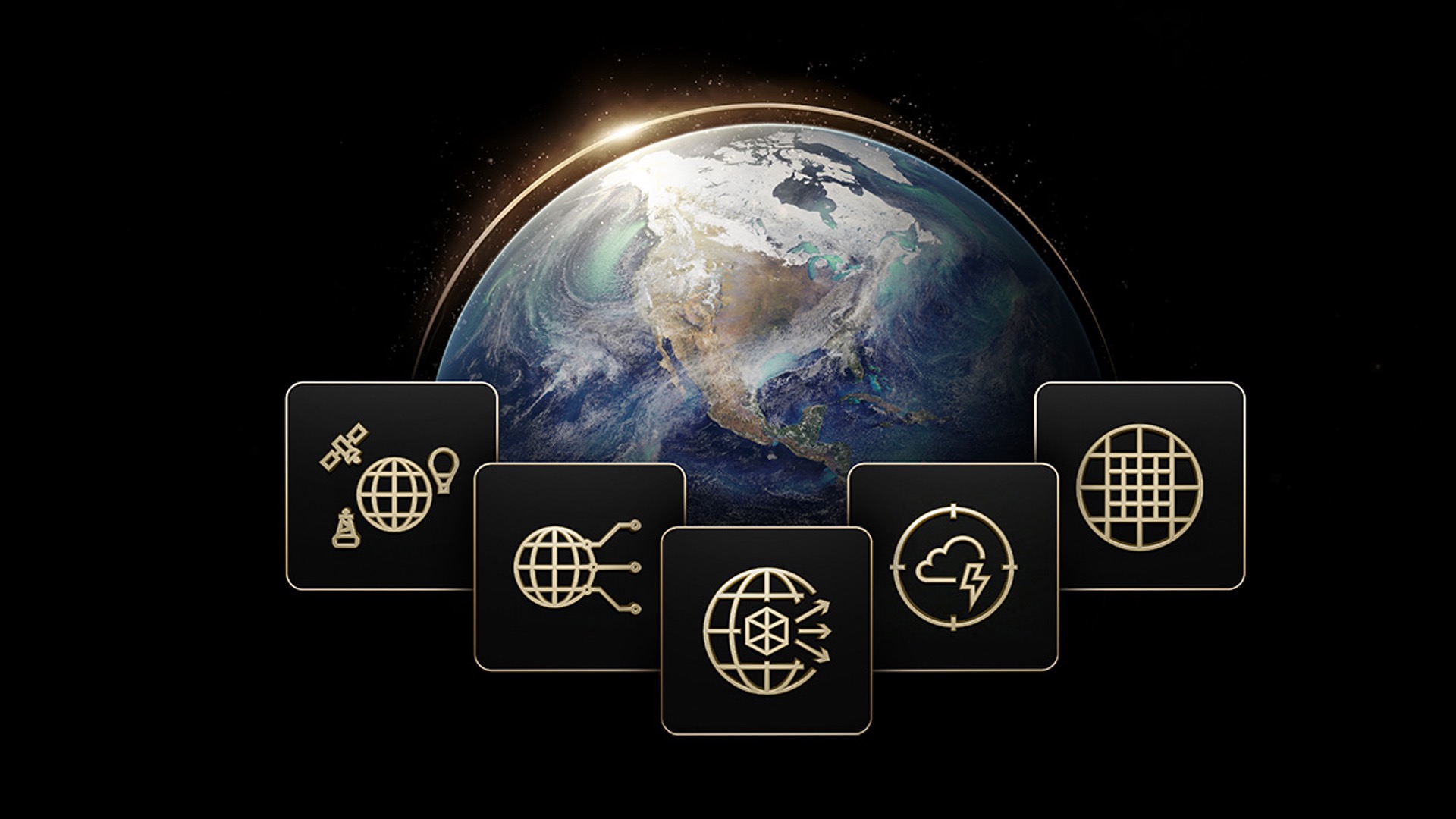
At the American Meteorological Society’s Annual Meeting, NVIDIA announced Earth-2, a family of open models, libraries, and frameworks designed to accelerate AI-based weather and climate forecasting. This fully open, production-ready software stack aims to make advanced weather AI accessible to researchers, businesses, and agencies worldwide.
Earth-2 covers all stages of weather prediction, starting from processing raw observation data to generating forecasts extending up to 15 days globally or on a local scale for specific storm events. By leveraging AI, Earth-2 significantly reduces the computational time and cost traditionally associated with physics-based weather models that require supercomputers.
The package includes pretrained models, development frameworks, recipes for customization, and inference libraries, providing an integrated solution for deploying weather AI applications on a variety of infrastructures. Developers and organizations can fine-tune and deploy these open models on their own systems, facilitating innovation and collaboration in atmospheric research and operational forecasting.
A spectrum of users is already employing Earth-2 to enhance weather prediction performance and deliver actionable insights. These range from AI weather tool providers and national meteorological services to energy companies and financial risk analysts. Some notable users include Brightband, the Israel Meteorological Service, Taiwan’s Central Weather Administration, The Weather Company, the U.S. National Weather Service, TotalEnergies, Eni, GCL, Southwest Power Pool (in collaboration with Hitachi), AXA, JBA Risk Management, and S&P Global Energy.
For example, Brightband uses the Earth-2 Medium Range model daily for global forecasting, emphasizing the value of an open-source approach that promotes rapid innovation and model improvement. The Israel Meteorological Service reports a 90% reduction in computing time at 2.5-kilometer resolution compared with traditional CPU-based numerical models, enabling up to eight high-resolution forecasts per day and improved responsiveness to extreme weather events.
Energy-sector users find Earth-2 particularly beneficial for grid management and risk assessment. TotalEnergies leverages the Nowcasting model for short-term risk awareness critical to energy operations. Eni actively tests FourCastNet and CorrDiff models to produce probabilistic forecasts weeks ahead, while GCL sees improved solar photovoltaic prediction accuracy at a lower cost. Southwest Power Pool’s integration of Nowcasting and FourCastNet3 supports better wind forecasting to enhance grid reliability. Meanwhile, financial and insurance firms use the models for scenario generation and risk analysis.
Earth-2 also integrates models from established meteorological and technology organizations, including the European Centre for Medium-Range Weather Forecasts (ECMWF) and Google. Additionally, training and fine-tuning can utilize NVIDIA PhysicsNeMo, an open-source framework intended for scalable development of AI-physics models.
NVIDIA positions Earth-2 alongside its portfolio of open AI model families that target diverse domains such as autonomous vehicles, biomedical research, robotics, and physics-based AI. The new Earth-2 stack is accessible through NVIDIA Earth2Studio, as well as platforms like Hugging Face and GitHub. The Global Data Assimilation model component is anticipated to be released later in 2026.
Accurate and timely weather forecasts remain vital for life safety, environmental protection, and informed decision-making across agriculture, energy, public health, and other fields. By delivering an open, accelerated, and scalable AI weather platform, NVIDIA’s Earth-2 initiative aims to foster scientific breakthroughs and operational enhancements in weather intelligence globally.
For more detailed technical information and tutorials on NVIDIA Earth-2, interested parties can consult the official NVIDIA blog and supporting resources.
Paul Balo is the founder of TechBooky and a highly skilled wireless communications professional with a strong background in cloud computing, offering extensive experience in designing, implementing, and managing wireless communication systems.
We use cookies to ensure that we give you the best experience on our website. If you continue to use this site we will assume that you are happy with it.