Business-to-business e-commerce startup OmniRetail has launched OmniOne, a new digital platform aimed at giving fast-moving consumer goods (FMCG) manufacturers deeper visibility into their distribution networks while embedding financial services into day-to-day trade.
The company, which operates in Nigeria, Ghana and Côte d’Ivoire, already runs OmniBiz, a B2B marketplace that connects retailers to inventory and fulfilment. OmniOne builds on that infrastructure, extending it upstream to manufacturers and formal distributors.
Across African FMCG markets, traditional trade still dominates. Citing data from NielsenIQ, OmniRetail notes that Nigeria and Kenya’s FMCG markets grew 18.1% in value in 2023, with traditional trade accounting for 98% of the retail landscape. Yet the distribution layer behind that growth remains highly fragmented.
Manufacturers typically rely on a chain of distributors, sub-distributors and informal retailers. Orders are often placed over the phone or during in-person visits, and payments are scattered across different channels. That manual workflow can cause delays, limited visibility on stock and demand, and missed sales opportunities.
OmniRetail is pitching OmniOne as a way to connect these moving parts. The platform is designed to bring together goods, payments, credit and data visibility in a single system for manufacturers and distributors.
“OmniBiz has earned the trust, built the network, and generated the data that makes OmniOne possible,” said Deepankar Rustagi, founder and CEO of OmniRetail. “Manufacturers, distributors, and financial institutions can now plug into what we have built and scale faster alongside us.”
OmniOne does not replace OmniBiz, the company emphasised. While OmniBiz continues to power retailer orders and fulfilment, OmniOne aggregates that activity into a unified interface for manufacturers and their distributor networks. The result, according to OmniRetail, is real-time visibility into demand, production units, distributor warehouses and retail sell-through rates.
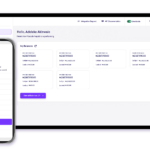
On the manufacturer side, OmniOne provides a consolidated dashboard for tracking performance indicators across the trade network. According to OmniRetail, that includes:
Customer analytics
Breakdowns of new, returning and churned customers
Leads and customer interactions
Survey responses
Order values and quantities sold
Total orders and new customer orders
This view is intended to help brands understand demand patterns, monitor channel performance and respond faster to changing market conditions across traditional retail.
For distributors, OmniOne functions as an operations and finance console. OmniRetail says distributors can:
Check their ledger or wallet balance
View Stock Keeping Unit (SKU) availability and pricing
Place orders and make payments via wallet balance or approved credit
Track order status in one place
Rustagi said the connected journey is meant to cut down on manual follow-ups, payment delays, blocked working capital and stockouts—issues that traditionally arise when inventory and finance systems are disconnected.
Financial services are a core part of the proposition. OmniRetail has partnered with more than 14 financial institutions, including banks and fintechs, to embed working capital and payments tools directly into trade on OmniOne. The company says the platform supports:
Working capital support tied to trading activity
Digital payments and collections
Interest on account balances
Fixed and flexible deposit options
Point-of-sale (POS) solutions
Rather than relying solely on traditional collateral, OmniRetail says creditworthiness on OmniOne is assessed using transaction and behavioural data. That includes purchase history, order frequency, repayment patterns and inventory movement. The idea is to let distributors and retailers access financing based on actual business activity visible on the platform.
The launch of OmniOne comes about a year after OmniRetail’s $20 million Series A round. The company, founded in June 2019, says it now has visibility into more than 500,000 FMCG orders each month, with a reported value of ₦250 billion (about $182 million), spanning 10,000 distributors and 100,000 retailers.
Looking ahead, OmniRetail indicated it plans to deepen its artificial intelligence capabilities to tighten the links between commerce, finance and data visibility on OmniOne. Rustagi described the company’s goal as building OmniOne into “the operating layer for traditional trade,” supporting the movement of goods, access to financial services and more data-driven decision-making.
Related Reading
More contextual TechBooky stories selected from tags, categories and article context.
Paul Balo is the founder of TechBooky and a highly skilled wireless communications professional with a strong background in cloud computing, offering extensive experience in designing, implementing, and managing wireless communication systems.
We use cookies to ensure that we give you the best experience on our website. If you continue to use this site we will assume that you are happy with it.