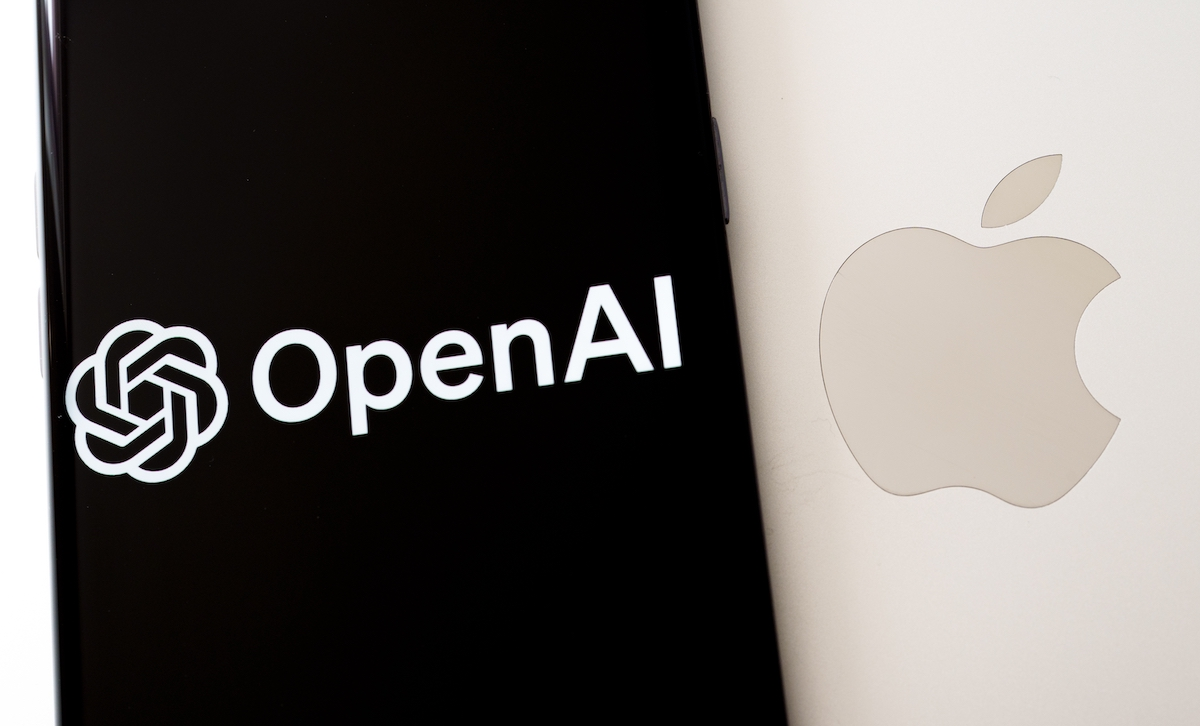
OpenAI’s once-promising partnership with Apple is reportedly beginning to unravel, and the fallout could become one of the most important legal and strategic fights in the AI industry.
According to Bloomberg, OpenAI has brought in outside legal counsel and is actively exploring options against Apple over a two-year-old partnership that integrated ChatGPT into the iPhone maker’s software ecosystem. One option reportedly under consideration is sending Apple a notice alleging breach of contract, though that would not necessarily mean an immediate lawsuit.
The dispute appears to centre on expectations. OpenAI believed its deal with Apple would turn ChatGPT into a deeply embedded part of the iPhone experience, helping it reach hundreds of millions of users and convert a meaningful number of them into paying subscribers. Instead, the company is reportedly frustrated that the integration has remained limited, under-promoted, and far less lucrative than expected.
That is a big shift from how the partnership was originally viewed. When Apple announced ChatGPT integration in 2024, it looked like a major win for both companies. Apple got access to a leading AI assistant at a time when it was under pressure to catch up in generative AI, while OpenAI got something every consumer AI company wants: distribution through the iPhone.
But distribution alone does not guarantee monetisation.
OpenAI reportedly expected ChatGPT’s placement inside Siri and Apple’s writing tools to drive major subscription growth, with users able to sign up for paid ChatGPT plans directly through iPhone settings. Instead, the deal “hasn’t come close” to generating the billions in annual subscription revenue OpenAI had hoped for, according to reports summarizing Bloomberg’s account.
The frustration appears to go beyond money. OpenAI executives reportedly believe Apple has not done enough from a product perspective, with one unnamed executive telling Bloomberg that OpenAI had done its part while Apple had not made an “honest effort” to make the integration successful.
Apple’s position is less clear because neither company has publicly commented in detail on the dispute. But there are signs that Apple’s AI strategy has moved in a more multi-model direction. The company has been exploring deeper integrations with other AI providers, including Google’s Gemini and Anthropic’s Claude, even as its existing ChatGPT integration continues separately.
That may be smart platform strategy for Apple, but it is exactly the kind of shift OpenAI may see as weakening the value of the original deal.
The deeper issue is that Apple and OpenAI entered the partnership from very different positions. Apple needed a credible AI partner to fill gaps in Apple Intelligence, especially around Siri and generative responses. OpenAI needed distribution, consumer reach, and a path to more paid users. On paper, those incentives aligned. In practice, Apple appears to have retained control over the user experience while OpenAI absorbed the disappointment of weaker-than-expected conversion.
This is where the legal question becomes complicated.
A business expectation is not automatically a contractual obligation. OpenAI may have expected deeper integration, broader promotion, or more prominent placement inside Apple software, but any legal claim would likely depend on whether Apple actually committed to those things in writing. That point has already been raised by Apple commentators, who note that disappointment over outcomes is not the same as breach of contract.
Still, even the possibility of legal action is significant because of what it says about the changing balance of power in AI.
Two years ago, Apple needed OpenAI more than OpenAI needed Apple. ChatGPT was the consumer face of generative AI, and Apple was under pressure to prove it had a serious answer to Microsoft, Google, and Meta. Today, the picture is more complicated. Apple has more model options, while OpenAI is trying to expand beyond software into hardware, including through its work with former Apple design chief Jony Ive, a move that could eventually put it into direct competition with Apple’s core device business.
That makes the relationship increasingly awkward.
OpenAI wants Apple’s ecosystem, but may also want to build the device that comes after the iPhone. Apple wants access to powerful AI models, but not at the cost of handing too much control of its platform to a single outside company. Both companies still benefit from cooperating, but their long-term ambitions are no longer perfectly aligned.
The dispute also lands at a sensitive moment for both sides. Apple is preparing to reveal more of its AI roadmap at its developer conference in June, while OpenAI is under pressure to turn massive user attention into sustainable revenue as the cost of running frontier AI continues to rise.
That is why this story matters beyond Apple and OpenAI.
It shows that the next phase of AI will not only be fought over models, chips, and apps. It will also be fought over distribution, platform control, revenue sharing, and who owns the relationship with the user.
For OpenAI, the iPhone was supposed to be a growth engine.
For Apple, ChatGPT was supposed to be a useful layer inside a broader Apple-controlled AI experience.
Those two visions are now colliding.
And if the dispute escalates, it could mark the moment when one of the most important AI alliances in consumer tech turned from partnership into power struggle.
Related Reading
More contextual TechBooky stories selected from tags, categories and article context.
Paul Balo is the founder of TechBooky and a highly skilled wireless communications professional with a strong background in cloud computing, offering extensive experience in designing, implementing, and managing wireless communication systems.
We use cookies to ensure that we give you the best experience on our website. If you continue to use this site we will assume that you are happy with it.