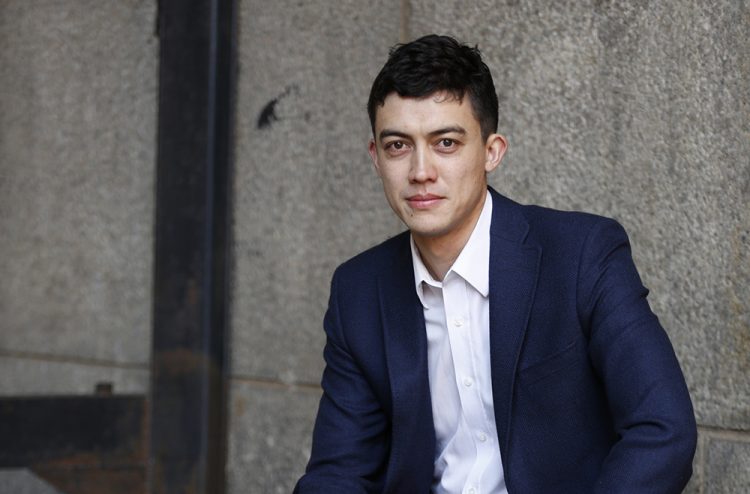
In the coming years, OpenAI plans on transforming its AI, ChatGPT into an operating system. And as result of this OpenAI has brought on a new executive to lead the effort in the transformation into a full operating system. On Monday, Glen Coates, the company’s new Head of App Platform, confirmed that the San Francisco-based AI firm is working to evolve ChatGPT from a simple interface and app into a complete operating system. The announcement comes at an intriguing time, when the communication chief is stepping. Report say OpenAI is already collaborating with Jony Ive on an AI-powered device slated for a tentative launch in 2027.
As of right now, ChatGPT is essentially regarded as an app and or platform. But it also functions as an interface because of its AI-powered conversational layer and backend agents that can connect to many platforms and apps. The introduction of OpenAI’s ChatGPT Apps functionality, which enables third-party apps to link directly with the AI chatbot and enable users to carry out in-app operations while remaining within the chatbot interface, further reinforced this goal.
Glen Coates expressed his excitement for creating an AI-centred operating system from the ground up when he revealed his new position on LinkedIn has he will answers to Nick Turley, the Head of ChatGPT at OpenAI.
But that’s where things start to get interesting. The interface, when paired with AI agents, built-in search, foundational data, and context-drawing capabilities and features, produces a singular experience that is just one step away from being an operating system.
We know that an operating system is a software that manages a computer’s hardware and software resources while providing essential services for applications. We can also say that an operating system (OS) is a fundamental piece of software that serves as a bridge between the hardware, users, and apps on a device and to this end OpenAI simply has to master hardware integration because ChatGPT which is now already a software, already aiming provides the user interface and application support. Coates, who recently started working for the company as the Head of App Platform, can help with this strategy. And it is good to know that he was the Head of Product and Vice President of Shopify.
Coates writes on X formerly Twitter, “Joined @OpenAI to head up App Platform and help turn ChatGPT into an OS.” It seems that Nick Turley, the Head of ChatGPT at OpenAI, will be the executive’s boss. In an interview with the publication team, he disclosed that he has also been working on transforming the chatbot into an operating system.
“The evolution we’re trying to make over the next few years is one where ChatGPT itself is more like an operating system where you can come and use applications,” Coates explained in an interview.
Over the coming years, we hope to transform ChatGPT into something more similar to an operating system where users may access and use the apps in a more defining manner and way. There is an app for writing. There is an app if you want to learn how to code. “There are applications for you if you want to interact with goods and services,” he said to the newspaper.
It’s also a wise decision for OpenAI to transform ChatGPT into an operating system at this time. Along with developing gadgets and partnering with apps like Adobe, Canva, Zillow, and others, the company already has a significant data centre footprint. The business may be the first to create an AI operating system if it can integrate all of this with its current conversational interface layer. It is impossible to predict when the platform will undergo its next transformation, though, as neither Coates nor Turley have provided a schedule.
This appointment supports a number of other significant OpenAI projects. And to this end, to support its expanding computational requirements, the business has already built a robust data centre footprint.
OpenAI and Jony Ive will be jointly working together to create gear with AI capabilities that may make use of this new AI operating system.
The company’s also further emphasis on commercialisation and product scalability which is highlighted by the recent appointment of Fidji Simo as CEO of Applications, who will oversee both consumer and business-facing initiatives.
We use cookies to ensure that we give you the best experience on our website. If you continue to use this site we will assume that you are happy with it.