OpenAI’s coding-focused desktop platform, Codex, received a significant update on Thursday. The latest version greatly improves the tool’s usability by giving users access to PC use, picture creation, native web access, and other personalization capabilities. The integrated development environment (IDE) and Windows will shortly receive the new functionalities, which are initially available on macOS. It’s interesting to note that the capability was introduced on the same day Anthropic published Claude Opus 4.7, which likewise aims to enhance software engineering.
With the formal update of the Codex platform by OpenAI to become a more comprehensive productivity tool that can run your computer and create visual assets, rather than just a specialized coding agent.
The San Francisco-based artificial intelligence (AI) giant revealed a new Codex update in a post. A number of new capabilities are being added to the developer and enterprise-focused solution, expanding its use case. During the announcement, the business also noted that over three million developers use Codex on a weekly basis (known as weekly active users, or WAU).
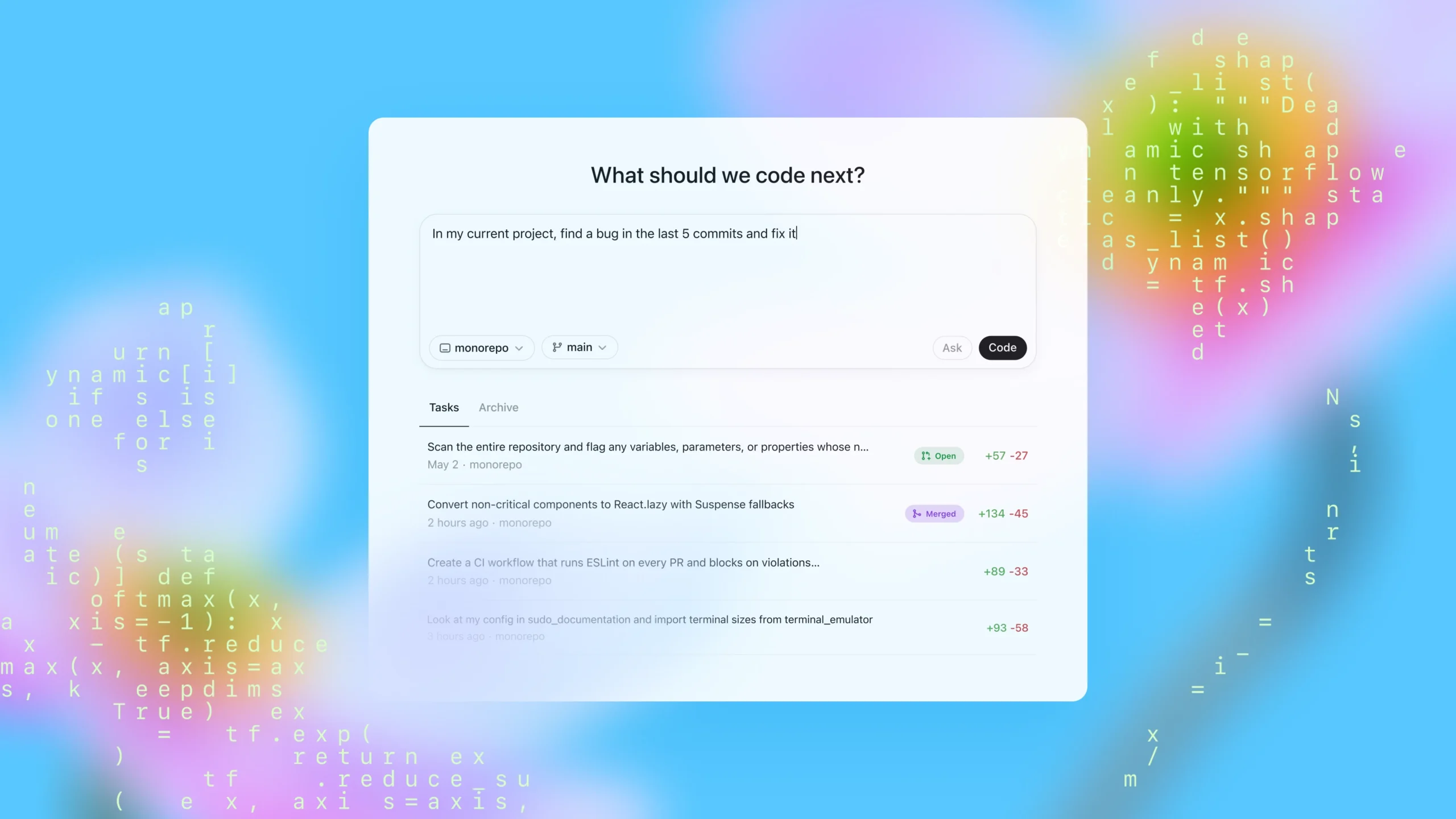
The usage of computers is the most notable addition. Now, Codex can run the user’s desktop on its own and manage a wide range of tools and applications. It can click on icons, input text in text boxes and documents, and view and process the content on the screen by employing particular agents. Because the feature can operate in the background, the user can choose to work on their own tasks or keep an eye on Codex in the interim. This feature will initially be available on macOS.
With an in-app browser, Codex can now work directly with the web. To provide the AI agent exact instructions, users can directly comment on pages. Nevertheless, the capability is restricted to local web application access. Additionally, the GPT-image-1.5 AI model can be used by the platform to create and modify photos.
According to OpenAI, developers who wish to use Codex for frontend chores, testing, and project iteration will find these features useful. Additionally, image generation can be used to create images for games, mockups, frontend designs, and product concepts.
The business has also released over 90 additional plugins to enable the agentic tool to gather context and take action, hence expanding Codex’s use cases. Atlassian Rovo, CircleCI, CodeRabbit, GitLab Issues, Microsoft Suite, Remotion, Render, and Superpowers are a few of these.
Additional enhancements include the ability to run several terminal tabs, integrate GitHub review comments, and establish SSH connections to remote devboxes in alpha. Additionally, OpenAI is releasing memory in preview, which will enable Codex to recall context from earlier sessions and talks. These could include study findings, revisions, and individual preferences.
Codex introduces persistent memory to recall your preferences and context from past sessions for proactive suggestions, long-running automations to schedule and resume tasks over days or weeks, and a plugin ecosystem launching with over 90 new plugins (some reports say up to 111) to connect with tools like GitHub, Slack, and Notion for deeper context across your stack.
The updated OpenAI Codex is now rolling out to desktop users on ChatGPT Plus, Pro, Business, or Enterprise accounts, though computer use and personalization features are unavailable in the EU and UK (with a rollout expected soon), and background computer control is currently exclusive to macOS.
We use cookies to ensure that we give you the best experience on our website. If you continue to use this site we will assume that you are happy with it.