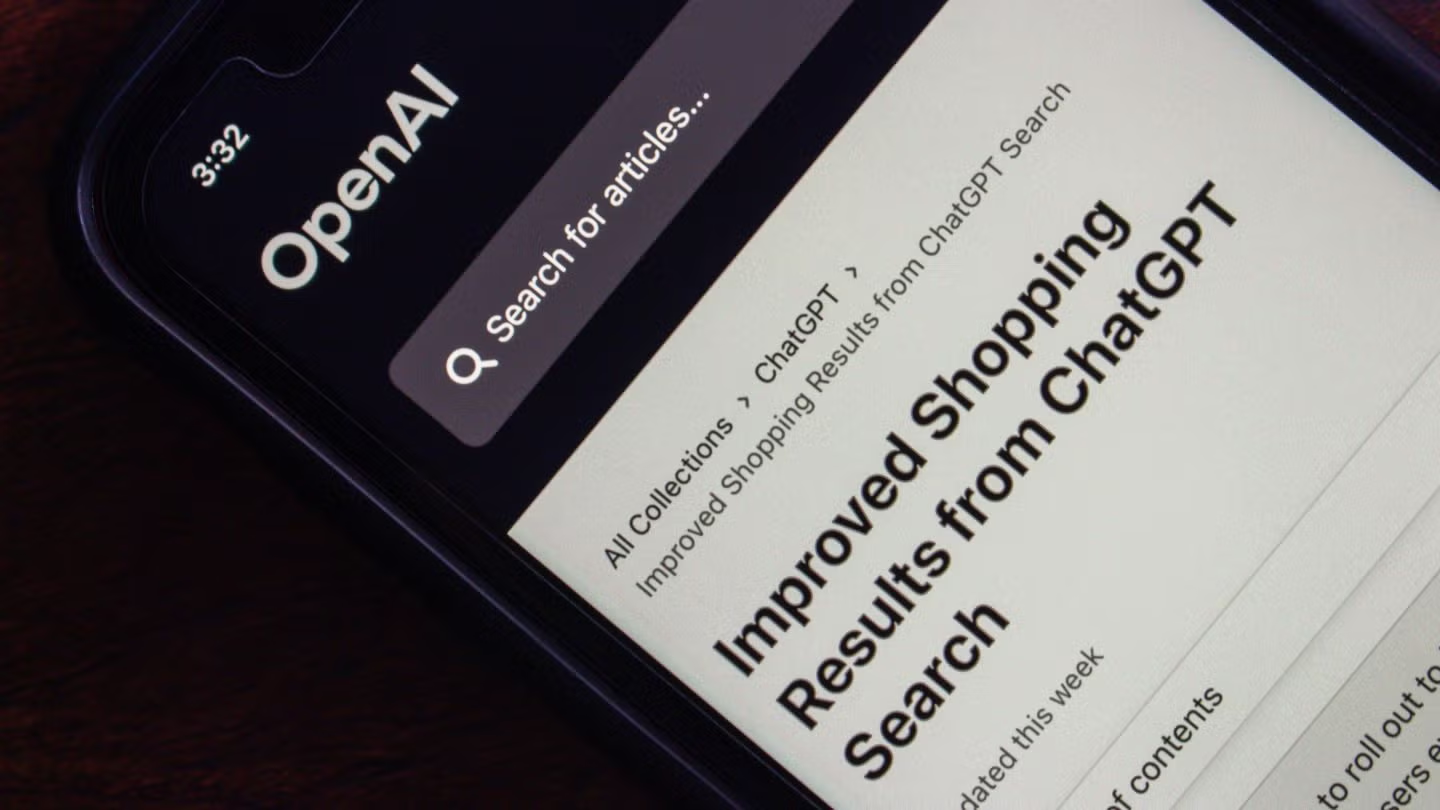
OpenAI is reworking its approach to online shopping inside ChatGPT, shifting away from its earlier “Instant Checkout” feature after it failed to gain meaningful traction with users and retail partners.
The company had previously introduced Instant Checkout as part of its push into “agentic commerce,” allowing users to browse, compare, and purchase products directly within ChatGPT without leaving the chat interface. But early results fell short of expectations, with significantly lower conversion rates compared to traditional e-commerce platforms.
Retail giant Walmart, one of the key partners in the initiative, has already stepped back from the feature after internal data showed purchases made through ChatGPT were roughly three times lower than those on its own website.
Under the revamped approach, ChatGPT will act less like a checkout platform and more like an intelligent shopping assistant, helping users compare products, analyse reviews, and find the best options while leaving the actual purchase process to external platforms.
The updated experience includes improvements such as side-by-side product comparisons, real-time pricing data, and richer product information, making it easier for users to evaluate options before completing a purchase elsewhere.
OpenAI is also working with retailers to embed their own shopping systems directly into ChatGPT, allowing transactions to happen through custom-built apps or integrations rather than a centralized checkout controlled by OpenAI.
The shift reflects a broader realisation across the industry that while AI can transform how people discover products, managing payments, logistics, and customer service remains complex and is often better handled by established e-commerce platforms.
It also signals a strategic recalibration for OpenAI as it competes with companies like Google, which is pushing its own AI-powered shopping features through Gemini, and other platforms experimenting with AI-driven commerce.
Despite the setback, OpenAI is continuing to invest in shopping features as part of its wider ambition to make ChatGPT a central hub for everyday tasks from research and coding to travel planning and product discovery.
The latest changes suggest that, for now, the future of AI shopping may lie less in replacing traditional online stores and more in enhancing how users find and evaluate what to buy.
Paul Balo is the founder of TechBooky and a highly skilled wireless communications professional with a strong background in cloud computing, offering extensive experience in designing, implementing, and managing wireless communication systems.
We use cookies to ensure that we give you the best experience on our website. If you continue to use this site we will assume that you are happy with it.