Opera is taking a more flexible approach to AI inside the browser and it’s a move that could quietly change how people interact with the web.
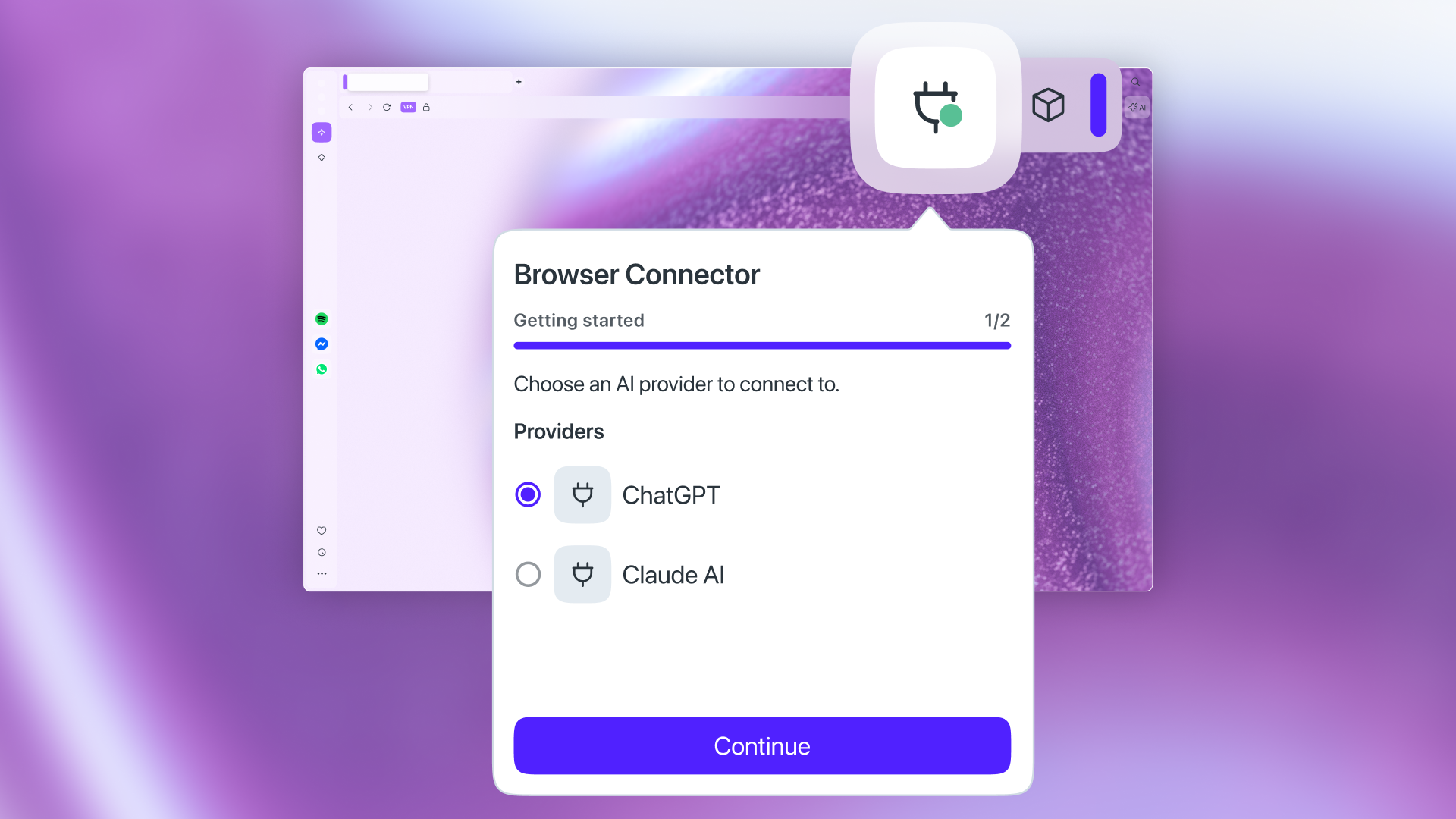
The company has introduced a new feature called Browser Connector, allowing users of Opera One and Opera GX to integrate external AI assistants like ChatGPT and Claude directly into their browsing experience.
Instead of switching tabs or copying content into a chatbot, users can now let these AI systems access and understand the content of active web pages in real time. That means you can ask questions, summarize articles, analyse data, or generate responses based on what’s currently open in your browser without leaving the page.
The feature is available for free and can be enabled through the AI Services section in Opera’s settings, signalling the company’s continued push to embed AI deeper into everyday browsing.
What makes this move interesting isn’t just the functionality, it’s the philosophy behind it.
Unlike some competitors that are building tightly controlled, in-house AI ecosystems, Opera is leaning into choice and interoperability. By allowing users to connect either ChatGPT or Claude, the browser avoids locking users into a single AI provider and instead turns itself into a platform for multiple models.
That flexibility could matter more than it seems.
Right now, the AI space is fragmented. Different models excel at different things, some are better at reasoning, others at coding, others at conversational tasks. Opera’s approach acknowledges that reality and lets users decide which tool fits their workflow at any given moment.
It’s also part of a broader strategy.
Opera has been experimenting aggressively with AI-first browsing experiences, including the launch of Opera Neon, a $20-per-month browser designed around autonomous AI agents that can perform tasks on behalf of users. Browser Connector feels like a more accessible version of that vision — bringing AI assistance into the mainstream without requiring a separate product or subscription.
At the same time, Opera is far from alone.
Across the industry, browsers are rapidly evolving into AI-powered interfaces, not just tools for loading web pages. Companies like Microsoft are embedding Copilot into Edge, while Google is integrating Gemini into Chrome and Search. The browser is becoming less of a gateway to the web and more of an intelligent layer that sits on top of it.
Opera’s take stands out because it doesn’t try to own the AI itself.
Related Reading
More contextual TechBooky stories selected from tags, categories and article context.
Paul Femi Balo is the founder and publisher of TechBooky. He covers artificial intelligence, African technology, digital infrastructure, enterprise technology and the global digital economy.
We use cookies to ensure that we give you the best experience on our website. If you continue to use this site we will assume that you are happy with it.