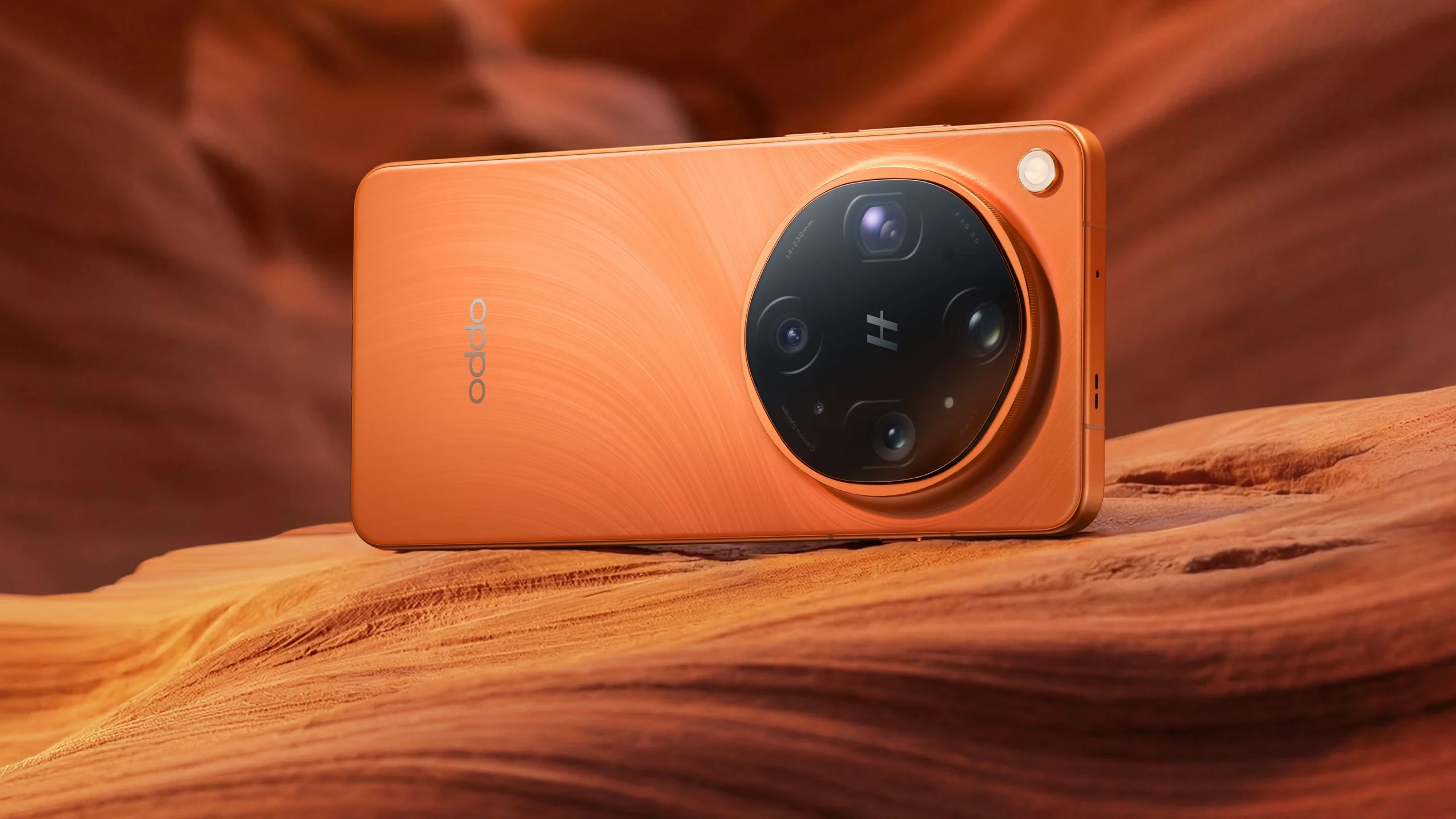
Oppo has unveiled the Find X9 Ultra, a camera‑centric flagship that leans hard into photography and video at a time when high-end Android phones are crowding the same space as Samsung’s Galaxy S26 Ultra, Xiaomi’s 17 Ultra and Vivo’s X300 Ultra. The new device builds on last year’s Find X9 Pro with a more aggressive camera system, a faster Qualcomm chipset and a fresh set of Hasselblad‑branded accessories designed to make the phone feel more like a compact camera.
The Find X9 Ultra arrives in two finishes that underline Oppo’s partnership with Hasselblad. Canyon Orange carries a subtle etched texture meant to evoke the Grand Canyon, while Tundra Umber is a woodland‑style colourway inspired by Hasselblad’s X2D and pitched as blending “Scandinavian minimalism” with glacial aesthetics. Both versions put the camera module front and centre, physically and visually.
To accommodate the upgraded camera hardware, the Find X9 Ultra is a large, thick phone with a noticeably protruding rear camera unit. Oppo has reshaped this array into a subtle hexagon – a nod, the company says, to camera heritage and its collaboration with Hasselblad. The module sits within a circular metal frame, similar to many rival flagships, and its edges are knurled to give your fingers extra purchase when you’re shooting.
Unlike some competitors that build zoom controls directly into the camera ring, Oppo leaves that ring purely decorative. Zoom controls instead come via accessories such as the “Earth Explorer Kit,” which adds a discrete camera grip with a zoom lever.
Internally, Oppo has shifted from MediaTek to Qualcomm at the top end. The Find X9 Ultra runs on Qualcomm’s Snapdragon 8 Elite Gen 5 chip, replacing the MediaTek Dimensity 9500 used in last year’s Find X9 Pro. On paper, that should mean stronger CPU and GPU performance, and more headroom for computational photography and video.
A 7,050mAh silicon‑carbon battery powers the device, backed by 100W SUPERVOOC fast charging. To keep heat in check under sustained loads – such as long 4K or 8K video sessions – Oppo says it has built in what it claims is the industry’s first encapsulated thermal unit. The goal is to maintain performance without the device getting too hot to handle.
The display follows the established flagship formula but pushes brightness and responsiveness. The Find X9 Ultra uses a 6.82‑inch panel with a 144Hz refresh rate. It can reach up to 3,600 nits peak brightness in HDR and drop to as low as 1 nit in dark environments, which should help both visibility outdoors and eye comfort at night.
Camera hardware, Hasselblad accessories and early impressions
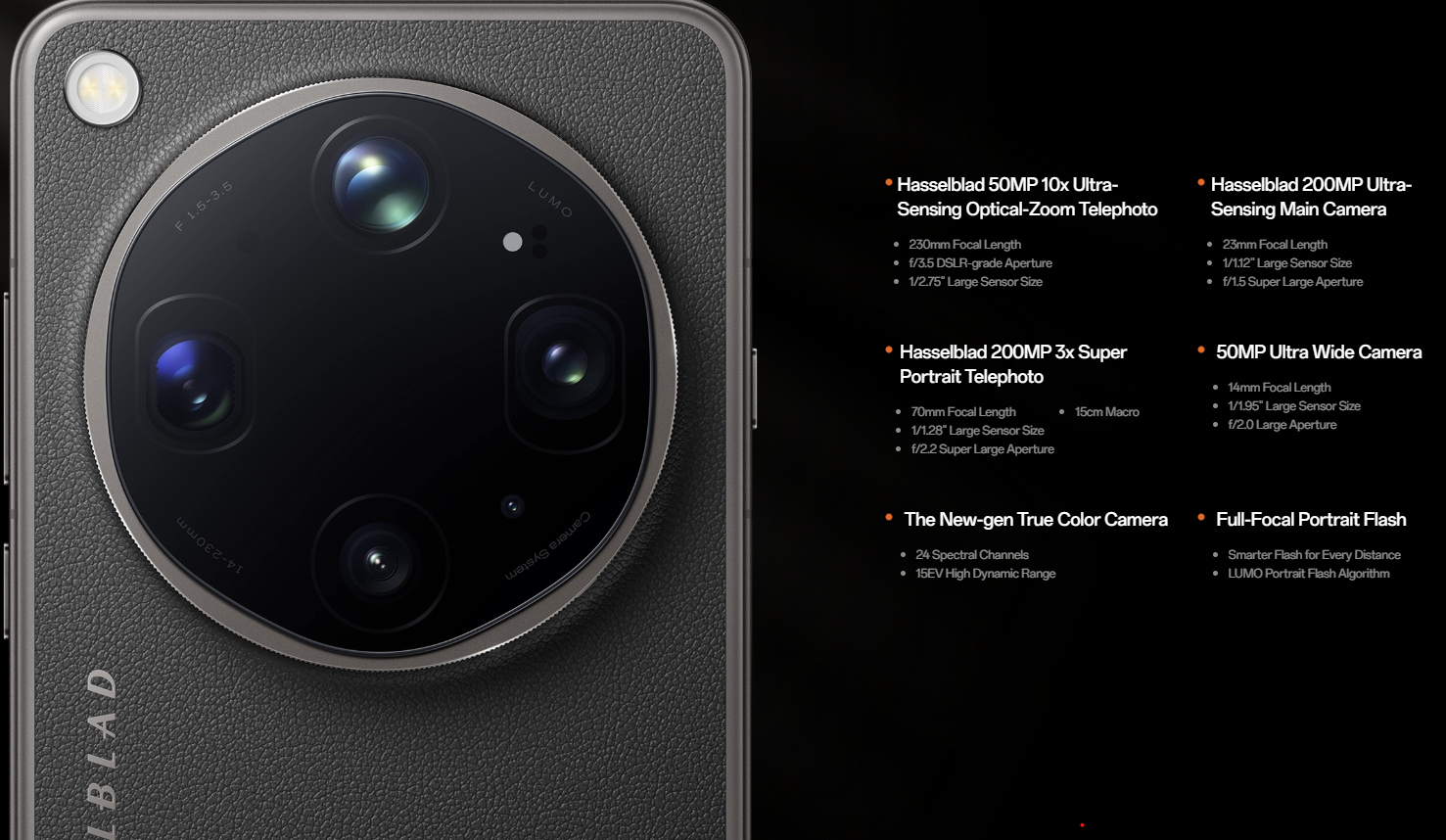
The headline feature is the camera system. The main sensor jumps to 200 megapixels, and at 1/1.12 inches, Oppo says it’s the largest 200MP sensor ever shipped in a phone. It’s paired with a bright f/1.5 aperture, which should improve low‑light performance and depth‑of‑field control. In early shooting, color accuracy from this main camera held up well across mixed lighting such as street lamps and neon signs.
Oppo has also embedded a new True Colour Camera module that works across both stills and video. It’s designed to maintain accurate color reproduction in standard shots, while users who want more stylized results can tap into a library of Hasselblad filters and effects.
The Find X9 Ultra doesn’t stop at one high‑resolution sensor. A 3x telephoto camera also uses a 200MP sensor, this time with an f/2.2 aperture. This is the lens that supports Oppo’s new clip‑on teleconverter, and it gives you an instant 3x optical zoom before any add‑on glass. Oppo says the full system covers the equivalent of eight focal lengths, though early testing revealed visible shifts in colour temperature and light sensitivity as the phone jumps between its various cameras and zoom levels.
The other standout is a second telephoto unit: a 50MP 10x optical zoom camera. Phones have offered 10x periscope zooms before – Samsung’s Galaxy S23 Ultra is one example – but not at this resolution. Oppo enables Portrait mode even at the full 10x optical zoom, and you can digitally crop down to 20x, though initial samples suggest image quality is most convincing at the native 10x level.
On the video side, Oppo isn’t chasing every spec its rivals do, but the Find X9 Ultra still makes some notable moves. It supports 4K recording at 60 frames per second with Dolby Vision, and it’s the first Oppo phone capable of 8K video at 30 fps. For creators who want more control over grading, there’s a new O‑Log2 profile, which Oppo says should pull more detail out of shadows and reduce smearing. Professional workflows are also in view: like Vivo’s X300 Ultra, the Find X9 Ultra is certified for the Academy Colour Encoding System (ACES), and users can load third‑party LUTs directly onto the phone to preview custom colour grades in real time.
The camera‑first positioning is reinforced by a suite of accessories. The Hasselblad Explorer case adds a two‑stage shutter button and integrated zoom controls, and its muted black and clay colour scheme is matched to the Tundra Umber phone finish. Then there’s the Hasselblad 300mm Explorer Teleconverter, which physically mounts to the 200MP 3x telephoto camera.
On the Find X9 Ultra, the teleconverter’s magnification ratio has increased from around 3.28x (on the earlier Find X9 Pro system) to about 4.3x, effectively turning the 3x lens into a 13x optical zoom. Oppo and Hasselblad’s latest add‑on is also described as the largest smartphone telephoto lens so far, out-sizing both the Find X9 Pro’s earlier attachment and Vivo’s substantial 400mm teleconverter. The companies use different sensor‑lens combinations, which makes like‑for‑like spec comparisons difficult, but in physical terms Oppo’s new teleconverter is currently the biggest of the bunch.
Oppo has made some practical tweaks based on feedback from the previous generation. The new telephoto adapter can stay attached to the phone without blocking the other cameras, making it easier to switch between focal lengths without reconfiguring your setup. However, buyers of earlier Oppo camera kits may be frustrated: there’s no cross‑compatibility between old teleconverters and the Find X9 Ultra. Oppo says the decision is about optimizing image quality, but it does mean previous accessories can’t simply be reused.
One smaller, photographer‑friendly touch is a touch‑sensitive button similar to the camera shortcut seen on Apple’s iPhone 17 Pro. On the Find X9 Ultra, it provides fast access to the camera, aimed at making the phone more responsive for spur‑of‑the‑moment shooting.
Availability, at least initially, is limited. Oppo plans to launch the Find X9 Ultra in parts of Asia and Europe, with a confirmed UK release on May 8 at £1,449 (around $1,959 at current exchange rates). There’s no US launch on the roadmap yet. Early hands‑on use points to a powerful, ambitious camera phone that will likely appeal to enthusiasts and creators who are willing to work with add‑on optics — but a fuller judgment will have to wait until Oppo’s new telephoto converter kit is in hand and tested alongside rivals like Vivo’s X300 Ultra.
Related Reading
More contextual TechBooky stories selected from tags, categories and article context.
Paul Femi Balo is the founder and publisher of TechBooky. He covers artificial intelligence, African technology, digital infrastructure, enterprise technology and the global digital economy.
We use cookies to ensure that we give you the best experience on our website. If you continue to use this site we will assume that you are happy with it.